
Satellites with Brains: The AI Revolution in Orbit
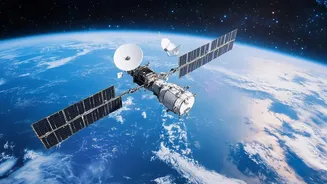
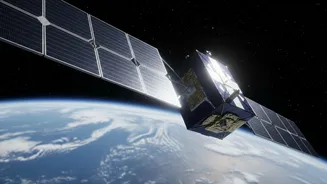
India's space agency, ISRO, is increasingly integrating Artificial Intelligence into its missions, turning standard satellites into smart, autonomous operators. Think of it less like a remote-controlled device and more like a self-driving car for space.
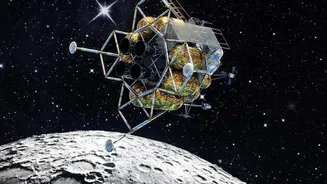
AI algorithms helped navigate the Pragyan rover on the Moon during the successful Chandrayaan-3 mission, allowing it to identify and avoid obstacles on its own. This technology is now being scaled up for constellations of 'intelligent satellites' that can process vast amounts of data onboard, make decisions without constant human intervention, and even monitor their own health to predict potential failures. This push, supported by collaborations with top Indian tech institutes, is crucial for everything from disaster management and precision agriculture to enhancing military surveillance capabilities.
The Quantum Radar Game-Changer
Perhaps the most futuristic element of India's strategy is its development of quantum radar. Unlike conventional radar that bounces radio waves off objects, quantum radar uses the bizarre principles of quantum mechanics, like entanglement, to detect targets. The primary advantage? It has the potential to render conventional stealth technology, used by advanced fighter jets like the F-35 and China's J-20, almost obsolete. While the technology is still in a developmental phase globally, India's Defence Research and Development Organisation (DRDO) is actively pursuing it, with plans for field trials. This isn't about replacing existing radar systems but augmenting them with a powerful new layer of detection, giving India a potential strategic edge in monitoring its airspace against next-generation threats.
A Network of Eyes in the Sky
The concepts of AI and advanced sensing are converging in India's plan for a massive constellation of new satellites. The government has sanctioned a 52-satellite network aimed at providing persistent intelligence, surveillance, and reconnaissance (ISR). These aren't just passive cameras; they are intelligent systems designed to work together. Dubbed I-STAR (intelligence, surveillance, target acquisition, and reconnaissance), this constellation will use Synthetic Aperture Radar (SAR) combined with onboard AI to see through clouds, detect small changes on the ground, and provide real-time information to military commanders. This ambitious program reflects a clear strategic goal: to reduce dependency on foreign satellites and create a robust, sovereign surveillance architecture to monitor borders and maritime interests.
Why This Matters for the U.S.
India's space push is about more than just technology; it's a core part of its ambition to become a major global power. The nation aims to grow its share of the global space economy from 2% to 8% by 2033, a jump from roughly $8 billion to $44 billion. This rapid advancement serves multiple purposes: it strengthens national security, particularly in its ongoing rivalry with China; it boosts economic growth by fostering a domestic private space industry; and it elevates India's geopolitical standing. For the United States, this presents both a challenge and an opportunity. India is emerging as a critical counterweight to China in Asia, and its growing space capabilities make it a more valuable strategic partner. As a signatory of the U.S.-led Artemis Accords, India is signaling its desire for collaboration, positioning itself as a key player in the next chapter of international space exploration and governance.