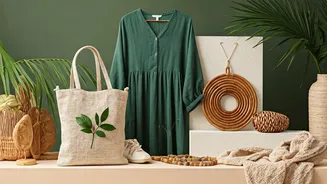







Beyond the Price Tag: Redefining 'Practical'
The new practicality of sustainable style isn't just about a lower price. It's a broader, more rewarding value proposition. Consumers, especially the younger generation, are looking beyond the initial cost and prioritising quality, durability, and ethical
production. [4] A well-made garment from a sustainable fabric like organic cotton or handloom not only lasts longer than its fast-fashion counterpart but also carries a story of craftsmanship. [5, 11] This shift redefines 'practical' to include cost-per-wear. An affordable fast-fashion top that loses its shape after three washes is ultimately more expensive than a timeless Khadi kurta that endures for years. [10] Brands are increasingly highlighting these benefits, focusing on longevity and classic designs that transcend fleeting trends. [15]
The Circular Closet: Thrifting, Renting, and Upcycling
One of the biggest drivers of practical sustainability is the booming circular fashion economy. [17] Once a niche activity, thrift shopping is now a celebrated trend in India, particularly among Gen Z. [2] Instagram thrift stores and curated resale platforms have made buying pre-loved clothing convenient, affordable, and stylish. [6] This movement from ownership to access also includes fashion rentals, which are soaring in popularity for occasion wear. [9, 18] Instead of buying a costly lehenga for a single wedding, consumers can rent designer pieces at a fraction of the price. [19, 21] This reduces wardrobe clutter, financial strain, and environmental waste. [18] Furthermore, upcycling—transforming old garments into new, unique pieces—is gaining traction, fueled by a desire for individuality and a rejection of disposable fashion. [6, 15]
Innovation in Your Wardrobe
Technological advancements and a return to traditional materials are making sustainable fabrics more mainstream and affordable. [8] Beyond organic cotton, materials like hemp, bamboo, and linen, which require less water and fewer pesticides, are being used by more Indian brands. [11, 17] Innovators are also creating textiles from agricultural waste, such as banana fibres, offering a sustainable alternative to conventional silk. [12, 13] These eco-friendly fabrics are no longer reserved for high-end designer labels. Brands are finding ways to incorporate them into everyday wear, making sustainable choices available at more accessible price points and proving that eco-friendly can also be budget-friendly. [4, 10]
A New Generation's Values
The shift towards practical sustainability is being championed by a new generation of consumers who view their purchases as a statement of their values. [2] For many young Indians, sustainability is a core expectation, not an afterthought. [3, 7] They demand transparency from brands about their supply chains and environmental impact. [2, 3] This heightened awareness, amplified by social media, means that brands can no longer get away with vague 'green' claims. [5] Consumers are increasingly willing to support homegrown labels that empower local artisans and preserve India's rich heritage of handloom and craftsmanship, which are inherently sustainable practices. [4] This conscious consumerism is forcing the entire industry to adapt, making ethical production a key factor for brand loyalty and relevance. [17]