



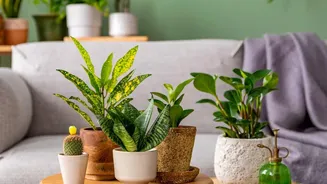
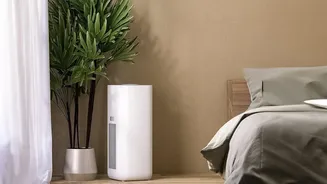
The desire for cleaner indoor air often leads to a choice: a lush houseplant or a modern air purifier? While one offers natural beauty and the other technological might, the best option depends on your goal and your tolerance for upkeep.
The Green Dream vs. Reality
The idea that
houseplants can purify indoor air is incredibly popular, largely thanks to a 1989 NASA study. This research showed that in a small, sealed chamber, common plants could remove volatile organic compounds (VOCs) like benzene and formaldehyde. However, translating this to a real-world living room is problematic. Subsequent research has clarified that your home is not a sealed chamber; air constantly flows in and out. To achieve the same air-cleaning effect as a building's natural ventilation, you would need an impractical number of plants—some studies estimate between 10 and 1,000 plants per square metre of floor space. While plants are excellent for boosting mood and adding a touch of humidity, they are not effective at removing dust, pollen, or pet dander.
The Mechanical Muscle of a Purifier
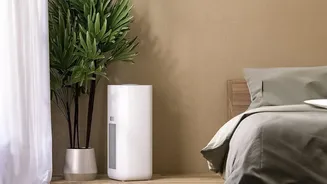
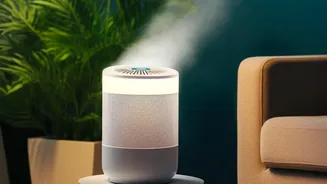
An air purifier, by contrast, is a purpose-built machine designed for one job: cleaning air. Most effective models use a combination of filters to get this done. A pre-filter catches large particles like hair and lint, an activated carbon filter absorbs odours and gases (VOCs), and a HEPA filter captures 99.97% of airborne particles as small as 0.3 microns. This includes the very things plants can't handle: dust mites, pollen, mould spores, and pet dander. For anyone with allergies or asthma, a purifier with a HEPA filter is significantly more effective at removing airborne triggers. The machine actively pulls in a room's air, forces it through these dense filters, and circulates it back out, cleaning a room's entire air volume multiple times per hour.
The True Cost: Effort and Expense
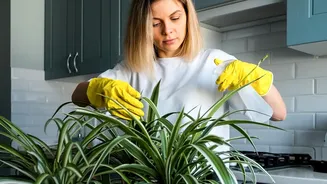
This is where the comparison gets interesting. A houseplant is a low-cost initial purchase. Its ongoing needs are your time and attention: regular watering, ensuring proper light, and occasional pruning. Forgetting these tasks can lead to a sad-looking plant that isn't providing any benefits. Worse, overwatering can create damp soil, which may harbour mould—introducing a new pollutant into your air. An air purifier is a more significant upfront investment, but its biggest commitment is filter maintenance. It’s not a 'set it and forget it' appliance. The pre-filter often needs to be cleaned every month to protect the more expensive filters behind it. The activated carbon filter typically needs replacement every 3 to 6 months as it becomes saturated with odours and gases. The main HEPA filter generally lasts 6 to 12 months, depending on usage and your home's air quality. Ignoring these replacements means the purifier stops working effectively. Annual filter costs can range from $50 to over $200, depending on the model.
What Goal Are You Trying to Achieve?
The right choice depends entirely on your primary goal. If you are looking to measurably reduce allergens, dust, smoke, or other airborne particles, an air purifier is the only effective solution. Its performance is quantifiable and targeted. If your goal is to enhance your living space, reduce stress, and enjoy the psychological benefits of nature, a houseplant is an excellent choice. Plants make a space feel more alive and can have a calming effect that no machine can replicate. It's a mistake to view them as interchangeable. A plant cannot do a purifier's job, and a purifier offers none of the aesthetic and mental wellness benefits of a plant.
The 'Both/And' Approach
Ultimately,' this isn't an either/or dilemma.' The ideal solution for a truly healthy and pleasant home environment is often to use both.' Let the air purifier do the heavy lifting of mechanical filtration,' ensuring the air you breathe is free from particulates and major pollutants.' You commit to the recurring cost and effort of replacing its filters on schedule to keep it performing at its peak.' At the same time,' fill your home with plants for the joy,' beauty,' and subtle humidity they bring.' Care for them,' enjoy their presence,' and appreciate them for what they are:' living decor that enhances well-'being,' not biological air filters.' This combined approach gives you the best of both worlds—technologically clean air and a naturally beautiful space.