





The Problem of the Plains
In most parts of India, especially across the densely populated Indo-Gangetic plain, the night sky is a pale version of what it should be. The culprit is a combination of factors. First, light pollution from cities, towns, and highways creates a perpetual
skyglow that washes out all but the brightest stars and planets. This artificial brightness is growing annually, effectively erasing our celestial heritage. Second, the atmosphere in the plains is thick with dust, smog, and moisture. This haze scatters the faint light from distant stars, blurring our window into the universe. During the monsoon season, from June to September, persistent cloud cover makes astronomical observation nearly impossible, right when the Milky Way is at its most spectacular.
The Altitude Advantage
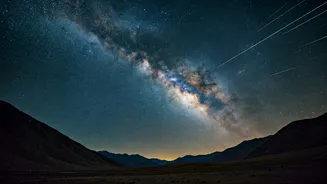
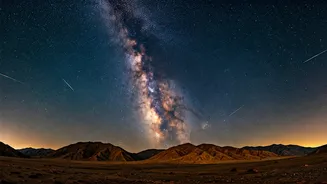
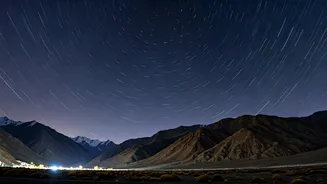
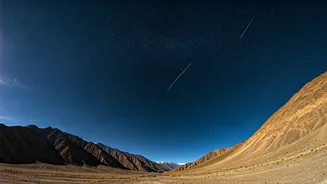
Ladakh's primary advantage is its staggering altitude. With most of the region situated above 10,000 feet, you are physically above a significant portion of the Earth's atmosphere. This thin, clean air has profound benefits for stargazing. Less atmosphere means less turbulence and distortion, a phenomenon astronomers call 'seeing'. It’s the difference between looking through clear, still water and looking through murky, choppy waves. In Ladakh, stars don't twinkle; they shine with a steady, piercing clarity. This stability allows the naked eye to see far more detail, and for photographers to capture incredibly sharp images of nebulae and galaxies.
A Desert in the Clouds
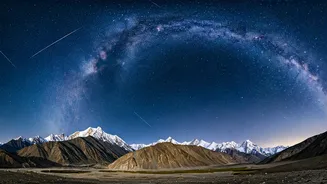
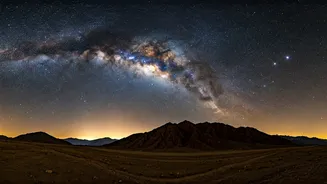
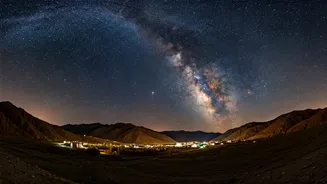
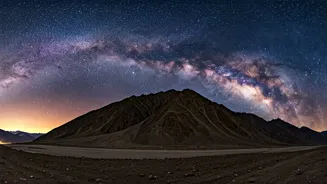
Located in a rain shadow created by the Himalayan range, Ladakh is a high-altitude cold desert. This unique geography means it receives very little rainfall and has extremely low humidity throughout the year. For stargazers, this translates to an abundance of cloudless nights. While the rest of India is experiencing the monsoon, Ladakh's skies from May to September are often crystal clear, offering perfect conditions for observing summer constellations and the magnificent core of our Milky Way galaxy. The dry air further enhances visibility, as water vapour in the atmosphere can absorb and scatter starlight.
India’s First Dark Sky Sanctuary
The commitment to preserving Ladakh's pristine skies is now official. The region of Hanle has been designated as India's first Dark Sky Reserve. This is a globally recognized status for areas with exceptional night sky quality, protected through policies that control light pollution. At an altitude of over 14,000 feet, Hanle is home to the Indian Astronomical Observatory, one of the highest in the world, precisely because of these world-class conditions. The reserve ensures that local communities use shielded, downward-facing lights, protecting the darkness for both scientific research and a burgeoning astro-tourism economy that benefits locals. For a traveller, visiting Hanle means experiencing a night sky so dark that the Milky Way can cast a faint shadow.
An Otherworldly Experience
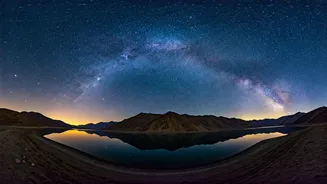
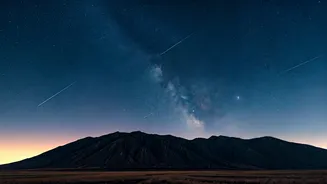
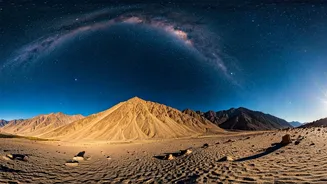
Ultimately, the recommendation for Ladakh goes beyond scientific metrics. Stargazing here is not just an activity; it's a profound experience. The stark, silent landscapes of places like Pangong Tso and the Nubra Valley provide a dramatic foreground to the cosmic theatre above. The feeling of being in such a remote, sparsely populated area, under a canopy of billions of stars, is humbling and awe-inspiring. Local communities, especially in places like Hanle, are now training as astro-guides, sharing their knowledge and telescopes with visitors, and adding a rich cultural layer to the journey. It’s the combination of pristine skies, breathtaking landscapes, and a deep sense of connection to the cosmos that makes Ladakh the undisputed champion for celestial events in India.