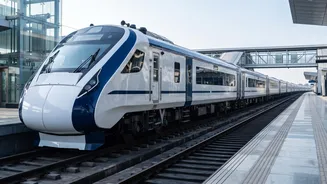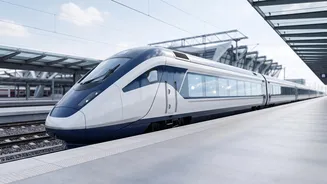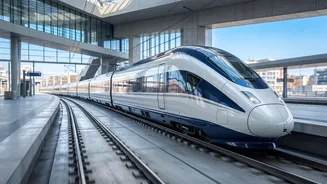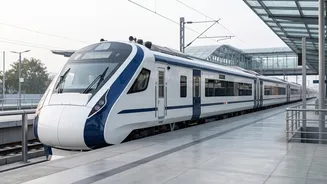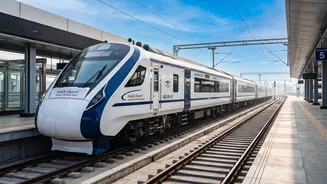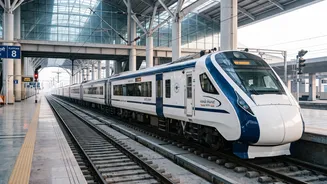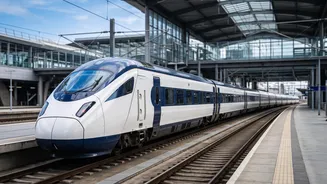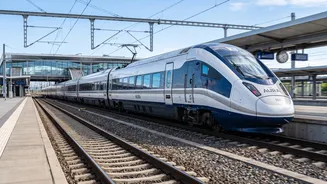








Indian Railways is expanding its popular Vande Bharat service into a new frontier: overnight travel. The much-anticipated sleeper version promises to redefine long-distance journeys with enhanced speed, comfort, and a significant boost in capacity.
A New Chapter in Overnight Travel
The
Vande Bharat Express has already changed the face of daytime inter-city travel in India, and now its sleeper variant is poised to do the same for overnight routes. Designed for journeys spanning 800 to 1,200 kilometres, these trains are Indian Railways' answer to growing demand for faster, more comfortable long-distance options. The first commercial Vande Bharat sleeper service was launched in January 2026, and the network is now expanding with new routes like Delhi-Varanasi and Mumbai-Bengaluru. This move signifies a major upgrade in premium train services, offering a modern alternative to established trains like the Rajdhani Express.
What's Inside the New Sleeper Train?
A standard 16-coach Vande Bharat sleeper train is designed to carry 823 passengers across three classes: AC First Class, AC 2-Tier, and AC 3-Tier. The configuration typically includes one First AC coach (24 passengers), four AC 2-Tier coaches (188 passengers), and eleven AC 3-Tier coaches (611 passengers). The interiors feature ergonomically designed berths with improved cushioning for better sleep quality. Passenger comfort is a clear priority, with features like automatic doors, sensor-based water taps in modern toilets, individual reading lights, and charging points for every passenger. Special attention has also been paid to reducing noise and vibrations, ensuring a smoother and quieter journey.
The Competitive Edge Over Rajdhani
For decades, the Rajdhani Express has been the benchmark for premium overnight travel in India. The Vande Bharat sleeper aims to surpass it in several key areas. A major advantage is its distributed power system, which allows for faster acceleration and deceleration compared to locomotive-hauled trains like the Rajdhani. This self-propelled design can significantly reduce journey times. For instance, the proposed Delhi-Varanasi sleeper is expected to complete the trip in about nine hours, compared to twelve hours on the Rajdhani. The new trains also boast advanced safety features, including the indigenous KAVACH anti-collision system, CCTV cameras, and fire detection systems, raising the bar for passenger safety.
Manufacturing and Future Rollout
The production of these advanced trainsets is a collaborative effort. The Integral Coach Factory (ICF) in Chennai is a key player in design and development. Manufacturing contracts have been awarded to major players like BEML, which is producing the initial rakes, and a consortium of Titagarh Rail Systems and BHEL, which is tasked with building 80 trainsets. Recent developments include a significant order placed with US-based Wabtec for critical components like braking systems and doors for 24-coach variants, indicating a move towards even higher capacity in the future. While the first prototype was rolled out in 2024, the fullscale rollout is a multiyear plan, with manufacturers like Titagarh aiming to deliver prototypes by midto late 2026 and ramp up production thereafter.
The Broader Impact on Indian Travel
The introduction of highercapacity Vande Bharat sleepers is more than just an addition of new trains; it's a strategic move to modernise the entire rail network. By offering a premium, highspeed alternative to both existing trains and air travel, Indian Railways is catering to a new generation of travellers who value both time and comfort. The expansion of services on key routes like MumbaiBengaluru will not only reduce travel time drastically but also ease the pressure on existing infrastructure. This development signals a clear vision for the future of Indian Railways, where speed, comfort, and capacity are central to the passenger experience, making train travel a more attractive option for millions across the country.