






The Cardio Contenders: What Are They?
Floor aerobics encompass a wide range of workouts performed on a solid surface. Think of high-impact step classes, dance fitness, or classic jumping jacks in your living room. These workouts rely on your body moving against gravity on a stable foundation.
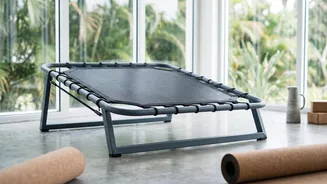
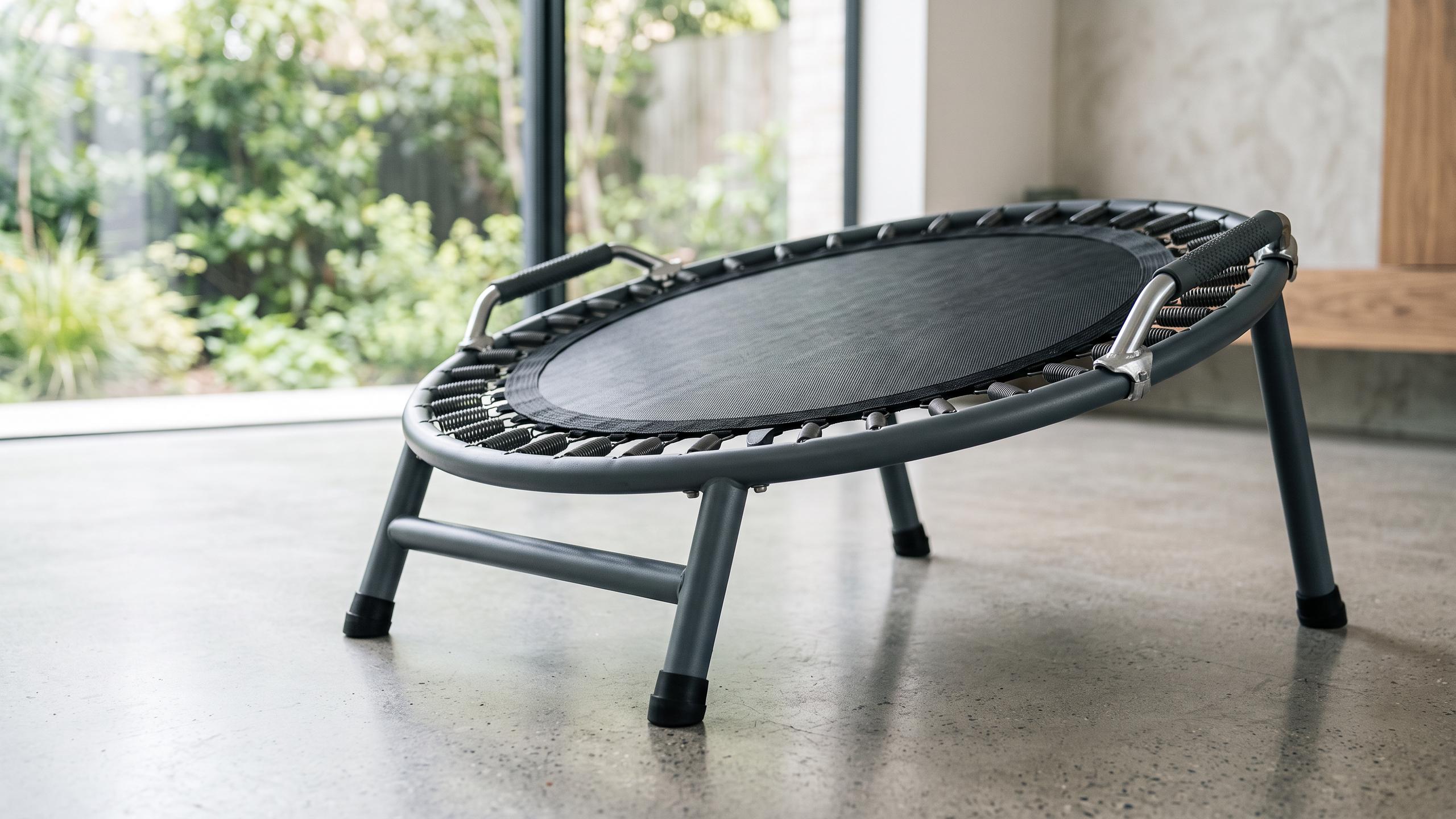
Rebounding, on the other hand, involves performing exercises on a mini-trampoline, also known as a rebounder. The workout consists of various types of bounces, from gentle 'health' bounces to high-intensity jumps, often choreographed to music in a class setting. While both get your heart pumping, the surface you work on is the game-changer.
Joint Impact: The Bounciest Difference
The most significant distinction lies in how these workouts treat your joints. Floor-based, high-impact aerobics involve your feet striking a hard surface, which sends shock through your ankles, knees, and hips. Over time, this can lead to stress or injury, especially for those with pre-existing joint issues or who are overweight. Rebounding is celebrated for being a low-impact exercise. The trampoline mat absorbs a huge percentage of the landing force—some estimates say up to 80%—drastically reducing the stress on your joints. This makes it an excellent alternative for people who want the intensity of a cardio workout without the punishing impact of running or traditional aerobics.
Calorie Burn and Heart Health
Both workouts provide excellent cardiovascular benefits, improving heart health and endurance. When it comes to burning calories, the numbers can be surprisingly close, but intensity is key. A vigorous step aerobics class can burn around 9.6 calories per minute. Similarly, a structured rebounding workout can burn between 9.4 and 12.4 calories per minute, depending on your body weight and the intensity of the moves. Some research suggests that due to the forces involved, rebounding may feel easier than it actually is, allowing people to work out longer and more consistently. In fact, a famous 1980 NASA study found that rebounding could be significantly more efficient than jogging for cardiovascular conditioning.
Muscle Engagement and Strength
Floor aerobics, especially step classes, are fantastic for building lower-body strength in the quads, hamstrings, and glutes. Rebounding offers a more comprehensive, full-body workout. The unstable surface forces your core and smaller stabiliser muscles to engage constantly just to maintain balance. Every bounce works your legs, glutes, and core. Additionally, the gravitational force experienced at the bottom of a bounce is believed to strengthen cells throughout the body, which is one reason NASA has studied it for astronauts who lose bone mass in space.
Beyond the Burn: The Lymphatic Boost
Here’s where rebounding claims a unique advantage: lymphatic drainage. Unlike your circulatory system, which has the heart as a pump, your lymphatic system relies on body movement to circulate lymph fluid, which helps remove toxins and waste. The vertical up-and-down motion of bouncing is thought to be uniquely effective at stimulating this flow, acting as a pump for the lymphatic system. Some studies suggest it can increase lymph flow by up to 15 times, helping to reduce inflammation and support immune function. While all exercise promotes circulation, the specific gravitational changes during rebounding are considered especially potent for this purpose.
Accessibility, Cost, and Fun Factor
Floor aerobics have a major advantage in accessibility—you can do them anywhere with minimal equipment. A good pair of shoes is often all you need. Rebounding requires a mini-trampoline, which involves an initial cost and dedicated space. However, many users find rebounding to be more fun and playful than traditional workouts, which can be a powerful motivator for consistency. The feeling of childlike joy while bouncing can make a challenging workout feel less like a chore and more like play, increasing the likelihood that you'll stick with it.