





Start with a Smart Plan
Before you start buying plants and pots, take a moment to assess your space. Note how much direct sunlight your balcony receives and at what times of day, as this will determine which plants will thrive. Measure your space to understand how many planters
you can accommodate without it feeling cluttered. Set a simple budget. A beautiful renovation is possible even with limited funds by focusing on smart, affordable choices. Planning ahead prevents impulse buys and ensures every rupee is well spent on creating a cohesive and sustainable green corner.
Choose Budget-Friendly Planters
You don't need expensive pots to create a stunning display. Many affordable and stylish options are available. Look for lightweight plastic, resin, or metal planters, which are often cheaper and easier to hang than heavy ceramic ones. Coir planters, made from coconut husks, are another excellent, eco-friendly, and durable choice. For a truly zero-cost approach, get creative with upcycling. Old plastic bottles, paint cans, coconut shells, and even kitchen sifters can be transformed into unique hanging planters with a bit of paint and creativity. Macrame hangers, which you can either buy affordably or make yourself with some rope, can hold simple pots and add a bohemian touch.
Select Hardy and Low-Maintenance Plants
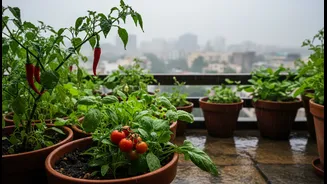
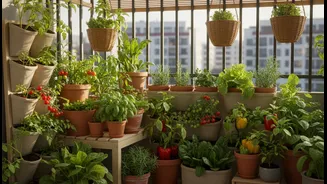
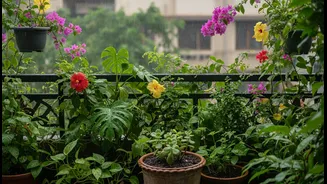
The right plants are key to a successful and low-effort balcony garden. For Indian climates, choose varieties that are resilient and don't require constant attention. Trailing plants are perfect for hanging baskets as they create a beautiful cascading effect. Good options include Pothos (Money Plant), Spider Plant, Philodendron, and English Ivy. These are known for being tough and can tolerate a range of light conditions. For a splash of colour, consider flowering plants like Petunias, Bougainvillea, Portulaca (Moss Rose), and Begonias. If you have a sunny spot, you can even grow herbs like mint and basil or vegetables like cherry tomatoes in hanging baskets.
Focus on Safe and Secure Installation
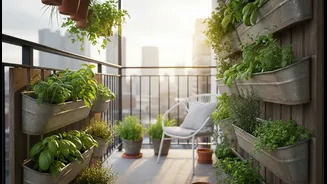
Safety is crucial when hanging anything on a balcony. The combined weight of the pot, soil, and a fully watered plant can be significant. For renters or those who want to avoid drilling, there are many no-drill options. Railing planters with hooks are a simple and effective way to use your balcony railings without causing damage. You can also use tension rods installed between the floor and ceiling or between two walls to hang lightweight plants. If you do drill, ensure you are anchoring hooks into a solid part of the ceiling, like a joist, and use hardware that is rated to hold more than the expected weight of your planter. For extra security against strong winds, you can use zip ties to lock hooks onto railings.
Create a Visually Appealing Arrangement
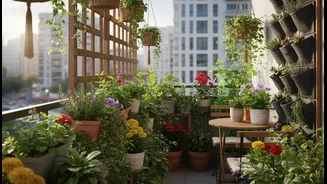
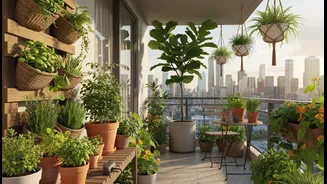
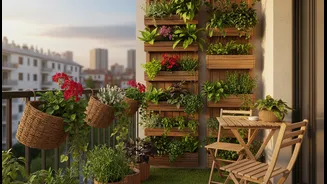
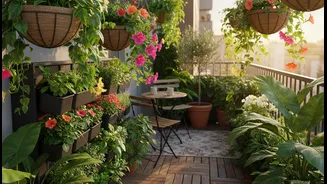
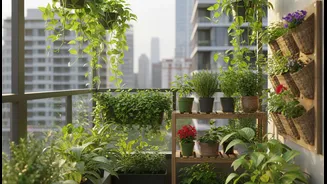
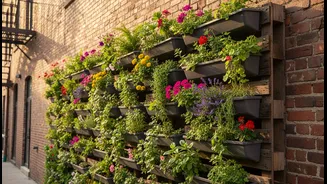
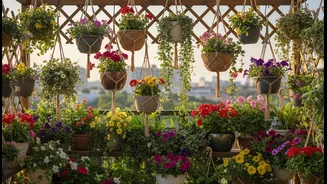
The final step is to arrange your planters for maximum impact. The secret to a professional-looking balcony garden is creating layers and variety. Hang planters at different heights to draw the eye upward and create a sense of depth. Mix different types of plants to play with textures and colours—combine a trailing vine with an upright flowering plant, for example. Grouping planters in clusters of three or five often looks more deliberate and stylish than scattering them randomly. Using vertical space is the most effective tool for a small balcony, making it feel lush and full without taking up valuable seating or floor area.