






What is the Bharatiya Antariksha Station?
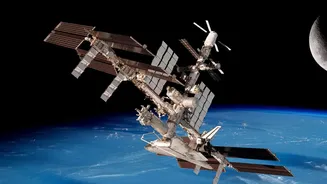
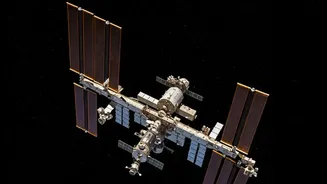
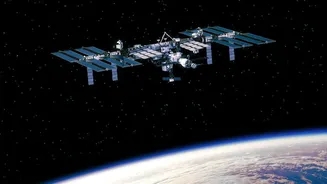
The Bharatiya Antariksha Station (BAS) is a modular space station planned by the Indian Space Research Organisation (ISRO). Think of it as India’s first permanent address in low-Earth orbit, approximately 400-450 kilometres above our planet. Unlike short-term
missions, the station is designed for astronauts to live and work for extended periods, potentially for three to six months at a time. The project is a natural and ambitious successor to the Gaganyaan programme, which is developing the capability to send Indian astronauts into space. Once complete, the station will serve as a cutting-edge laboratory for science and a crucial stepping stone for future deep-space exploration.
The Phased Assembly in Orbit
Building a space station isn't a single launch event but a carefully phased construction project in orbit. ISRO has confirmed the full station will be assembled from five distinct modules. The first component, known as BAS-01, is a base module scheduled to be launched by 2028 using the powerful LVM3 rocket. This initial module will be robotic and serve as a testbed for crucial technologies like docking, life support, and power management. Following this, subsequent modules will be added over several years, with the entire 52-tonne station targeted for completion and full operation by 2035. This modular approach allows ISRO to test and validate each stage before committing to the next, ensuring the long-term success of this complex endeavour.
What Will Happen Onboard?
The primary purpose of the Bharatiya Antariksha Station is to conduct scientific research in a microgravity environment—conditions that are impossible to replicate on Earth for long periods. The station will host experiments in a wide range of fields, including life sciences, material science, pharmaceuticals, and biotechnology. For instance, scientists can study the effects of prolonged space travel on the human body, such as muscle atrophy and bone density loss, which is critical knowledge for future missions to the Moon and beyond. It will also be a platform for developing and testing new space technologies, such as in-orbit refuelling and advanced robotics. This floating laboratory will unlock new scientific insights and drive technological innovation back on Earth.
Why a Space Station Matters for India
Establishing an orbital station is more than just a scientific achievement; it holds immense strategic and national significance. For one, it cements India’s position as a major global space power, joining the ranks of the US, Russia, and China, which have demonstrated this capability. An independent station ensures that India is not reliant on international partners for access to space for long-duration research. Economically, the project is expected to boost India's share in the global space economy by fostering high-tech manufacturing and creating opportunities for startups. Furthermore, a landmark project like the BAS is a powerful source of inspiration for a new generation, encouraging young people to pursue careers in science, technology, engineering, and mathematics (STEM).
The Road Ahead: Challenges and Vision
The path to 2035 is ambitious. ISRO is simultaneously advancing several critical technologies, including the Gaganyaan human spaceflight mission, a next-generation launch vehicle, and autonomous docking capabilities, all of which are foundational to the station's success. The first module alone is estimated to cost approximately ₹1,763 crore. While the challenges are significant, the vision is clear. As confirmed by ISRO chairman Dr. V Narayanan, the government has approved the first module, moving the project from a plan into an actively funded engineering effort. This is part of a larger roadmap that includes landing an Indian on the Moon by 2040. Each successful step, from the Gaganyaan test flights to the launch of BAS-01, brings India closer to this incredible future.