



The Coolest Science in Orbit
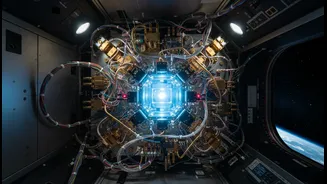
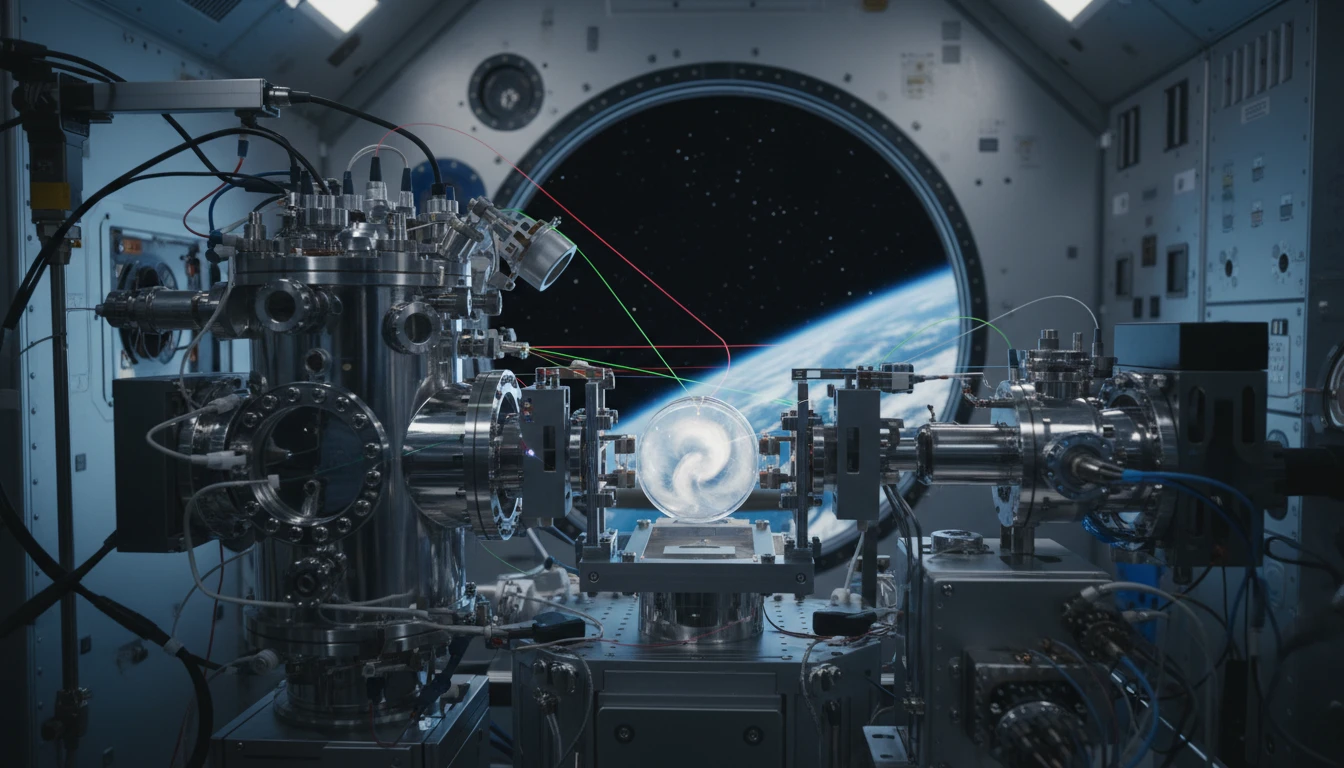
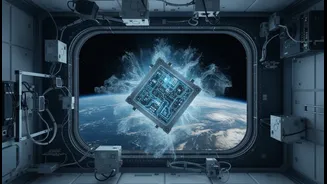
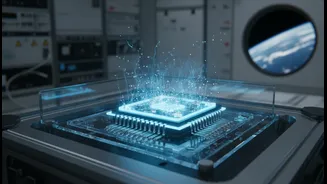
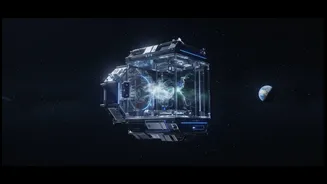
The Cold Atom Laboratory (CAL) is a one-of-a-kind physics facility that has been operating aboard the International Space Station since 2018. Its mission is to study how atoms behave at temperatures just a fraction of a degree above absolute zero, or minus
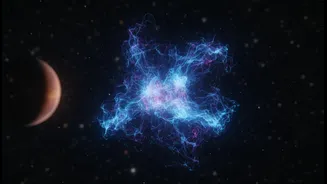
273.15 degrees Celsius. At these extreme lows, atoms slow to a near standstill and can enter a fifth state of matter, called a Bose-Einstein condensate (BEC). In this state, a cloud of individual atoms begins to act like a single, massive wave, allowing scientists to observe quantum phenomena on a macroscopic scale. This strange behaviour was first predicted by Albert Einstein and Indian physicist Satyendra Nath Bose in the 1920s but only created in a lab in 1995.
Why Space is the Ideal Laboratory
Creating and studying these delicate quantum states on Earth is incredibly challenging. Gravity is a major hurdle; as soon as the atoms are released from their magnetic traps for observation, they fall and dissipate in fractions of a second. The microgravity environment of the ISS effectively eliminates this problem. By conducting these experiments in constant free fall, scientists can observe the ultracold atom clouds for much longer periods—over a second, compared to mere milliseconds on Earth. This extended observation time is crucial for making more precise measurements and probing the subtle forces that govern the quantum world.
A New Chapter of Discovery
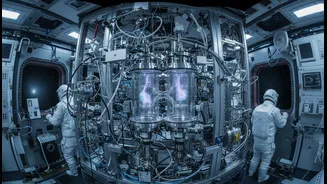
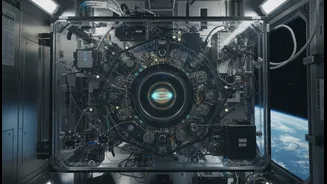
In mid-2026, the Cold Atom Lab began its next major scientific phase following a significant hardware upgrade. This is the fourth major enhancement since the facility was installed. The new equipment, delivered to the station in April 2026 and installed by astronauts, includes a redesigned magnetic trap and improved atom sources. These enhancements give scientists unprecedented control, allowing them to create larger condensates and manipulate the shape of the quantum gas clouds. This new flexibility opens the door to entirely new kinds of experiments, pushing the facility's capabilities far beyond its initial design.
From Fundamental Physics to Future Tech
The research conducted in the Cold Atom Lab isn't just about satisfying scientific curiosity; it's laying the groundwork for next-generation technologies. The ultra-precise measurements enabled by cold atoms could lead to dramatically improved sensors, atomic clocks, and navigation systems. One day, these technologies could allow astronauts to navigate deep space with pinpoint accuracy without relying on GPS. The experiments also aim to test fundamental principles of physics, such as Einstein's theory of relativity, and could even shed light on cosmic mysteries like dark matter and dark energy.