





Beyond the Six-Pack: What Is Your Core Anyway?
When most people hear “core workout,” they immediately think of sculpted abs. While a strong core can certainly contribute to a toned midsection, its true purpose is far more fundamental. Think of your core as the central link connecting your upper and
lower body. It’s an interconnected group of muscles in your pelvis, lower back, hips, and abdomen that work in harmony. These muscles act as a stabilizer for your entire body, allowing you to do everything from bending down to tie your shoes to playing a sport. A strong, stable core improves your posture, enhances balance, and is crucial for preventing injuries, especially lower back pain which affects a vast number of adults. In short, a functional core isn't about aesthetics; it’s about making nearly every physical activity you do easier and safer.
Taming the Overwhelmed Brain
The headline's promise to “reduce unnecessary complexity” might seem like a stretch for a few daily exercises, but the magic lies in the power of routine. Our brains are wired to seek patterns and predictability. When we establish a routine, we automate choices, which reduces cognitive load and decision fatigue. Instead of waking up and wondering if, when, or how you’ll exercise, the decision is already made. That one small, automated choice frees up significant mental energy for the more complex and unpredictable challenges of the day. This sense of predictability can lower baseline anxiety and create a feeling of control, acting as an anchor in an otherwise chaotic schedule. A simple physical routine provides a moment of focus and predictability, creating a stable foundation to build your day upon.
Consistency Over Intensity
The key to unlocking these benefits isn't spending hours in the gym. In fact, the goal of reducing complexity is best served by a routine that is simple and sustainable. Starting with small, manageable goals is crucial for building a lasting habit. A 10-minute core session performed consistently every day is far more beneficial than a grueling hour-long workout once a week. Consistency strengthens the neural pathways that form habits, making the activity feel less like a chore and more like a natural part of your day, like brushing your teeth. Furthermore, regular, modest exercise is proven to boost mood, increase energy levels, improve sleep, and relieve stress by helping the body regulate hormones and release endorphins. By focusing on a short, repeatable routine, you get both the physical benefits of a stronger core and the powerful mental benefits of a consistent daily ritual.
Your 10-Minute Core Foundation
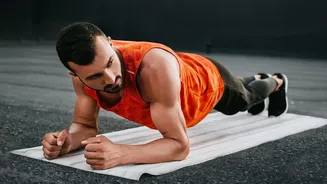
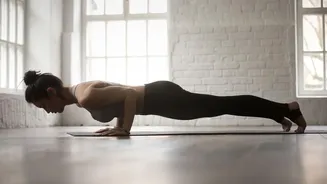
You don't need any equipment or a gym membership to build a powerful core routine. The goal is to choose a few effective exercises that target the different muscle groups of the core. Perform each of these for 45 seconds, rest for 15 seconds, and repeat the circuit two times for a highly effective 10-minute workout. 1. Plank: A classic for a reason. Hold a push-up position, keeping your back flat and your abdominal muscles engaged. This strengthens your entire core in a coordinated way. 2. Bridge: Lie on your back with your knees bent and feet flat on the floor. Tighten your stomach and lift your hips off the floor until they align with your knees and shoulders. This is excellent for your glutes and lower back muscles. 3. Bird-Dog: Start on all fours. Extend your right arm straight forward and your left leg straight back, keeping your hips level and core tight. Return to the start and switch sides. This improves stability and coordination. 4. Dead Bug: Lie on your back with your arms extended toward the ceiling and your knees bent at a 90-degree angle over your hips. Slowly lower your right arm and left leg toward the floor simultaneously, then return and switch sides. This targets deep core muscles without straining the back.
Making the Habit Stick
Knowing what to do is only half the battle; making it a permanent fixture in your life is the other. The best way to create a sustainable habit is to link it to an existing one. For example, decide to do your core routine immediately after you get out of bed or while your morning coffee is brewing. This technique, known as habit stacking, uses the momentum of an established routine to carry you into the new one. Treat the workout as a non-negotiable appointment with yourself. It can also help to focus on how the routine makes you feel—more stable, more energetic, and more in control—rather than just on the physical outcome. This intrinsic reward helps reinforce the habit loop, making you more likely to stick with it for the long haul.