



Understanding the Price Rise
The increase in edible oil prices is a significant issue, especially as India imports nearly two-thirds of its vegetable oil. Factors like international market dynamics and import duties play a major role in the costs you see on the shelf. While the government
is considering measures like cutting import duties to ease the burden on consumers ahead of the festive season, households can also make immediate changes in the kitchen to navigate this period of inflation.
Swap Your Cooking Techniques, Not Your Dishes
You don't need to give up your favourite family recipes. Instead, focus on cooking methods that require less oil. Investing in good quality non-stick or cast-iron cookware is a great first step, as it can significantly reduce the amount of oil needed to prevent food from sticking. Techniques like steaming vegetables instead of frying them, or using an air fryer for snacks like kebabs and pakoras, can deliver crispy results with minimal to no oil. For curries, a common mistake is adding more oil when the masala sticks to the pan. A better approach is to deglaze the pan with a splash of water or vegetable broth to keep the ingredients moving without adding extra fat.
Make Smarter 'Tadka' and Masala
The 'tadka' or tempering is the soul of many Indian dishes, but it doesn't need to swim in oil to be flavourful. One effective technique is to dry roast whole spices like cumin, mustard, and coriander seeds in a hot pan for about 30 to 40 seconds before adding them to your dish. This process releases their essential oils and aromas without relying on fat. When you do add oil, use it strategically. Cold-pressed oils like mustard or groundnut oil carry more flavour than refined oils, meaning you can often use less to achieve the same taste. Using a spray bottle or a brush to apply a thin, even layer of oil instead of pouring it directly from the bottle is another highly effective way to control consumption.
Incorporate Low-Oil and Zero-Oil Recipes
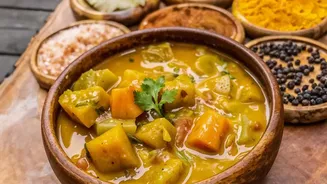
Embracing recipes that are naturally low in oil can bring variety to your weekly menu and ease the pressure on your wallet. Dishes like Baingan Bharta, where the eggplant is flame-roasted for a smoky flavour, require very little oil for the final sauté. Similarly, many dals can be made with a zero-oil 'tadka' by sizzling spices in a hot, dry non-stick pan with a little water. Other options include steamed snacks like Dhokla, protein-rich Moong Dal Cheela, or a simple Lauki Chana Dal Sabzi where everything is cooked together in a pressure cooker with minimal fat. You can also replace oil with other ingredients to add richness and texture; for instance, using yogurt or curd can add creaminess to curries.
Choose the Right Oil and Use It Wisely
While the goal is to reduce consumption, the type of oil you use also matters. For Indian cooking, traditional cold-pressed oils like mustard, groundnut, and sesame oil are often recommended because they are flavourful and suited to various cooking temperatures. Blending oils can also be a good strategy to get a balance of fatty acids. However, be mindful of which oil you use for which task. Some oils, like extra virgin olive oil, are best used for dressings and not for high-heat frying. Ultimately, the key is moderation. Even with healthier oils, using less is the most direct way to manage both your budget and your health.