


Understanding Space Weather
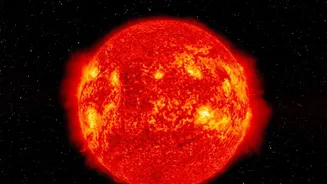
Space weather refers to the changing conditions in space driven by the Sun's activity. The primary culprits are solar flares and, more significantly, Coronal Mass Ejections (CMEs). CMEs are colossal eruptions of plasma and magnetic fields from the Sun's outer
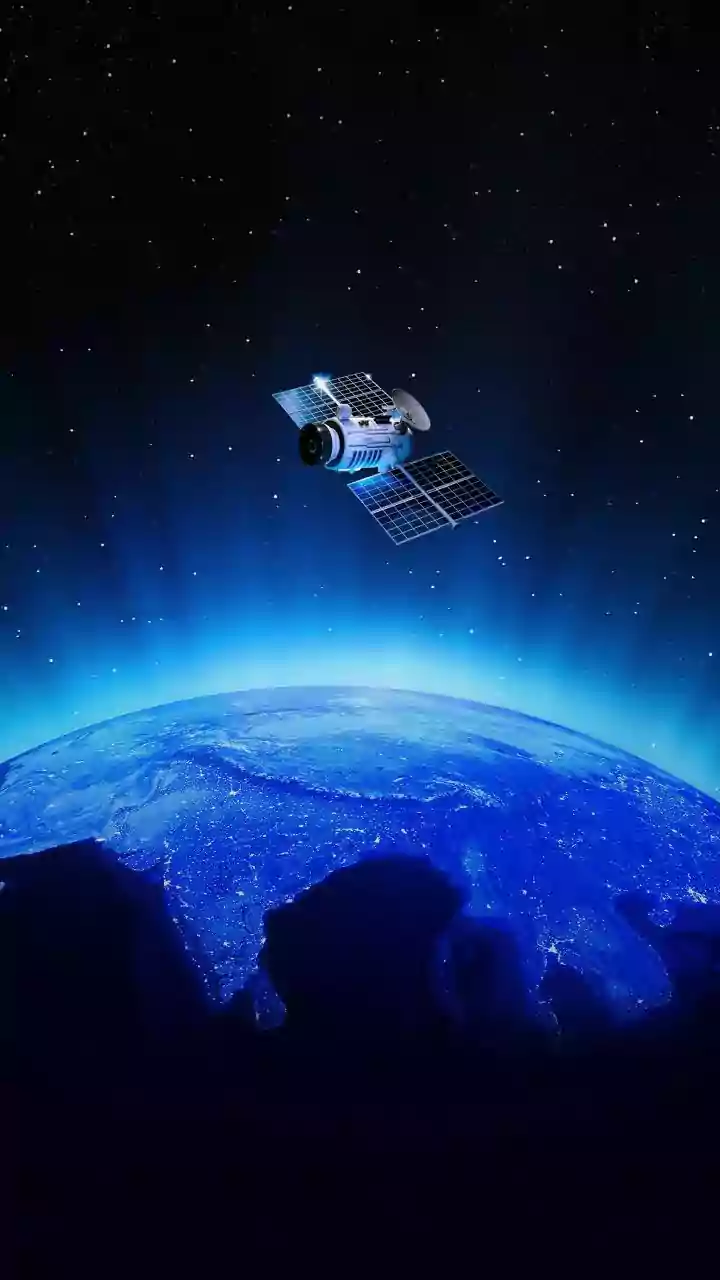
atmosphere, the corona. These billion-tonne clouds of material travel through space at immense speeds. If a CME hits Earth, it can trigger a geomagnetic storm by interacting with our planet's magnetic shield. These storms can have serious consequences, inducing currents in power lines that lead to widespread blackouts, damaging critical satellites used for GPS and communication, and disrupting radio signals essential for aviation.
A Constant Watch From Point L1
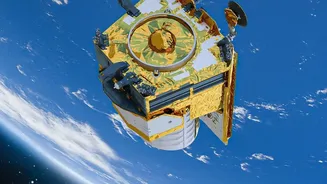
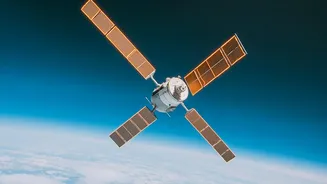
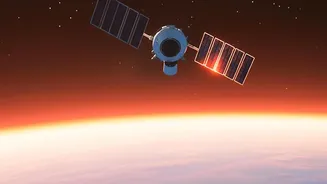
To effectively forecast this celestial threat, we need to see it coming. This is where Aditya L1's unique position comes in. The spacecraft is stationed at Lagrange Point 1 (L1), about 1.5 million kilometres from Earth. At this specific point in space, the gravitational pull from the Earth and the Sun balance out, allowing the satellite to maintain a stable position. This provides an uninterrupted, continuous view of the Sun, without any eclipses or occultations. This constant watch is fundamental for early detection, giving scientists the lead time needed to issue warnings before a solar storm reaches us.
Decoding the Corona's Secrets
The key to better forecasts lies in understanding where CMEs are born: the solar corona. Aditya L1 is equipped with seven instruments, but its primary payload for this task is the Visible Emission Line Coronagraph (VELC). A coronagraph is a special telescope that blocks the overwhelming glare of the Sun's main disk, allowing scientists to study the much fainter corona. By observing the corona, VELC can detect the very initiation of a CME. Recent findings from VELC have provided unprecedented details about the temperature, velocity, and density of the plasma as it erupts from the Sun. This is a major leap forward, as we can now study the origin of these events in detail, not just their effects when they are already hurtling through space.
From Raw Data to Early Warning
The data from VELC and other Aditya L1 instruments is transforming how we predict space weather. By observing the initial moments of a CME, scientists can analyse its characteristics right at the source. This includes understanding its structure and how the Sun's magnetic fields might deflect its path through the solar system. This information is critical for determining if a CME is Earth-directed and for improving the accuracy of its arrival time. Previously, forecasts relied more heavily on observing a CME once it had already left the Sun. Aditya L1's ability to see the 'onset' of these events provides crucial hours, sometimes days, of extra warning time. This allows satellite operators to put their spacecraft in a safe mode, power grid managers to protect their networks, and airlines to reroute flights away from polar regions where radiation effects are strongest.
Protecting Our Digital Infrastructure
For a nation rapidly expanding its digital footprint, these advancements are not just academic. India's reliance on technology—from digital payments and satellite television to advanced navigation and a growing network of space assets—makes it vulnerable to the disruptions of space weather. The enhanced forecasting ability provided by Aditya L1 is a form of national insurance. It helps safeguard our critical infrastructure and ensures the resilience of services that millions of Indians use daily. By contributing this vital data, ISRO's mission is not only advancing our scientific understanding of the Sun but also playing a direct role in protecting our modern way of life from cosmic disturbances.