


The Classic Messy Fishtail
The fishtail braid looks intricate and impressive, but it's surprisingly simple to create. It's a two-strand braid, not three, which gives it its unique herringbone pattern. For a loose, everyday feel, the key is not to aim for perfection. Start by pulling
your hair into a low or side ponytail. Split the ponytail into two equal sections. Take a small piece from the outside of one section and cross it over to the inside of the other section. Repeat on the opposite side, continuing this pattern all the way down. Once secured, gently pull the edges of the braid apart to create a fuller, 'pancaked' effect. This technique of loosening the loops makes the braid look thicker and gives it that sought-after relaxed vibe.
The Effortless Dutch Braid
A Dutch braid, often called a 'reverse French braid', creates a bold braid that sits on top of the hair rather than blending into it. The technique is nearly identical to a French braid, but instead of crossing sections over the middle, you cross them under. To start, take a section of hair at your hairline and split it into three. Cross the right strand under the middle, then the left strand under the middle. Continue this pattern, adding a small amount of new hair to each outer strand before you cross it under. Don't worry about keeping it super tight. Once you've braided to the nape of your neck, you can continue with a standard three-strand braid. For that loose, everyday style, gently tug on the sides of the finished braid to add volume and a softer finish.
The Deceptively Simple Pull-Through Braid
If you struggle with traditional braiding, the pull-through braid is a game-changer. It creates the illusion of a thick, complex braid using nothing but a series of ponytails and elastics. Start with a small ponytail at the crown of your head and another one directly below it. Split the top ponytail into two halves. Pull the bottom ponytail up and through the split, clipping it out of the way on top of your head. Now, take the two split sections from the first ponytail and add some more hair from the sides, securing them together with an elastic to form a new ponytail. Release the clipped section, which is now your top ponytail, and repeat the process. Continue all the way down, then gently pull on the 'bubbles' to create that signature voluminous look.
The Romantic Half-Up Braid
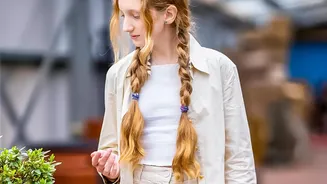
A half-up braid offers the perfect compromise, keeping hair out of your face while letting your long locks flow freely. This style is incredibly adaptable. You can create two small, simple braids from either side of your temple and pin them together at the back of your head for a boho-inspired headband effect. Another popular option is to start a single French or Dutch braid at your crown, braiding for just a few inches before letting the rest of your hair hang loose. For a fishtail variation, create two small fishtail braids on either side and tie them together at the back. These styles are quick, easy, and add a touch of romance to any look.
Tips for the Perfect 'Undone' Look
Achieving that perfectly imperfect loose braid takes a little technique. Before you start, prepping your hair can make a huge difference. If your hair is very clean or silky, it can be hard to grip. A light mist of dry shampoo or texturizing spray will add some grit and hold, making the hair easier to manage. When braiding, don't pull too tightly. A looser grip is key to an effortless look. The most important step often comes after the braid is secured: pancaking. This involves gently pulling on the outer loops of the braid to widen them. Start at the bottom and work your way up for a fuller, more relaxed appearance. Finally, don't be afraid of a few flyaways; they add to the charm of an everyday style.