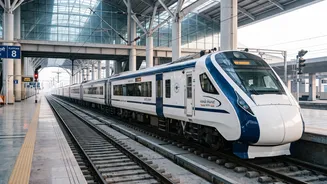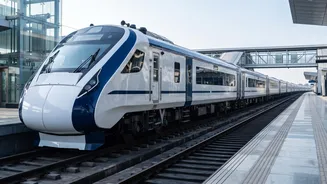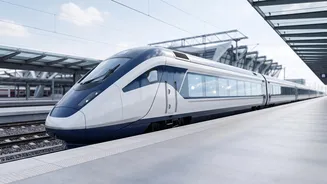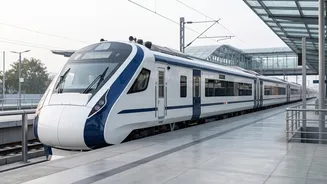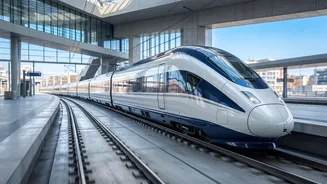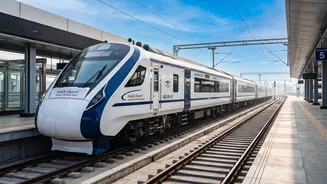






Indian Railways is planning a major upgrade to its long-distance services by developing a new, longer sleeper train prototype. This move aims to tackle the perennial issue of waitlisted tickets and enhance passenger capacity on high-demand routes.
A New Era: The 24-Coach Sleeper Train
After
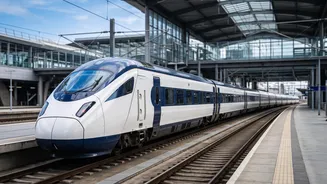
the initial rollout of 16-coach Vande Bharat sleeper trains, Indian Railways is now setting its sights on a bigger model: a 24-coach variant designed specifically for high-traffic, long-distance overnight journeys. The Integral Coach Factory (ICF) in Chennai has been given the responsibility of manufacturing 50 of these extended trainsets. This development marks a significant step up from the initial 16-coach sleeper prototypes, which have a capacity of around 823 passengers. The new 24-coach version aims to become one of the longest and highest-capacity sleeper trains manufactured in India, directly addressing the ever-growing demand for train berths across the country.
Why Go Longer?
The primary motivation behind developing a 24-coach train is simple: capacity. By adding more coaches, Indian Railways can offer significantly more berths on a single journey, a crucial move in a country where trains often run at full capacity with long waitlists. This initiative is part of a broader strategy to double the train handling capacity in major cities by 2030. The longer train will also come with enhanced features. Unlike the 16-coach versions, the 24-coach design is planned to include a dedicated pantry car, allowing for hot food to be prepared and served during the journey. It is also expected to feature more toilets to accommodate the increased passenger load, further improving the onboard experience.
Upgraded Comforts for Overnight Travel
The new generation of Vande Bharat sleeper trains, including the upcoming 24-coach variant, promises a paradigm shift in passenger comfort. The interiors are being designed with a focus on a superior travel experience. Berths are expected to be wider and better cushioned, while the design for accessing upper berths has been re-engineered for ease of use. Modern, aircraft-style bio-vacuum toilets with odour-control systems will be standard. For those in AC First Class, the trains will offer the luxury of hot_water showers. Additional features like individual reading lights, automatic interconnecting doors, fully sealed gangways for cleanliness and temperature control, and the indigenous KAVACH anti_collision system for safety are set to become standard.
The Infrastructure Challenge
While adding coaches seems straightforward, it presents significant logistical and infrastructural challenges. A train's length is fundamentally limited by the railway network's infrastructure. Key constraints include the length of station platforms, loop lines (tracks used for temporary halts to allow other trains to pass), and maintenance facilities like washing lines. For years, most modern LHB (Linke Hofmann Busch) trains have been capped at 22 coaches because their longer individual coach length already pushes the limits of existing infrastructure. Successfully operating a 24_coach train will require a coordinated effort to upgrade platforms and other facilities along its designated routes, a complex and expensive undertaking that explains why such long trains are not already commonplace.
From Blueprint to Reality
The journey for the 24_coach sleeper is just beginning. According to reports, the design is in its final stages and is expected to be completed by November 2026. Following this, the Integral Coach Factory aims to roll out a prototype by mid_2027, with June being a target month. Once the prototype is ready, it will undergo a period of rigorous trials to test its safety, stability, speed, and performance under various conditions, much like the extensive trials conducted for the 16_coach version which was tested at speeds up to $180$ km/h. These trials are essential to ensure the new train is safe and reliable for long distance passenger service before it can be cleared for commercial operation.