



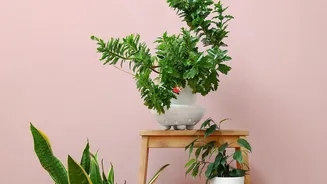
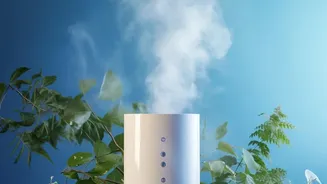

The idea of a home filled with lush greenery doubling as a natural air filter is appealing. But while houseplants add beauty and life to our spaces, can they truly purify the air we breathe? The science says it's not that simple.
The Myth's Green Roots
The popular belief that
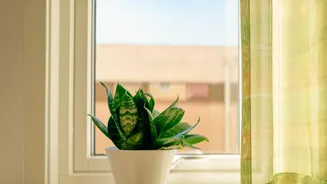
houseplants are effective air purifiers largely stems from a 1989 NASA study. Facing the challenge of keeping the air clean in sealed space stations, researchers explored whether plants could filter out airborne toxins. The study placed various common houseplants in small, sealed chambers and injected volatile organic compounds (VOCs) like formaldehyde and benzene. The results were promising: the plants did absorb some of these pollutants over the course of hours and days. This finding was widely reported and quickly grew into the idea that a few snake plants and peace lilies could scrub a home's air clean.
From a Sealed Lab to Your Living Room
The problem is that a sealed NASA chamber has very little in common with a typical house or apartment. Your home has a much larger volume of air, which is constantly being exchanged with the outdoors through windows, doors, and ventilation systems. This air exchange dilutes pollutants far faster than plants can absorb them. Subsequent research reviews have put the NASA findings into a real-world context. One 2019 analysis found that you would need an astonishing 10 to 1,000 plants per square meter of floor space to compete with a building's standard air exchange rate, let alone an actual air purifier. In short, the handful of plants in your living room have a negligible effect on air quality.
What Houseplants Are Actually Good For
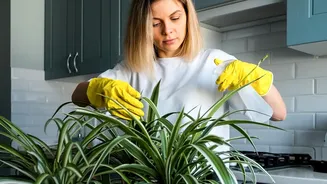
This doesn't mean your houseplants are useless. Far from it. While they aren't powerful air cleaners, their benefits for mental and emotional well being are well documented. Studies have shown that interacting with indoor plants can reduce stress, boost mood, improve concentration, and lower anxiety. The simple act of caring for a plant can provide a sense of purpose and accomplishment. They connect us to nature, especially in urban environments, and their aesthetic value can make a space feel more comfortable and vibrant. So, while they won't clean your air, they can certainly improve your quality of life.
How Air Purifiers Get the Job Done
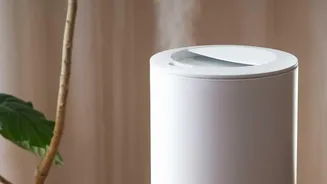
For actually removing pollutants from indoor air, you need a machine designed for the task: an air purifier. Unlike plants, which are passive, air purifiers actively draw in large volumes of air and force it through a series of filters. The most effective models use High Efficiency Particulate Air (HEPA) filters. A HEPA filter is a dense mechanical web that is certified to capture 99.97% of airborne particles down to 0.3 microns in size. This includes common irritants like dust, pollen, pet dander, mold spores, and smoke particles that plants cannot remove. Many purifiers also include an activated carbon filter, which is designed to trap gaseous pollutants and VOCs, the very chemicals from the original NASA study.
The Verdict : The Right Tool for the Right Job
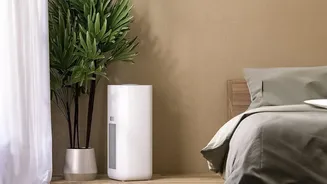
When comparing houseplants and air purifiers , it isn 't a matter of one being 'bad ' and the other 'good ' . It 's about understanding their completely different functions . A HEPA air purifier is a high - performance tool for a specific job : actively and efficiently removing harmful particles and gases from the air . Their air cleaning capacity is thousands of times greater than that of a plant . Houseplants are a lifestyle enhancement . They boost mental health , reduce stress , and beautify your environment . The ideal approach for a healthy home is to use both . Rely on an air purifier for the heavy lifting of air filtration and fill your home with plants for the joy and tranquility they provide .