

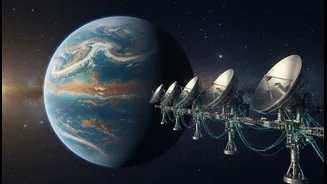


The Promise of a 'Hycean' World
Located 124 light-years away, K2-18b captured the world's imagination. Observations from the James Webb Space Telescope (JWST) detected methane and carbon dioxide in its atmosphere. This led to the tantalising classification of K2-18b as a potential 'Hycean'
world—a hypothetical planet covered by a deep, liquid-water ocean beneath a hydrogen-rich atmosphere. For scientists hunting for life, this was a landmark moment. The ingredients seemed right. Then, in early 2025, a team of astronomers announced they had detected a faint signal of dimethyl sulfide (DMS). On Earth, DMS is overwhelmingly produced by marine life, like phytoplankton. The news was electrifying, suggesting not just a habitable environment, but one that might already be inhabited.
The Search for a Second Opinion
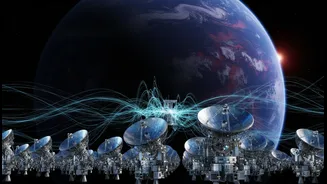
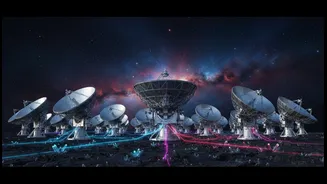
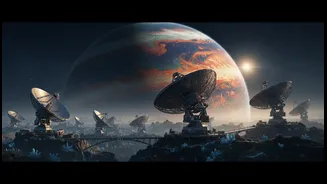
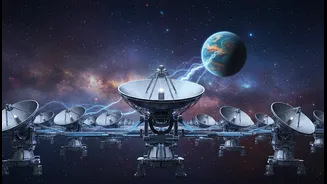
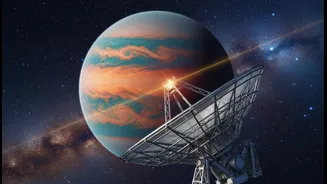
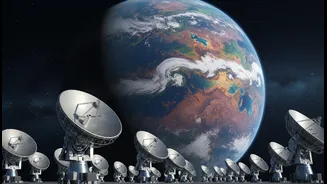
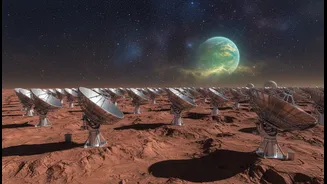
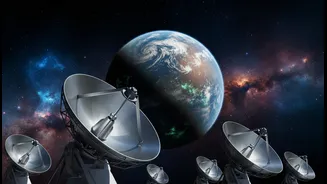
Extraordinary claims require extraordinary evidence. While the DMS detection was statistically significant, it wasn't a slam dunk, and many scientists urged caution. The faint signal could be statistical noise or a different molecule altogether. This is where other forms of astronomy become crucial. The headline-making claim was based on JWST's ability to see what gases absorb light in the planet's atmosphere. But what about listening? Recently, researchers aimed some of the world's most powerful radio telescopes, including the Very Large Array (VLA) and MeerKAT, at the K2-18 system. Their goal was different: they were conducting a search for extraterrestrial intelligence (SETI) by scanning for artificial radio transmissions, or 'technosignatures'.
A Different Kind of Silence
The comprehensive radio survey came up empty-handed for alien broadcasts. After filtering out millions of potential signals from Earth-based interference and other sources, no convincing technosignatures were found. While this doesn't disprove the existence of microbial life—after all, phytoplankton don't build radio transmitters—the process of studying the planet with different instruments has provided a more complete, and sobering, picture. Other analyses of the JWST data have also cast doubt on the initial DMS claim, suggesting the signal is not statistically significant or could be explained by non-biological processes. Some models suggest K2-18b isn't a temperate water world at all, but a gas-rich 'mini-Neptune' with no habitable surface, or even a scorching 'magma ocean' world.
Not a Failure, but Science at Work
So, is the dream of life on K2-18b over? For now, the more sensational claims have been tempered by a healthy dose of scientific skepticism and further investigation. The debate over whether K2-18b is a habitable Hycean world or an inhospitable mini-Neptune continues. The initial DMS signal, once a beacon of hope, is now seen as highly uncertain. But this is not a failure. It is a perfect example of the scientific method in action. One set of observations proposes a radical new idea, and other independent teams test it, question it, and offer alternative explanations. This rigorous process of verification and debate is what separates speculation from discovery. The story of K2-18b isn't just about one planet; it's a valuable dress rehearsal for how we will handle potential signs of life in the future.