


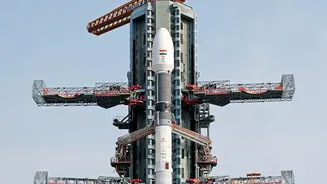

India's Solar Sentinel Reports for Duty
Since its celebrated launch, ISRO's Aditya-L1 mission has been a source of national pride. Positioned 1.5 million kilometres from Earth at a special spot called Lagrange point 1 (L1), the spacecraft has an uninterrupted view of the Sun. This mission isn't
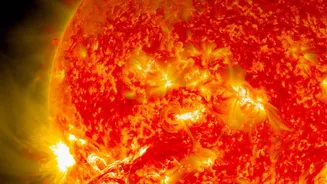
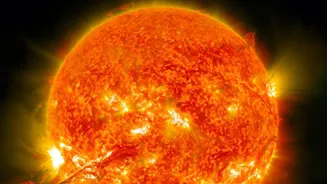
just about taking pretty pictures; it's India’s first dedicated solar observatory, designed to unlock the secrets of our star. Its primary goal is to study the Sun's atmosphere, its ferocious eruptions, and the constant stream of particles it emits, known as the solar wind. Recently, ISRO confirmed that key instruments aboard the satellite have begun sending back crucial data, marking a significant milestone in this ambitious scientific endeavour.
Decoding the Solar Wind
So, what exactly has Aditya-L1 been measuring? The headline news is its analysis of the solar wind. This isn't wind like we experience on Earth; it's a superfast flow of charged particles—mostly protons and electrons—that blast out from the Sun's scorching hot outer atmosphere, the corona. This wind travels at incredible speeds, often reaching over a million kilometres per hour. Aditya-L1's instruments, such as the Aditya Solar wind Particle Experiment (ASPEX) and the Plasma Analyser Package for Aditya (PAPA), are designed to measure the speed, density, and composition of this particle stream directly. These 'in-situ' measurements are vital because they help scientists understand the forces that drive space weather.
Meet the Sun-Watching Instruments
The Aditya-L1 mission is equipped with a suite of seven advanced instruments, each with a specific job. Four are designed to observe the Sun directly, while three perform on-site studies of the space environment at L1. The ASPEX payload, which includes the Solar Wind Ion Spectrometer (SWIS), is crucial for analysing the protons and heavier ions in the solar wind. Meanwhile, the PAPA instrument focuses on both the electrons and ions, helping to build a complete picture of the plasma environment. Data from these tools has already helped scientists understand the impact of major solar events, like the intense geomagnetic storms of 2024, providing a clearer view of how solar eruptions travel through space.
Why This Matters for Life on Earth
Studying the Sun's behaviour isn't just an academic exercise. The solar wind and more violent events like Coronal Mass Ejections (CMEs) can have a significant impact here on Earth. These solar storms can disrupt our planet's magnetic field, potentially damaging critical infrastructure. Everything from communication satellites and GPS navigation to power grids and aeroplane communications are vulnerable. By continuously monitoring the solar wind, Aditya-L1 acts as an early warning system. Understanding its speed and density allows scientists to better predict when a potentially harmful solar storm is heading our way, giving us precious time to protect our technological systems. This capability is crucial for India's growing space economy and its reliance on satellite technology.
A New Chapter in Indian Space Science
The successful operation of Aditya-L1's instruments is a testament to ISRO's growing prowess in complex space missions. While its primary role is solar physics, the data it provides is a massive step towards developing India’s own space weather prediction capabilities. The insights gained are not just for India; they contribute to a global effort to understand our star's influence on the solar system. Previous missions have studied the Sun, but Aditya-L1's unique orbit and sophisticated payloads provide a fresh perspective. These initial measurements of solar wind velocity and atmospheric dynamics are just the beginning, heralding a new era of solar research from an Indian perspective.