



A National Laboratory in the Stars
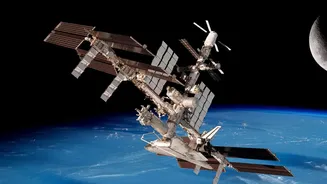
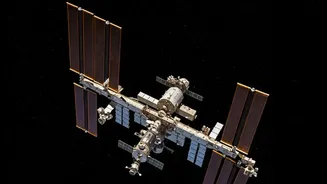
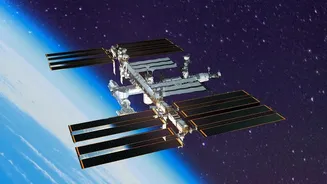
The Bharatiya Antariksh Station (BAS), India's planned modular space station, represents a monumental step in the nation's space journey. Targeted for completion by 2035, with the first module launching as early as 2028, this orbiting outpost will be
humanity's newest home in Low Earth Orbit, approximately 400-450 kilometres above us. Envisioned as a 52-tonne, five-module facility, the station will build upon the technologies developed for the Gaganyaan human spaceflight mission. It will transition India from a nation capable of short-duration space missions to one with a sustained human presence in orbit, allowing astronauts to conduct research for months at a time. This isn't just about planting a flag; it's about building a permanent, cutting-edge laboratory for Indian scientists.
The Promise of Microgravity Research
The single most significant contribution of the Bharatiya Antariksh Station will be as a dedicated platform for microgravity research. The near-weightless environment of space allows for experiments that are impossible to conduct on Earth. Scientists will be able to study the effects of long-duration spaceflight on the human body, such as muscle atrophy and bone density loss, which is critical for planning future deep-space missions. Beyond human health, the station will unlock new possibilities in materials science, biotechnology, and pharmaceuticals. Growing purer crystals for advanced electronics, developing new medicines, and understanding fluid behaviour in novel ways are just a few of the high-impact research areas that will flourish.
A Stepping Stone to the Moon and Beyond
Operating the BAS is a crucial part of India's long-term space exploration roadmap. The experience gained in running a long-duration orbital habitat, including perfecting life support systems and mastering rendezvous and docking procedures, will be invaluable. This expertise is a prerequisite for more ambitious undertakings, such as India's stated goal of a crewed lunar landing by 2040 and eventual interplanetary missions. The station will serve as a testbed for the very technologies needed to keep astronauts safe and productive on long journeys away from Earth. It will function as a vital training ground and technological proving ground, ensuring future explorers are prepared for the challenges of deep space.
Fostering Self-Reliance and Economic Growth
The construction and operation of the space station will be a powerful driver for 'Aatmanirbhar Bharat' in the space sector. The project necessitates the indigenous development of highly advanced technologies, from life support systems to robotics and docking mechanisms, reducing India's reliance on foreign partners. This national endeavour is expected to create numerous high-tech jobs and foster a robust ecosystem of startups and private industries supporting the mission. Furthermore, the BAS opens up avenues for commercial activities, including hosting experiments for private companies or even contributing to a future space tourism market, thereby boosting India's space economy.
Enhancing India's Global Standing
By establishing its own space station, India will join an exclusive club of nations with the capability for sustained human spaceflight, a group that has historically included only the US, Russia, and China. This achievement will significantly enhance India's strategic autonomy and geopolitical standing. A national space station also opens new doors for international collaboration on India's own terms, allowing partnerships with other space agencies for scientific research and exploration. The station will be a powerful symbol of India's scientific prowess and a beacon of inspiration, encouraging a new generation of scientists, engineers, and innovators to look to the stars.