

A Parade of Planets Early in the Month
September kicks off with a beautiful procession of planets for early risers. Before sunrise in the first week, you can catch a planetary alignment featuring Jupiter and Mars. From September 6th to the 9th, watch as the waning crescent moon drifts past
Jupiter and Mars in the pre-dawn sky. On September 8th, the Moon will have a particularly close encounter with brilliant Jupiter, creating a stunning pair above the eastern horizon. For those in India, this planetary dance also involves the Moon making close approaches to Mars and Jupiter, which will be visible to the naked eye. Even Saturn makes an appearance, visible in the southwest sky. This celestial gathering is a fantastic opportunity to appreciate the movement of our solar system neighbours from one morning to the next.
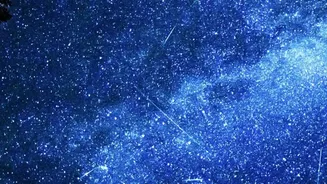
Faint Streaks of the Epsilon Perseids
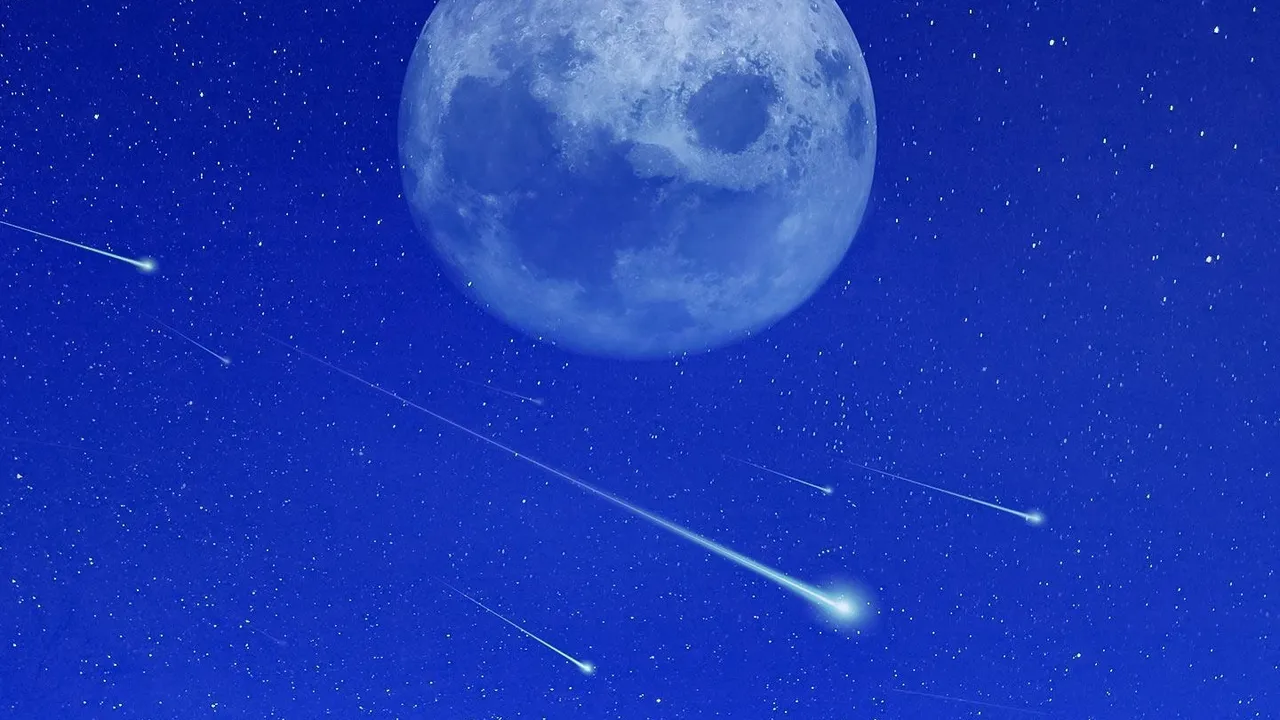
While not as famous as its August counterpart, the September Epsilon Perseid meteor shower offers a chance to catch some shooting stars. This minor shower is active from September 5th to the 21st, with its peak activity expected around September 9th. The best part for 2026 is that the peak coincides with the period just before the New Moon. This means the skies will be wonderfully dark, with no moonlight to wash out the faint meteors. Observers in the Northern Hemisphere will have the best view. While it's a modest shower, producing about five to eight meteors per hour under ideal conditions, the moonless sky provides an excellent opportunity for patient stargazers to spot a few swift streaks of light. For the best views, find a dark location away from city lights, let your eyes adjust, and look towards the constellation Perseus after 10 or 11 p.m. local time.
The Autumnal Equinox Arrives
The official start of autumn in the Northern Hemisphere arrives with the autumnal equinox. In 2026, this astronomical event occurs on September 22 or 23, depending on your time zone. For India, it will be in the early hours of September 23. On this day, the Sun shines directly over the Earth's equator, and the length of day and night are nearly equal across the globe. This event marks the point when the days begin to grow shorter than the nights in the Northern Hemisphere, ushering in longer nights perfect for stargazing. The equinoxes are also known to be a prime time for viewing the Northern Lights, as geomagnetic activity is often more frequent during the spring and fall.
The Brilliant Full Harvest Moon
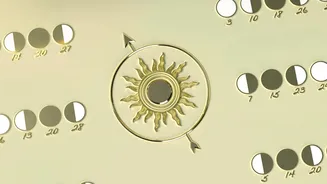
September's celestial highlight is undoubtedly the full Harvest Moon, which will grace the sky on Saturday, September 26. This particular full moon is defined as the one occurring closest to the autumnal equinox, which makes it the September full moon this year. The Moon will appear full and bright for about three days, from September 25th through the 27th. What makes the Harvest Moon special is that for several evenings around its peak, it rises only about 25 to 30 minutes later each night, compared to the usual 50 minutes. This phenomenon once provided farmers with extra hours of bright moonlight to bring in their crops. Look for the Moon to rise in the east shortly after sunset. On the night of the 26th, the planet Saturn will be visible nearby, adding to the beautiful autumn sky scene.
Dazzling Venus in the Evening
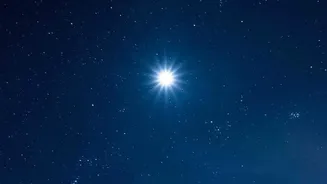
The planet Venus, often called the 'Evening Star,' puts on a stunning show throughout September. It will be unmissable in the western sky shortly after sunset. On September 18, Venus reaches its peak brightness for its 2026 evening appearance, shining at a dazzling magnitude of -4.8. While its brilliance will be remarkable on the nights surrounding this date as well, it’s a perfect time to step outside and spot our nearest planetary neighbour. You won't need any special equipment; its intense light is easily visible even from brightly lit urban areas. For an added treat on September 13th and 14th, look for a thin crescent moon meeting the brilliant planet low in the west-southwest after sunset.