

A Cosmic Data Deluge
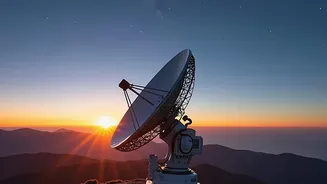
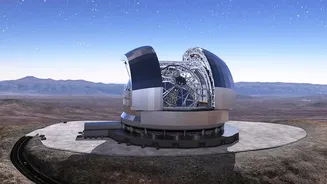
Modern observatories are creating a data tsunami. The Vera C. Rubin Observatory in Chile, for instance, generates about 20 terabytes of data every single night. Over its decade-long survey, it will produce a monumental movie of the southern sky. Similarly,
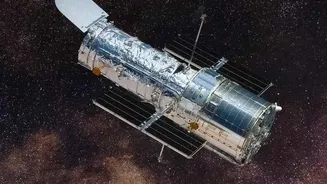
the Hubble Space Telescope has amassed an archive of millions of images over its 35-year history. It's simply impossible for astronomers to manually inspect every pixel. This is where AI becomes not just helpful, but essential. It acts as a powerful filter, capable of sifting through these enormous datasets at speeds no human team could ever hope to match, ensuring that potential discoveries aren't lost in the noise.
Hunting for Hidden Worlds
One of the most exciting fields in astronomy is the search for exoplanets, or planets orbiting other stars. AI has become a star player in this hunt. Algorithms are trained to look for the tiny, tell-tale dip in a star's brightness that occurs when a planet passes in front of it—a signal that can be easily missed by human observers. For example, AI tools with names like RAVEN and ExoMiner have been unleashed on data from NASA's TESS and Kepler missions. These systems have successfully identified hundreds of new exoplanets, including rare worlds that might have otherwise remained hidden in the data. They can analyze thousands of star signals at once, a task that would be incredibly tedious and time-consuming for an individual scientist.
Classifying the Cosmos
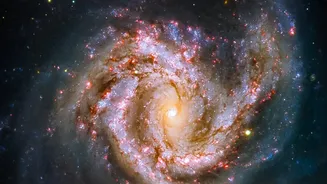
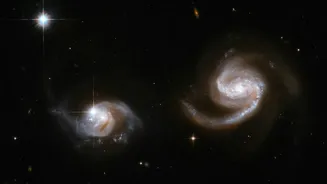
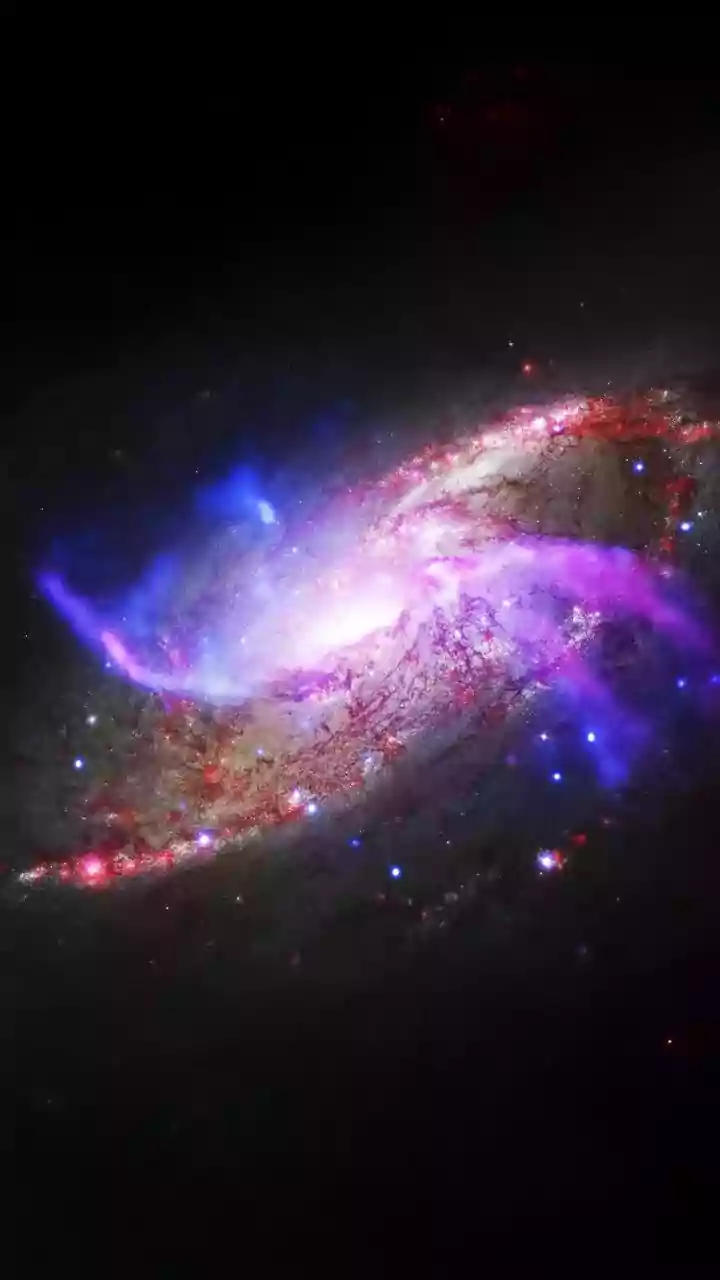
The universe is filled with galaxies of all shapes and sizes, from elegant spirals to smooth ellipticals. Classifying them helps astronomers understand how they form and evolve. This task was once done manually, often with the help of citizen science projects like Galaxy Zoo, where volunteers classify galaxies by eye. Now, AI is taking on this role with remarkable efficiency. Neural networks can be trained on millions of galaxy images and learn to classify them with an accuracy of over 97%. This partnership between human and machine is powerful; human classifications help train AI models like ZooBot, which can then handle the vast number of images from missions like the Euclid space telescope. This allows scientists to build enormous catalogues of galaxies in a fraction of the time.
Spotting the Strange and Unexpected
Perhaps AI's most powerful contribution is its ability to find anomalies—things that don't fit the pattern. While some AIs are trained to find specific objects, others are designed to simply flag anything that looks unusual. Recently, an AI model called AnomalyMatch was used to scan the entire Hubble Legacy Archive. In just a few days, it identified over 1,300 strange objects, more than 800 of which had never been documented before. These included bizarre merging galaxies, 'jellyfish' galaxies with gas tentacles, and some objects that defied any existing classification. This ability to spot the unexpected opens up new avenues for discovery, presenting astronomers with cosmic puzzles they didn't even know existed.
A Partnership for the Future
It’s important to understand that AI is not replacing human astronomers. Instead, it’s augmenting their abilities, acting as an intelligent co-pilot. AI handles the monumental task of sorting, filtering, and pattern-matching, which frees up human scientists to do what they do best: ask creative questions, interpret the findings, and develop new theories about the universe. By taking over the tedious parts of the research process, AI allows astronomers to focus on the bigger picture. It is a tool that enhances, rather than replaces, human intellect, accelerating the pace of discovery and pushing the boundaries of what we can learn about the cosmos.