






Understanding the Berth Landscape
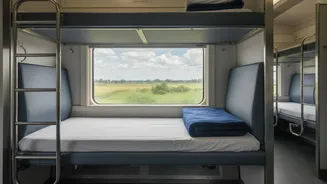
Indian Railways coaches, particularly in Sleeper, 3AC, and 2AC classes, have a specific layout. Most are divided into bays of six berths and a separate section of two berths along the aisle. The main bay consists of a Lower Berth (LB), a Middle Berth (MB),
and an Upper Berth (UB) stacked on each side. The aisle section has a Side Lower (SL) and a Side Upper (SU). The Middle Berth is often considered the least desirable as it must be folded down at night and put back up in the morning, limiting rest time. Understanding this basic layout is the first step to making a smarter choice.
For the Solo Traveller: Privacy and Security
If you're travelling alone, the Upper Berth (UB or SU) is often your best bet. It offers a degree of privacy and security, allowing for uninterrupted rest away from the foot traffic in the aisle and the daytime chatter of the main bay. You can settle in with your luggage and remain relatively undisturbed for the entire journey. However, be prepared to climb. If you value a window view and don't mind potential daytime disturbances, a Side Lower berth can provide a sense of personal space with a view, though it may be used for seating by other passengers during the day.
For Couples: A Slice of Privacy
For a couple, booking the Side Lower and Side Upper berths together can create a semi-private space. You have your own section along the aisle, which can feel more secluded than being in a six-berth bay. For those seeking maximum privacy, booking a two-berth 'coupe' in an AC First Class (1A) coach is the premium option, offering a lockable cabin. In AC 2-Tier, where there are no middle berths, booking an adjacent lower and upper berth can also provide a comfortable arrangement with added privacy from curtains.
For Families and Groups: Staying Together
When travelling with family, especially with children or elderly members, the goal is to keep everyone together and comfortable. Booking a full bay of four or six berths is ideal. A combination of Lower Berths for seniors and children, and Upper Berths for younger, more agile members is a practical strategy. The Lower Berth is essential for those with mobility issues, as climbing can be difficult and risky. It's also the social hub of the bay during the day, making it perfect for family meals and conversations. When booking, it’s crucial to book all members on a single ticket (PNR) to increase the chances of being seated together.
For Seniors and Those Needing Accessibility
The Lower Berth is undeniably the best choice for senior citizens and passengers with mobility challenges. There's no climbing involved, and it provides easy access to the aisle and washrooms. Indian Railways has a dedicated quota for lower berths for senior citizens (men over 60 and women over 45) and pregnant women. To avail this, it's best to book early and select the Lower Berth preference. If travelling as a pair of seniors, booking together on one PNR maximizes the chances of the system allocating two lower berths under the quota.
The Unspoken Rules of Shared Seating
Remember that the Lower Berth in any bay doubles as a shared seating area for all passengers in that section during daytime hours (typically 6 AM to 10 PM). If you've booked an LB, expect to share your space. Conversely, if you have a Middle or Upper berth, you have a right to sit on the lower berth during the day. The Side Lower berth is also considered a shared seat, often used by passers-by. Being mindful of these unwritten rules ensures a smoother, more harmonious journey for everyone in the coach.