




Embrace Local and Native Flowers
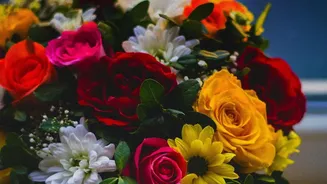
The most authentic Pookkalams were traditionally made with flowers and leaves gathered from the immediate neighbourhood. While large, commercially grown marigolds and chrysanthemums are popular for their vibrant colours and volume, returning to native
species is a powerful act of sustainability. Flowers like Thumba (Ceylon slitwort), Chethi (Ixora), Shankhupushpam (Butterfly Pea), and Mukkutti are not only traditional but also support local biodiversity. Sourcing flowers from local growers or your own garden reduces the carbon footprint associated with transporting them from other states and ensures peak freshness. This practice connects your celebration directly to the local landscape, just as the harvest festival of Onam intended.
Go Beyond Petals with Natural Materials
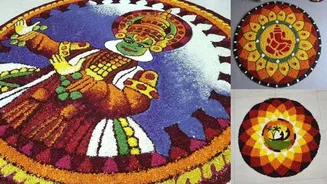
A stunning Pookkalam doesn't have to be made exclusively of flower petals. Traditionally, a variety of natural elements were used to add texture and colour. You can define borders and create fine details using materials like colourful leaves, rice flour paste, or even grated coconut. In earlier times, the base of the Pookkalam was often prepared with a layer of cleansed cow dung, which has antiseptic properties and provides a dark background that makes the flower colours pop. While this may not be practical for apartment dwellers, the principle of using natural, earthy materials remains a beautiful, eco-friendly alternative to plastic sheets.
Say No to Artificial Additives
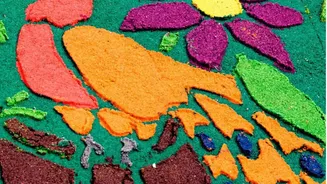
In the pursuit of a perfect design, it can be tempting to reach for artificial enhancements. However, synthetic coloured powders, plastic glitter, and thermocol pieces disrupt the biodegradable nature of the Pookkalam. These materials contaminate the organic waste, making it impossible to compost the flowers and leaves after the festival. The beauty of a Pookkalam lies in its connection to nature; adding non-biodegradable elements breaks this sacred link. Instead, focus on creating vibrant colour contrasts using only natural petals and leaves. The Kerala government's Green Protocol for festivals actively encourages avoiding such disposable and non-biodegradable products.
Mindful Sizing and Design
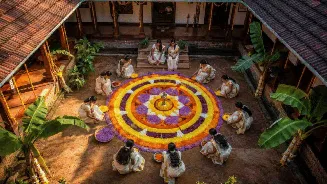
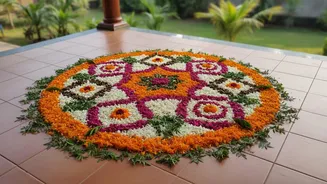
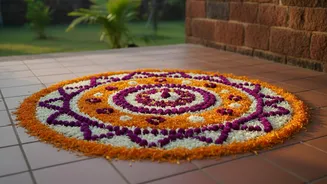
A beautiful Pookkalam is about spirit and creativity, not just size. Instead of an enormous carpet that requires a vast quantity of flowers, consider a smaller, more intricate design. Compact, mandala-style patterns can be just as breathtaking and are perfectly suited for apartments and smaller homes. Traditionally, the Pookkalam starts small on the first day, Atham, and grows a little each day, culminating on Thiruvonam. Adopting this practice is not only culturally authentic but also helps in planning flower usage and reducing potential waste. Sketching your design with chalk first helps in accurately estimating the quantity of petals needed for each section.
Give Your Pookkalam an Afterlife
The celebration doesn't end when the Pookkalam is swept away. One of the most significant ways to reduce waste is by planning for the disposal of the flowers. Instead of mixing the petals with general household garbage, where they will end up in a landfill releasing methane, give them back to the earth. The flower petals and leaves are perfect for composting. If you have a home composting system, add them to your bin. If not, you can bury them in a garden bed or even a large terracotta pot, where they will decompose and enrich the soil. This act turns the Pookkalam into a complete cycle of beauty, returning nature's gift to the soil.