


The Empire's Second City
For over a century, until the capital shifted to Delhi in 1911, Kolkata—then Calcutta—was the epicentre of British power in India. This wasn't just a political designation; it was a project of immense architectural and cultural engineering. The British sought
to build a capital that reflected the scale of their imperial ambition, leading to the rise of the 'City of Palaces'. Situated on the banks of the Hooghly River, its importance as a trade and port city mirrored London's own development along the Thames, forming one of the earliest parallels between the two. The East India Company invested heavily in creating a modern city with infrastructure that met European standards, transforming it into the most significant city in the British Empire after London itself.
A Stroll Through the Heart of the Raj
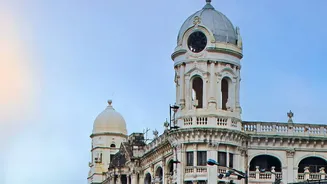
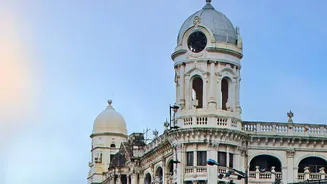
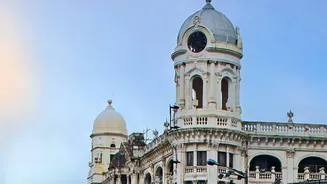
The best place to understand the 'London' moniker is by walking through B.B.D. Bagh, formerly known as Dalhousie Square. This area was the administrative core of British India, and its buildings are a powerful statement of colonial authority. The most prominent is the Writers' Building, a massive red-brick structure designed by Thomas Lyon in 1777. Originally built to house the junior clerks or 'writers' of the East India Company, it eventually became the seat of the Bengal government. Its Greco-Roman facade, adorned with statues representing Justice, Commerce, and Science, was designed to impress and intimidate. Nearby, the General Post Office (GPO), with its towering dome and Corinthian columns, and the Calcutta High Court, a stunning example of neo-Gothic design, further cement the area's European aesthetic.
Architectural Echoes of Europe
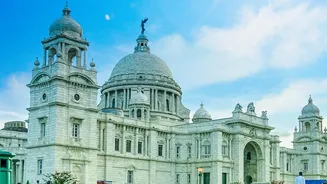
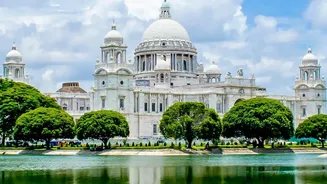
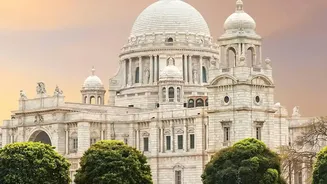
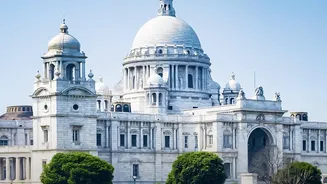
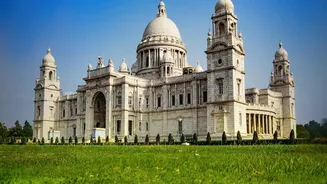
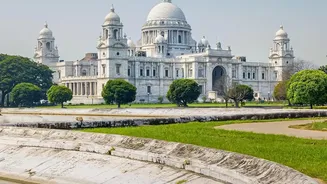
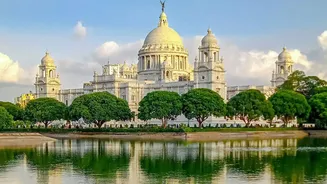
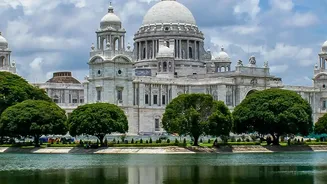
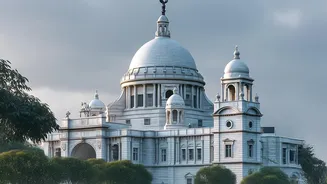
The colonial architecture across Kolkata is a rich tapestry of styles borrowed from Britain and adapted for India. You'll find grand Neoclassical buildings with imposing columns, such as the Raj Bhavan, once the residence of the Governor-General. St. Paul's Cathedral is a magnificent example of the Indo-Gothic style, designed to serve the city's growing European community in the 19th century. Perhaps the most famous landmark is the Victoria Memorial, a vast monument of white Makrana marble built to honour Queen Victoria. Its design, often called Indo-Saracenic, is a deliberate fusion of British, Mughal, and other Indian architectural elements, symbolising the blend of cultures, but also the grandeur of the Raj. These buildings were not simple copies; features like high ceilings and deep verandas were practical adaptations to the local climate.
Planning Your Own Heritage Walk
Exploring this history on foot is an unparalleled experience. The most popular heritage route focuses on the B.B.D. Bagh area, which can be comfortably covered in two to three hours. An early morning walk offers the best light for photography and a chance to see the city come alive. Start at the Mahakaran Metro Station, located right under the square, and wander past the Writers' Building, St. John's Church, the GPO, and the gates of the Raj Bhavan. For a different flavour, a walk through North Kolkata reveals the opulent mansions of 19th-century Bengali merchants and the famous potters' quarter of Kumartuli. While many routes are easy to navigate on your own, several companies offer guided walks that provide deeper historical context and anecdotes you might otherwise miss.