





The Cosmic Middle Child
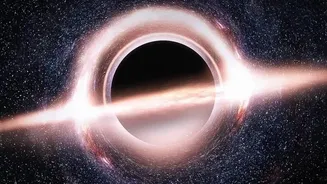
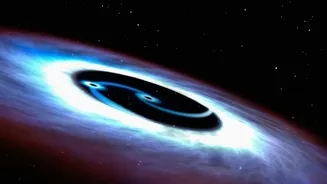
In the universe's menagerie of strange objects, black holes come in two well-known sizes. There are the stellar-mass black holes, weighing a few to a hundred times the mass of our sun, formed from the collapse of massive stars. Then there are the supermassive
black holes, behemoths millions or billions of times heavier, lurking at the heart of nearly every galaxy, including our own Milky Way. But what about the ones in between? Scientists have long theorized the existence of intermediate-mass black holes (IMBHs), those with masses from a hundred to hundreds of thousands of suns. These have been incredibly difficult to find, creating a frustrating gap in our understanding of the cosmos. Proving they exist is one thing; understanding how they form and what role they play is the next great frontier. The detection of IMBHs is considered a key piece in solving the puzzle of how supermassive black holes get so big.
Listening to the Universe's Whisper
We cannot 'see' black hole mergers with traditional telescopes. These violent collisions happen in total darkness. But they are not silent. When two black holes spiral into each other and merge, they unleash a storm of gravitational waves—ripples in the very fabric of spacetime. First predicted by Albert Einstein, these waves were not directly detected until 2015. Observatories like LIGO in the United States, Virgo in Italy, and KAGRA in Japan act like cosmic ears. By measuring minuscule distortions—far smaller than the width of an atom—these L-shaped detectors can 'hear' the chirps and bangs of distant cosmic collisions. The signal from an IMBH merger is particularly exciting; it’s a loud, short 'bang' that carries immense energy and a wealth of information about the objects that created it.
A Chorus of New Detections
Recent observing runs by the global network of gravitational wave detectors have been incredibly fruitful, with hundreds of new signals pushing the total number of detections toward 400 as of early 2026. Among these are powerful events that point directly to the existence and formation of IMBHs. The landmark event GW190521 was the first confirmed observation of two black holes merging to form an IMBH of 142 solar masses. More recent analyses of gravitational wave data have identified at least five more events that likely resulted in IMBHs. These detections are confirming that a process called hierarchical merging is a key pathway for black hole growth. This is where black holes formed from stars merge, and then those resulting larger black holes merge again, stepping their way up the mass ladder. This solves a major riddle, as standard models of star death can't produce black holes in this intermediate range.
How Galaxies Get Their Heart
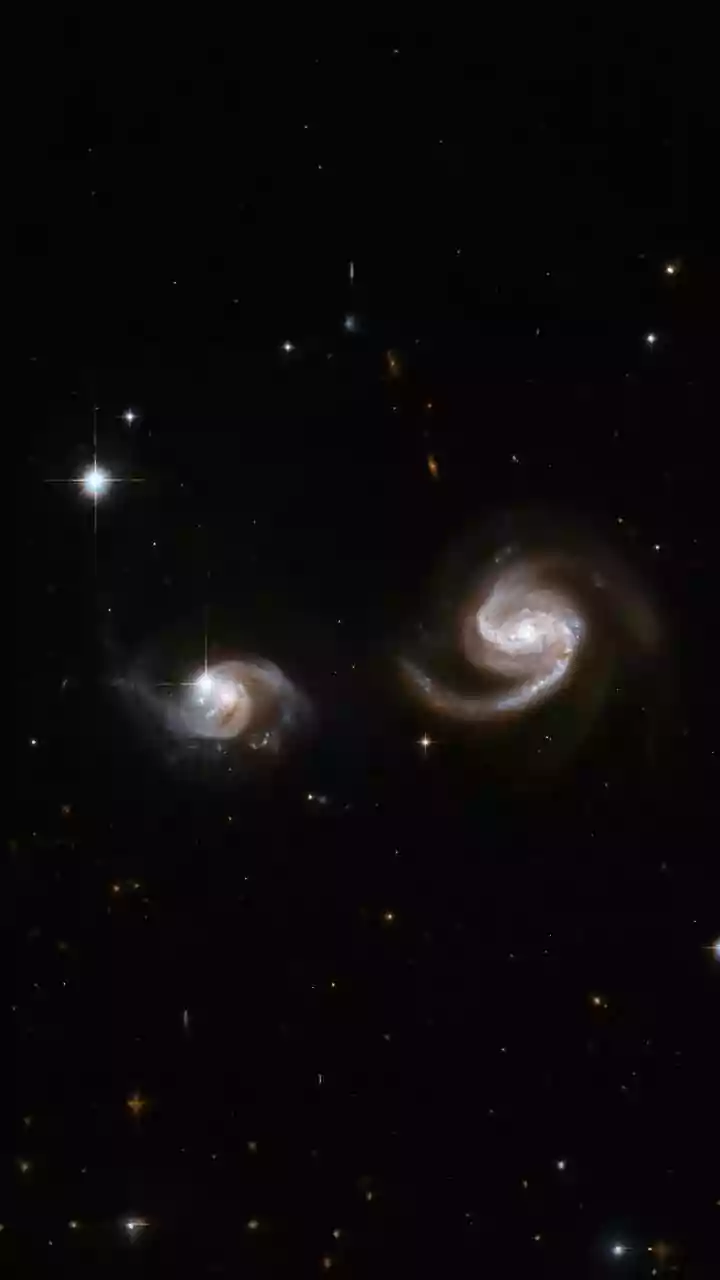
The confirmation of IMBH mergers provides a direct line to understanding cosmic formation. The leading theory for how supermassive black holes grow is that they start from smaller 'seeds'. IMBHs are the perfect candidates for these seeds. They could form in dense star clusters, then sink to the center of their host galaxy. Through a series of mergers with other black holes and by consuming surrounding gas and stars, these seeds could grow into the giants we see today. By studying the frequency and nature of IMBH mergers, scientists can effectively rewind the clock, testing models of galaxy formation and evolution. Each detection helps to refine our understanding of how often these mergers happen and in what kind of environments, painting a clearer picture of the early universe.
India's New Ear on the Cosmos
India is set to play a pivotal role in this exciting field. The LIGO-India observatory, which broke ground in Maharashtra in April 2026, will soon join the global network. This isn't just about adding another detector; it's about fundamentally improving the entire network. Having a detector in a new location drastically improves the ability to triangulate and pinpoint the source of gravitational waves on the sky. This allows astronomers using traditional telescopes to quickly look at the right patch of sky for any associated light, a practice known as multi-messenger astronomy. LIGO-India will enhance sensitivity and provide unique insights due to its orientation, helping to measure properties of the waves like polarization. It positions Indian science at the absolute forefront of one of the most profound quests in modern physics.