




The Legend of the Air-Purifying Plant
The popular belief that houseplants are natural air purifiers stems largely from a 1989 NASA study. Faced with the challenge of keeping air clean in sealed space stations, researchers found that certain common houseplants could indeed remove volatile
organic compounds (VOCs) like benzene and formaldehyde from the air in a controlled lab chamber. The study identified plants like the Snake Plant, Peace Lily, and Spider Plant as effective at absorbing these toxins. This exciting finding quickly entered popular culture, launching a decades-long trend of promoting 'air-purifying' plants as a simple, green solution for a healthier home.
What The Science Really Says
Unfortunately, your home is not a sealed space station. Later studies revealed a major caveat: the effects seen in NASA's sealed chambers don't really translate to a typical home or office. Buildings have natural and mechanical ventilation that exchanges air, a factor not present in the original study. To make a meaningful impact on your home's air quality, you would need a huge number of plants—some experts estimate between 10 and 1,000 plants per square metre of space. While it's true that plants perform phytoremediation (absorbing pollutants), the rate at which they do so is too slow to compete with a room's existing air exchange. In short, while your plants are technically filtering some toxins, the effect is so small it's virtually unnoticeable.
The Real, Proven Benefits of Indoor Plants
Just because they aren't miracle air purifiers doesn't mean you should abandon houseplants. Their proven benefits are significant, especially for mental well-being. Studies have shown that interacting with indoor plants can reduce stress, anxiety, and blood pressure. The simple act of caring for a living thing—watering it, watching it grow—can foster a sense of purpose and mindfulness. The presence of greenery has also been linked to improved concentration, productivity, and mood. And let's not forget the aesthetic value; plants are dynamic, beautiful decor that can make any space feel more vibrant and connected to nature.
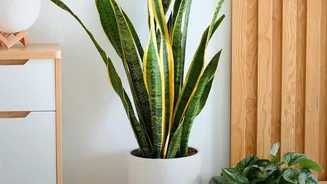
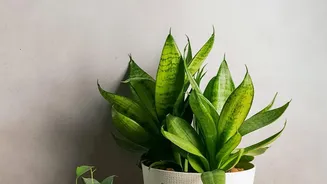
For Beauty And Ease: The Snake Plant
The Snake Plant (Dracaena trifasciata) is the champion of low-maintenance greenery. Its stiff, upright leaves provide a strong architectural element that suits modern and minimalist decor. It's famously hard to kill, thriving on neglect. It tolerates low light and requires infrequent watering, making it perfect for beginners or busy individuals. Its clean lines make it a striking addition to a corner, a bookshelf, or a bedside table, providing maximum visual impact with minimum fuss.
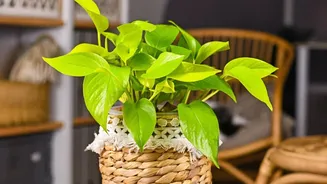
The Forgiving Vine: The Pothos
Pothos (Epipremnum aureum), also known as Devil's Ivy, is celebrated for its forgiving nature and trailing, heart-shaped leaves. It's incredibly versatile, looking just as good cascading from a hanging basket as it does climbing a small trellis. Pothos is adaptable to a wide range of lighting conditions and will often give you a clear sign (drooping leaves) when it needs water, bouncing back quickly once refreshed. It's an excellent choice for adding a touch of romantic, flowing greenery to shelves and high surfaces.
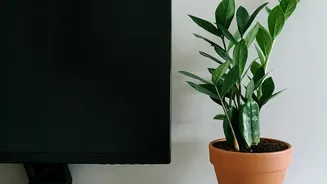
The Indestructible Pick: The ZZ Plant
The ZZ Plant (Zamioculcas zamiifolia) is another nearly indestructible option. With its wide, dark green, glossy leaves, it adds a lush, tropical feel to any room. The ZZ plant is a succulent, meaning it stores water in its underground rhizomes and can tolerate long periods of drought. This makes it extremely forgiving if you forget to water it. It's also tolerant of low-light conditions, making it a perfect fit for shadier corners or office environments where natural light is limited.