







As the days grow shorter and a chill enters the air, our kitchens naturally turn to warmer, more comforting foods. Embracing seasonal winter produce is a simple way to eat fresh, flavourful, and nutrient-dense meals.
Why Eat Seasonally in Winter?
Eating with the seasons is a practice
rooted in traditional food wisdom. In winter, our bodies often crave heartier, warmer meals to stay energized. Nature provides just what we need: grounding, energy-rich vegetables and grains that are at their peak. Produce that is harvested in its natural season is not only more affordable but also packed with a higher concentration of nutrients and flavour, as it doesn't need to be stored or transported over long distances. This approach supports better digestion and immunity during the colder months, helping the body stay nourished and resilient.
Hearty and Wholesome Winter Grains
Winter is the perfect time to explore grains beyond everyday wheat. Millets and whole grains are central to traditional Indian winter diets for their warming properties and nutritional benefits. Bajra (pearl millet) is a winter favourite, especially in Rajasthan and Gujarat. Rich in iron and fibre, it is often made into rotis served with a dollop of ghee. Makki (maize flour) is a staple in Punjab, famous as the base for Makki di Roti, the classic partner to Sarson ka Saag. Other excellent choices include Jowar (sorghum) and Ragi (finger millet), both of which are gluten-free and can be used to make rotis, porridge, or pancakes. These grains provide sustained energy, helping you feel full and warm.
Grounding and Nourishing Root Vegetables
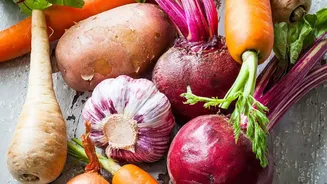
Root vegetables are true winter heroes. Growing underground, they are dense, sweet, and packed with nutrients. Carrots, especially the vibrant red 'Delhi carrots', are a winter specialty and the star of the beloved dessert Gajar ka Halwa. Radish (mooli) is another staple, famous for its use in stuffed parathas that make a popular North Indian breakfast. Sweet potatoes (shakarkandi), yams (suran), and turnips (shalgam) are also at their best during this season. These vegetables are incredibly versatile. A simple way to enjoy them is to chop them into chunks, toss them with spices like cumin, coriander, and turmeric, and roast them until tender and slightly caramelized. They can also be added to warming soups, stews, and curries.
Vibrant and Versatile Winter Greens
Winter markets in India are flooded with a stunning variety of leafy greens. Sarson (mustard greens) is perhaps the most iconic, forming the base of the rich and flavourful Sarson ka Saag. Because mustard greens have a unique, slightly bitter taste, they are often cooked with other greens like spinach (palak) and bathua (lamb's quarters) to create a balanced flavour. Methi (fenugreek leaves) is another winter favourite, known for its distinct aroma and taste. It can be used to make the simple and satisfying Aloo Methi, added to dals, or kneaded into the dough for parathas and theplas. These greens are packed with iron, vitamins, and fibre, making them an essential part of a healthy winter diet.