


A Universe in High Definition
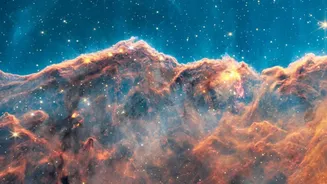
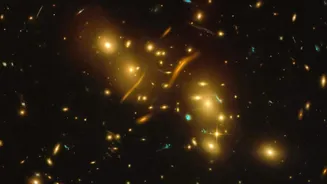
Recent releases from international space agencies have left astronomers and the public in awe. One of the most stunning is a new image of the galaxy cluster MACS J0553.4-3342 from the James Webb Space Telescope (JWST), a collaboration between NASA, the European
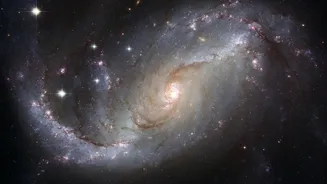
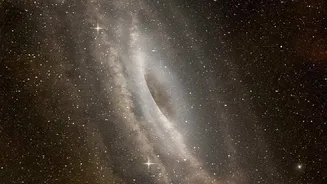
Space Agency (ESA), and the Canadian Space Agency. This isn't just a snapshot; it's a time machine. The light from this cluster traveled for 4.4 billion years to reach us, showing the cluster as it was when it was still forming. Separately, the ESA's Euclid telescope, typically tasked with mapping dark matter, was pointed toward the heart of our own Milky Way galaxy. The result is the most detailed visible-light image ever taken of our galaxy's center, a six-gigapixel mosaic packed with over 60 million stars. These images provide a richness of detail that helps scientists study everything from galactic mergers to the birth of individual stars.
The Technological Leap Forward
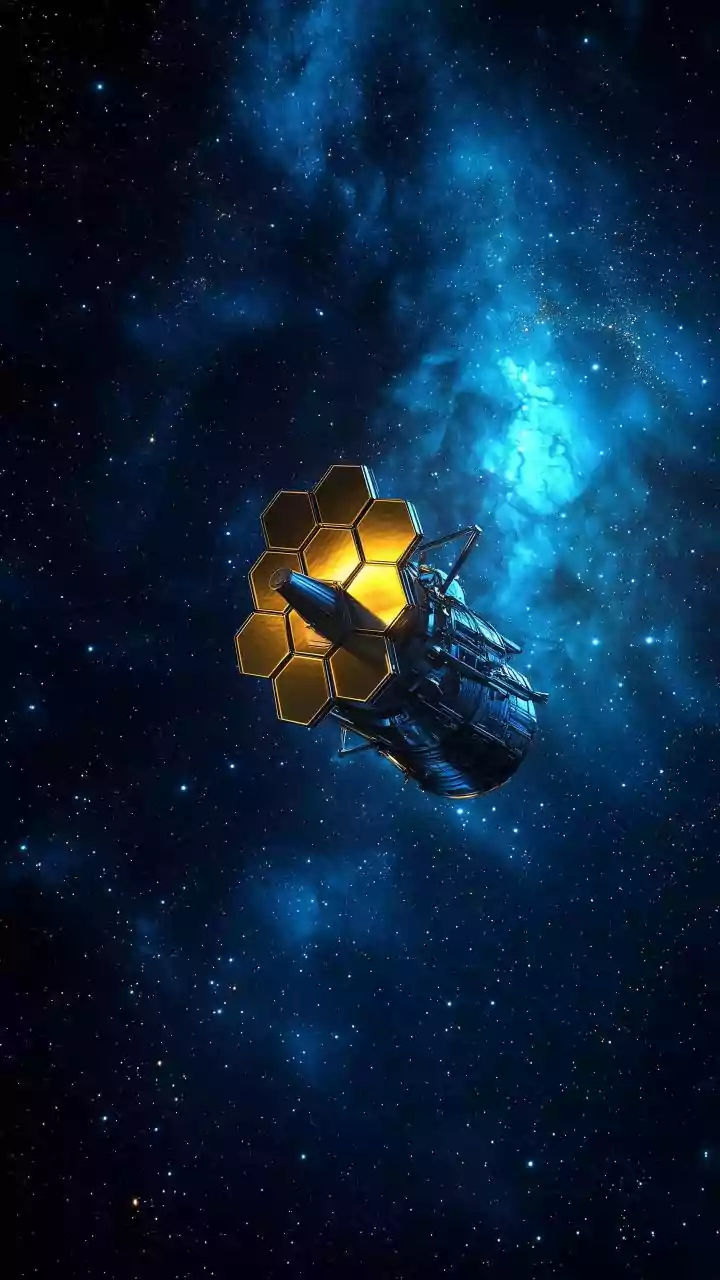
Achieving these views requires incredible technology. The James Webb Space Telescope, launched in 2021, uses a massive, gold-coated mirror and highly sensitive infrared instruments to detect faint light from the early universe. Its ability to see in infrared allows it to peer through clouds of cosmic dust that would otherwise obscure the view of telescopes like Hubble, revealing newborn stars and the swirling hearts of galaxies. The Euclid telescope boasts a different kind of power: an enormous field of view. Its camera can capture an area of the sky 270 times larger than Hubble's in a single shot, making it perfect for creating vast cosmic maps. It was this wide-angle capability that allowed it to survey the Milky Way's dense central bulge, an area so crowded with stars it is normally difficult to parse. Together, these instruments represent a new era in astronomy, building on the foundations laid by previous missions to give us a more complete picture of the cosmos.
Unlocking Galactic Secrets
These aren't just pretty pictures; they are treasure troves of scientific data. The detailed view of MACS J0553.4-3342 helps astronomers understand how galaxy clusters—the largest known structures in the universe held together by gravity—are assembled. By observing a cluster in the process of merging, scientists can test theories about galaxy evolution and the influence of dark matter. Meanwhile, Euclid’s massive image of our galactic core serves a different purpose. It acts as an unprecedented 'before' photo for future planet-hunting missions. By providing a sharp, comprehensive map, it will allow the upcoming Nancy Grace Roman Space Telescope to more easily detect exoplanets using a technique called microlensing, where a star's gravity magnifies the light of a more distant star. This could lead to the discovery of hundreds or thousands of new worlds.
What Comes Next for Astronomy
These new images are just the beginning. Each observation opens up new lines of inquiry and poses new questions for astronomers to tackle. The data from the JWST is helping scientists refine their understanding of how supermassive black holes at the center of galaxies feed themselves, revealing intricate filaments of gas that fuel their growth. Discoveries made with these new instruments are also raising new puzzles, such as why some early galaxies appear to have died young. The ongoing surveys by Euclid, which began its main science survey in early 2024, will eventually create the largest 3D map of the universe ever made. This map will provide crucial data for understanding the mysterious forces of dark matter and dark energy that govern the cosmos. The coming years promise a flood of data that will likely rewrite textbooks and reshape our cosmic perspective.