






Festive Buying Sees a Strong Revival
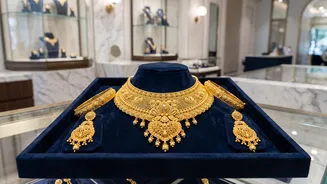
This year's festive season, particularly around Dhanteras and Diwali, saw a significant uptick in gold demand. According to the India Bullion and Jewellers Association (IBJA), gold buying rose by as much as 30% in volume compared to last year. Jewellers reported
brisk business, with consumers purchasing an estimated 52 tonnes of gold. This surge was driven by the cultural tradition of buying gold during festivals, coupled with the onset of the wedding season which runs from mid-November. The increased footfall in jewellery stores points to a revival in consumer sentiment after a period of slower sales earlier in the year.
Decoding the 'Price Correction'
The term 'price correction' has been used widely, and it simply means that prices have fallen from a recent peak. Gold isn't crashing, but it is experiencing a downward trend after a strong rally. Earlier in 2026, gold prices saw a blistering run, briefly crossing the Rs 1.8 lakh per 10 grams mark in some market reports. However, since those highs, prices have pulled back. As of mid-November, domestic gold prices have seen a significant drop, with some reports indicating prices falling to around Rs 1.36 lakh to Rs 1.42 lakh per 10 grams. This dip made gold more attractive to buyers who had been waiting on the sidelines, contributing to the festive sales boom.
The Rs 1.8 Lakh Figure Explained
The Rs 1.8 lakh per 10 grams figure has been a point of confusion. This price point was touched upon in analytical reports and market commentary earlier in the year during a period of intense rallying. For instance, some bank reports in mid-2026 projected that gold would trade in a range of Rs 1.5 lakh to Rs 1.8 lakh for the remainder of the year, influenced by global trends and a depreciating rupee. This level represented a peak or a high-end forecast rather than a stable, long-term price. The subsequent fall from this peak is what analysts refer to as a correction. So, while gold did reach these levels, the market has since adjusted downwards.
Why Are Prices Falling Now?
Several factors are contributing to this price correction. A key driver is the monetary policy of the US Federal Reserve. Expectations of interest rate hikes in the US make assets that don't pay interest, like gold, less attractive. A strengthening US dollar also puts downward pressure on gold, as the metal is priced in dollars globally. Furthermore, after a period of strong gains, some investors have been 'profit booking', which means selling their holdings to lock in the high prices, adding to the supply in the market. Locally, while festive demand was strong, overall annual demand for 2026 is projected to be at a multi-year low, which also tempers prices.
What Should Buyers and Investors Consider?
For consumers, the recent price dip presented a welcome buying opportunity, especially for weddings and festive gifting. Many who had postponed purchases re-entered the market. However, the volatility is a reminder that timing the market is difficult. The current environment is being pulled in two directions: lower prices are encouraging physical buying, while global economic headwinds suggest prices could remain volatile. Experts suggest that buyers focus on their long-term needs rather than trying to catch the absolute bottom of the market. For investors, the correction might be seen as a chance to accumulate gold as part of a diversified portfolio, especially since the long-term drivers for gold, like central bank buying and geopolitical uncertainty, remain in place.