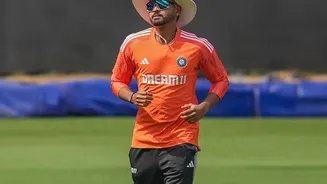

A '200 Percent' Fitness Philosophy
The biggest shift isn't a single test, but a new selection philosophy. The BCCI and team management will now only select players they are '200 percent' confident about in terms of fitness. This move comes after several instances where players were named
in a squad only to be ruled out with recurring injuries, disrupting team balance and strategy. In response, players who are still recovering may be named with an asterisk next to their name, indicating their selection is conditional on passing fitness tests closer to a series. This policy aims to end the cycle of premature comebacks and ensure that any player wearing the India jersey is not just skilled, but physically robust and ready for the rigours of international cricket.
Enter the Bronco: A New Endurance Challenge
At the heart of the new regime is the Bronco Test, a demanding fitness assessment borrowed from rugby. It replaces the famous Yo-Yo test as the primary benchmark for endurance. The test requires players to run shuttle runs between markers placed at 20, 40, and 60 metres. This entire sequence is repeated five times without a break, totalling 1,200 metres. The goal is to measure a player's aerobic endurance and their ability to recover between high-intensity efforts, which mimics the demands of a modern cricket match. Unlike the Yo-Yo test, which involves short, paced beeps, the Bronco is a continuous effort designed to push players to their cardiovascular limits, making it harder to 'game' the system.
The Science and the Standards
Alongside the Bronco, players will also undergo a 2-kilometre time trial. The benchmarks are specific to a player's role in the team. Fast bowlers are expected to complete the 2km run in 8 minutes and 15 seconds, while batters, spinners, and wicket-keepers have a target of 8 minutes and 30 seconds. Some reports suggest a slightly more lenient window of 9 to 10 minutes has been set by the Centre of Excellence (CoE). The goal is clear: to move beyond a one-size-fits-all approach and tailor fitness expectations to the specific physical demands of each position. The combination of the Bronco and the 2km run provides the selectors with a more comprehensive picture of a player's running endurance and overall cardiovascular health.
Why the Overhaul? The Road to 2027
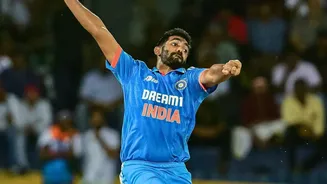
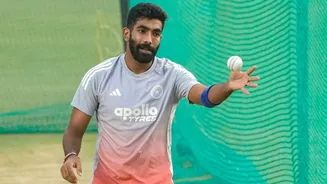
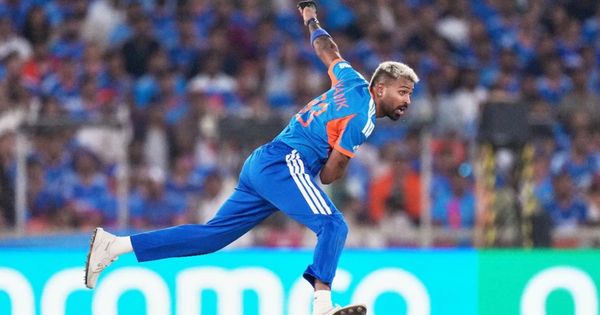
This renewed focus on fitness is directly linked to the long-term goal of winning the 2027 ODI World Cup, which will be co-hosted by South Africa, Zimbabwe, and Namibia. Recent tours have been plagued by injuries to crucial players like Jasprit Bumrah and Hardik Pandya, exposing a potential weakness in the team's conditioning. There was a growing feeling that fitness standards had slipped after the high bar set during Virat Kohli's captaincy. The BCCI's review meetings identified injury management as a top priority to build a resilient squad capable of enduring a long and demanding tournament. By implementing these tougher standards now, the board aims to cultivate a deep pool of supremely fit athletes who can withstand the pressures of a gruiring eight-month calendar leading into the World Cup.
What It Means for the Players
The message from the BCCI is unequivocal: fitness is non-negotiable. For players, this means the bar for selection has been raised significantly. Younger players who have come through modern, science-based training systems may find it easier to meet these new demands. For veteran cricketers, it presents a new challenge to adapt their training and prove they can still match the intensity required. The policy places immense responsibility on the players to maintain peak physical condition throughout the year, not just in the lead-up to a series. It also puts the onus on the National Cricket Academy (NCA) in Bengaluru to ensure rehabilitation programmes are foolproof and that players returning from injury are truly ready for the demands of the international game.