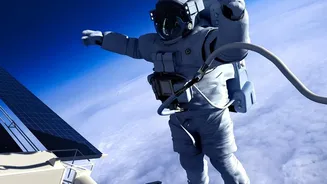





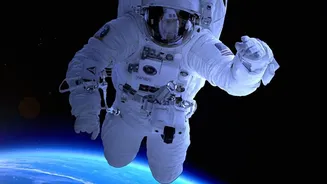
We’ve all seen the footage: an astronaut peacefully floating, a wrench suspended in mid-air beside them. The easy answer is 'zero gravity,' but that’s not quite right. The truth is far more elegant and reveals a core principle of physics.
The Misconception of 'Zero Gravity'
First, let's
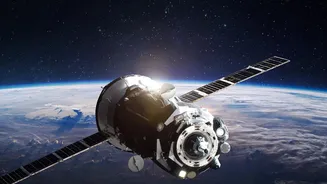
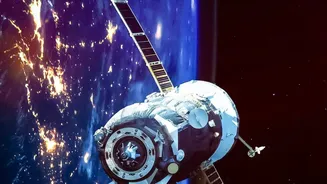
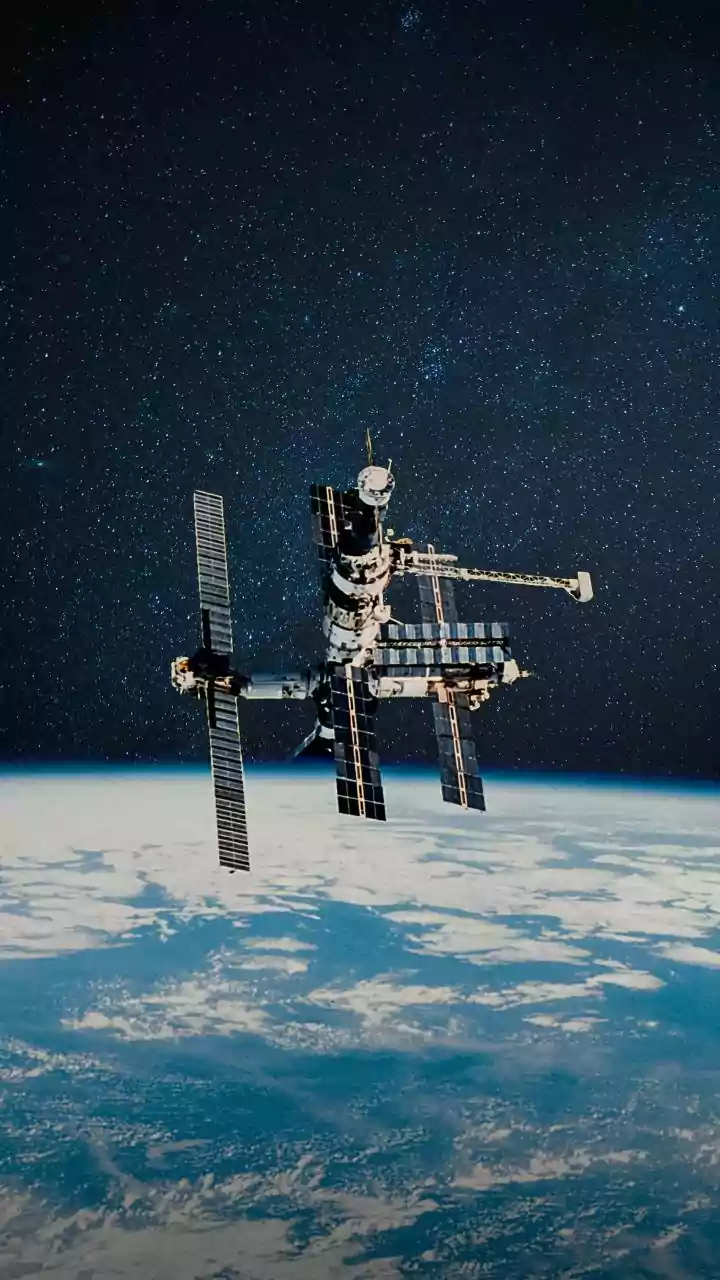
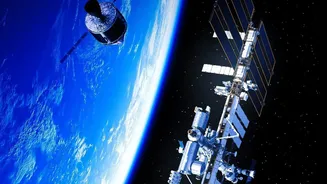
get a big misunderstanding out of the way. The International Space Station (ISS), which orbits about 250 miles up, is not free from Earth's gravity. Not even close. The gravitational pull at that altitude is still about 90% as strong as it is on the surface. If you could somehow build a tower that high and stand on it, you would feel only slightly lighter than you do right now. So, if gravity is still pulling on everything, why do astronauts and their tools float? The answer isn't the absence of gravity, but the experience of something called free-fall.
The Elevator Thought Experiment
Imagine you're in an elevator and its cable suddenly snaps. For the few terrifying seconds before the emergency brakes kick in, you, the elevator car, and the phone in your hand would all be falling at the exact same rate. If you were to let go of your phone, it wouldn't drop to the floor relative to you. It would hover right where you left it, seemingly 'weightless'. You are all falling together. This state, where the only significant force acting on you is gravity, is free-fall. You don't feel your weight because there is no ground or floor pushing back up on you. What we perceive as weight is really just a contact force from a surface resisting gravity's pull.
An Orbit is Just a Fall Where You Miss
Now, apply that elevator analogy to the ISS. The space station is constantly falling toward Earth, pulled by the same gravity that keeps your feet on the ground. The key difference is that the station is also moving sideways at an incredible speed—about 17,500 miles per hour. This immense horizontal velocity means that as it falls, the curved surface of the Earth drops away beneath it at the same rate. In effect, the ISS is perpetually falling but always missing the ground. This state of continuous free-fall is what we call an orbit. Because the astronauts and everything inside the station are all 'falling' at the same acceleration, they float relative to each other, just like you and your phone in the plummeting elevator.
Gravity's Speed and the Equivalence Principle
This brings us to the core of the headline. An object in free-fall—whether it's an apple dropped from a tree or a space station—accelerates at a specific rate determined by the local gravitational field. Near Earth's surface, that's about 9.8 meters per second squared. For the ISS, it's just a bit less. The 'floating' astronaut is a perfect visual proof of this. They are accelerating downward at the exact same rate as their spacecraft because the force of gravity is acting on them both equally. This concept was central to Einstein's 'happiest thought,' which led to his principle of equivalence. This principle states that an observer cannot tell the difference between being in a uniform gravitational field and being in an accelerating frame of reference. The feeling of weightlessness in the falling ISS is physically indistinguishable from floating in deep space far from any gravity. The acceleration of the fall perfectly cancels out the sensation of gravity's pull.