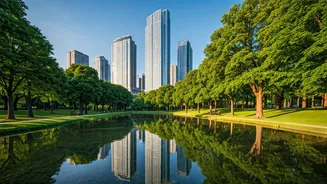









Chandigarh: India’s Original Green Dream
Long before ‘urban greening’ became a buzzword, there was Chandigarh. Designed by the visionary architect Le Corbusier in the 1950s, the city was conceived with nature woven into its very fabric. The master plan designated vast green belts, known as the 'lungs
of the city,' to ensure that residents were never far from open space. The most famous of these is the Leisure Valley, a 7-kilometre-long park that meanders through the city, offering a continuous stretch of gardens, groves, and walking paths. Chandigarh’s strict building codes and commitment to its original plan mean that even today, it boasts one of the highest per-capita green coverages in India. It stands as a timeless testament to the idea that a city can be meticulously planned for both human efficiency and natural harmony.
Bengaluru: The Enduring Garden City
Bengaluru’s nickname, the ‘Garden City of India’, is not just a marketing slogan; it's a historical identity. At its heart are two iconic green spaces: Lalbagh and Cubbon Park. Lalbagh Botanical Garden, established in the 18th century, is a sprawling 240-acre oasis housing a rare collection of tropical plants, ancient trees, and the famous glasshouse inspired by London's Crystal Palace. A short distance away, Cubbon Park provides another 300 acres of green relief right in the administrative core of the city. While modern Bengaluru grapples with the pressures of being a tech hub, these legacy parks remain vital, serving as community spaces for joggers, families, artists, and anyone seeking a moment of peace. They are a powerful reminder of how historical green infrastructure can continue to serve a rapidly growing metropolis.
Mumbai: The Miyawaki Forest Miracle
In a city as densely packed as Mumbai, finding space for nature seems like an impossible task. Yet, a grassroots movement is proving otherwise through the Miyawaki method. This Japanese technique involves planting dense, multi-layered forests of native species in small urban plots. These mini-forests grow up to ten times faster and become thirty times denser than conventional plantations, quickly creating rich, self-sustaining ecosystems. Across Mumbai, citizen groups and the local municipal corporation have transformed barren patches of land—along railway lines, in neglected parks, and on industrial plots—into thriving forests. Each project, though small, helps improve air quality, reduce urban heat, and restore biodiversity, proving that even in the most concrete of jungles, nature can find a way back with a little human ingenuity.
Delhi: Heritage and Ecology Reimagined
Delhi's Sunder Nursery is a masterclass in how to blend history, culture, and ecology. Located next to Humayun's Tomb, this 90-acre park was a neglected 16th-century nursery before its stunning transformation. The Aga Khan Trust for Culture meticulously restored its Mughal-era monuments, water canals, and tombs, while rewilding the landscape into a vibrant ecological zone. Today, Sunder Nursery is a certified arboretum with over 300 tree species, a paradise for birdwatchers with over 80 avian species, and a beloved public space. It features beautiful walking trails, sunken gardens, and lotus ponds, all set against a backdrop of magnificent heritage structures. It's a perfect example of urban renewal where restoring the past has created a greener, more beautiful future for the city’s residents.
Gandhinagar: A Capital Built on Green
Often overshadowed by its more famous counterparts, Gujarat's capital, Gandhinagar, holds the distinction of being one of the greenest cities in Asia. Like Chandigarh, it is a planned city, but its commitment to greenery is on another level. Over 50% of its total area is dedicated to green cover, with trees lining every major road and filling sprawling public parks. The planning philosophy was simple: create a city where the built environment is secondary to the natural one. This results in a unique urban experience where wide, tree-canopied avenues keep the city cool and quiet. The city’s Central Vista Gardens and Sarita Udyan are prime examples of large-scale green spaces that are seamlessly integrated into the urban layout, offering residents a high quality of life that beautifully balances modern amenities with a deep connection to nature.