






The Unseen World Underground
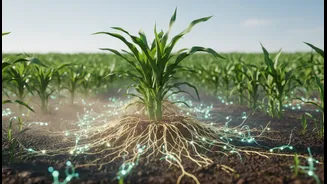
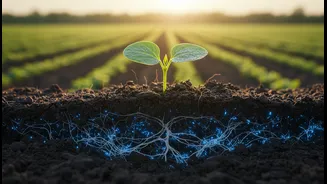
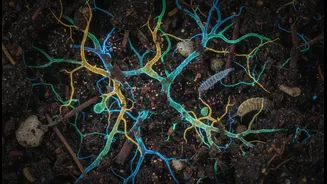
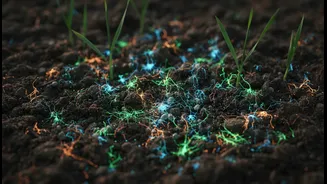
Beneath the surface of every field lies a complex, bustling ecosystem teeming with billions of microscopic organisms. For decades, farming has often focused on what happens above ground, but a revolution is brewing in the soil itself. The stars of this
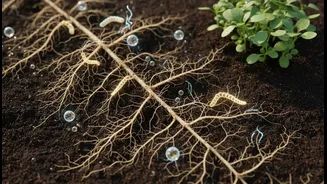
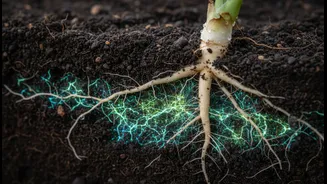
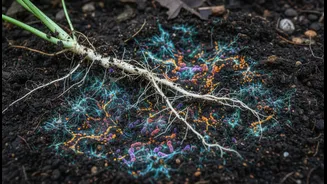
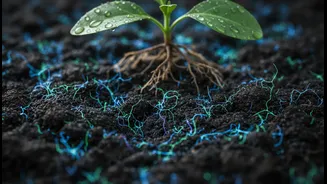
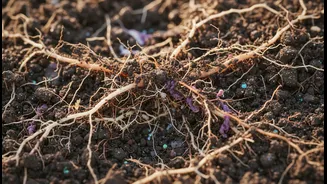
revolution are plant growth-promoting rhizobacteria (PGPR) and endophytic fungi, microorganisms that live in and around plant roots. These are not pests, but partners. In a healthy soil environment, these microbes form a symbiotic relationship with plants. The plant releases sugars and other compounds from its roots, feeding the microbes. In return, these tiny allies work to protect and support their host plant.
A Microscopic Support System
So, how exactly do these bacteria help a plant under duress? Their methods are remarkably diverse. Some bacteria act as tiny fertilizer factories, fixing atmospheric nitrogen or unlocking phosphorus and potassium that are bound up in the soil, making these crucial nutrients available to the plant. Others produce plant-growth hormones like auxins, which encourage stronger and more extensive root development, allowing the plant to explore a larger volume of soil for water and nutrients. This enhanced root system is a critical advantage, especially when resources are scarce. This intricate partnership creates a healthier, more robust plant from the very beginning.
Battling the Stress of a Changing Climate
The real game-changer is how these microbes help crops handle abiotic stress—the environmental pressures that can devastate yields, such as drought, extreme heat, and high soil salinity. When a plant faces drought, certain bacteria can produce a sticky substance called exopolysaccharides (EPS), which helps retain water around the roots. Some microbes also help plants regulate their hormonal response to stress, preventing overreactions that can stunt growth. For instance, they can produce an enzyme that lowers ethylene levels, a stress hormone that can inhibit root growth under duress. A recent study even found that specific bacteria called pseudomonads trigger an increase in lignin in plant roots under salt stress, reinforcing the cell walls and making the plant physically tougher.
The View from the Indian Farm
For India, where agriculture is the backbone of the economy and faces constant threats from erratic monsoons, heatwaves, and soil degradation, this technology holds immense promise. Indian research institutions like the International Crops Research Institute for the Semi-Arid Tropics (ICRISAT) are actively exploring these microbial solutions. They are developing and testing 'consortia' of microbes—formulations containing multiple types of beneficial bacteria and fungi—to boost soil health and crop resilience. The goal is to move towards a more sustainable model of farming that is less reliant on chemical fertilizers and pesticides, which can degrade soil over time. By harnessing these natural processes, farmers could potentially improve yields while also improving the long-term health of their land. Products known as biostimulants, which include these microbial inoculants, are already gaining traction in India, with studies showing they can improve yields and reduce the need for chemical inputs.
From the Lab to the Land
The path from a scientific discovery to a widely used agricultural product is long. One of the biggest challenges is stability and consistency. A microbial strain that works wonders in a controlled lab environment might struggle to establish itself in a real field with its own native microbial population. Researchers are working on creating resilient formulations, such as spore-forming bacteria like Bacillus, which can survive harsh conditions. The Indian Council of Agricultural Research (ICAR) has already developed liquid biofertilizer formulations containing nitrogen-fixing, phosphate-solubilizing, and potassium-solubilizing bacteria that have shown promising results in farmers' fields. As this technology matures, the focus will be on creating affordable, effective, and scalable products that can be easily integrated into existing farming practices, such as through seed treatments or soil applications.