



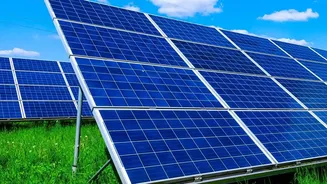

The Challenge with High-Output Solar
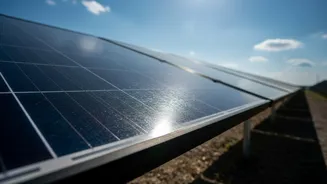
Solar energy is a cornerstone of our transition to clean power, but large-scale solar farms face a persistent enemy: degradation. All solar panels lose their ability to convert sunlight into electricity over time, a process accelerated by environmental
factors. This is especially true for high-output technologies like perovskite solar cells. While incredibly promising due to their high efficiency and low manufacturing costs, perovskite materials are notoriously unstable. They break down quickly when exposed to moisture, oxygen, and even ultraviolet (UV) light, which is a major problem for something that has to sit in the sun all day. This instability is a significant barrier to their widespread commercial use, as operators need panels that can last for 25 years or more to be economically viable. The industry has been searching for a cost-effective shield to protect these powerful but fragile cells from the elements.
Nature’s Ultimate Sunscreen: Melanin
The solution may come from an unexpected source: melanin. This is the same pigment that colours our skin, hair, and eyes, and its primary job in nature is to provide protection from the sun. Melanin is exceptionally good at absorbing harmful UV radiation and dissipating that energy as harmless heat before it can damage the sensitive DNA in our cells. It acts as a natural, biological shield against the very forces that degrade advanced solar cells. This protective quality has led scientists to wonder if this natural sunscreen could be adapted for industrial purposes. The type of melanin found in abundance in the ink sacs of squid and cuttlefish is particularly robust, making it an easily recoverable and sustainable resource.
From Biology to Bio-Synthetic Coatings
You can’t simply paint squid ink onto a solar panel. Instead, scientists are creating bio-synthetic melanin. They can either extract the natural pigment from marine sources or, more scalably, synthesize a nearly identical polymer in the lab. This lab-made melanin can then be turned into a thin, protective coating. In recent experiments, researchers have applied melanin-based layers to solar cells with remarkable results. One study showed that a melanin coating helped a perovskite cell retain 96% of its initial efficiency after 1,000 hours of continuous operation under simulated sunlight. The melanin acts as a multifunctional shield. It absorbs damaging UV light, prevents moisture from reaching the sensitive materials, and can even help manage heat, all of which contribute to a longer operational life.
The Impact on the Future of Solar
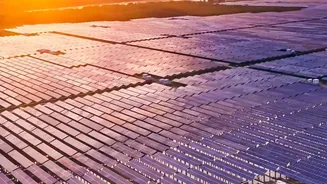
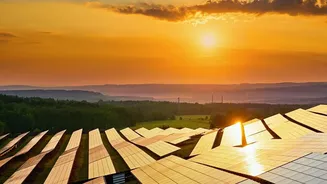
Incorporating melanin into solar technology could be a game-changer for the renewable energy industry. For high-output perovskite cells, a durable protective layer solves their biggest weakness, potentially unlocking their widespread adoption and leading to cheaper, more efficient solar power. By extending the lifespan of solar farms, these coatings would improve the return on investment for large-scale energy projects and reduce long-term maintenance costs. The melanin itself is a biocompatible and biodegradable polymer, aligning with the green goals of the solar industry. While a single panel might see a small boost, applying this technology across a solar farm covering hundreds of acres could lead to a significant increase in overall energy production and reliability over the asset's lifetime.
The Road Ahead
While the laboratory results are exciting, there are still hurdles to overcome before melanin-coated solar panels become a common sight. A major challenge is producing synthetic melanin at a scale large enough for the massive solar industry and at a cost that doesn't negate the economic benefits. Currently, pure melanin can be more expensive than gold, though new production methods using fungi are being developed to bring the price down. Researchers are also working to optimize the application process, ensuring the coating is uniform and robust enough for real-world conditions. However, the promise of using an ancient, nature-perfected pigment to power the future of energy is a powerful motivator, driving innovation toward a more sustainable and stable energy grid.