





An Early Morning Dance: Moon and Saturn
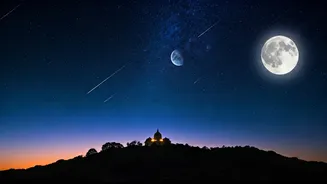
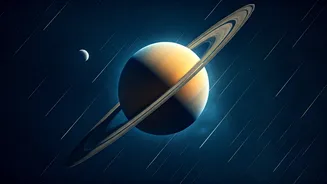
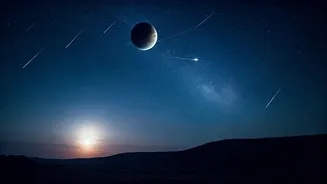
Kick off the month’s stargazing in the early hours of July 7 and 8. The waning Moon will pair up closely with Saturn, the ringed jewel of our solar system. Look towards the eastern sky any time after midnight, and you'll see the two celestial bodies journeying
together until dawn's light washes them from view. Saturn is recognisable by its steady, golden glow that doesn't twinkle like distant stars. While the pairing is a beautiful sight for the naked eye, those with a small telescope will be rewarded with a view of Saturn's iconic rings, making it a memorable morning for early risers.
A Triad in the East: Moon, Mars, and the Pleiades
Just a few mornings later, another stunning celestial arrangement awaits. On July 11, look east about an hour or two before sunrise to witness a beautiful alignment of the crescent Moon, the red planet Mars, and the Pleiades star cluster. Known as the 'Seven Sisters,' the Pleiades is a breathtaking cluster of young, blue-white stars that looks like a tiny, shimmering patch in the sky. While you might only spot a few of its stars with the naked eye, binoculars will reveal the cluster's true, densely packed beauty. This celestial trio offers a picturesque moment for skywatchers and photographers alike.
The Full Buck Moon and Guru Purnima
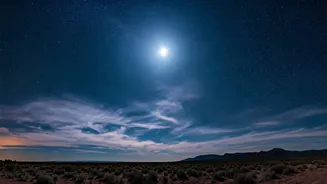
On the evening of July 29, the sky will be dominated by the brilliant Full Buck Moon. The full moon will peak around 8:06 PM IST, ensuring it is visible all night long across India. This full moon is known as the Buck Moon, named for the time of year when male deer begin to grow their new antlers. In India, this day holds special significance as it coincides with Ashadha Purnima and the festival of Guru Purnima, a day to honour teachers and spiritual guides. As you watch the moon rise, you may notice it appears larger and more orange near the horizon—an optical effect known as the 'Moon Illusion'.
A Double Meteor Shower Spectacle
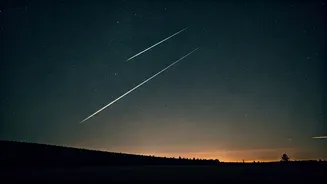
July concludes with a celestial fireworks show as two meteor showers, the Southern Delta Aquariids and the Alpha Capricornids, reach their peak activity on the night of July 29-30. The Delta Aquariids can produce around 15 to 20 faint meteors per hour, while the Alpha Capricornids, though less frequent at about 5 per hour, are known for producing exceptionally bright, slow-moving fireballs. Unfortunately, the nearly full Buck Moon will be shining brightly all night, making it challenging to see the fainter meteors. For the best chance of a good show, try looking up in the pre-dawn hours of July 30 and 31 between 1:30 a.m. and 4:30 a.m. IST, or during the darker, moonless nights in the week leading up to the peak, from July 21 to July 26.