




The Vision for a 'New India' Games
In a virtual presentation to the IOC's Future Host Commission, the Indian Olympic Association (IOA) detailed a comprehensive roadmap for bringing the world's biggest sporting spectacle to the country for the first time. The roughly 30-minute presentation was
led by a team including IOA President PT Usha, Sports Minister Mansukh Mandaviya, and IOC member Nita Ambani. The core message focused on leveraging the Games as a catalyst for national development, promoting the Olympic spirit, and showcasing India's capability to host mega-events. The vision is not just about a 30-day event, but about creating a lasting legacy that aligns with India's long-term growth plans.
Why Ahmedabad is the Centrepiece
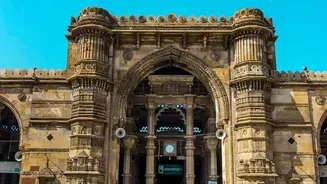
Ahmedabad has been strategically chosen as the anchor city for the bid. The proposal builds on the city's successful bid to host the 2030 Commonwealth Games, with a plan to use and enhance the infrastructure developed for that event. A key element is the Sardar Vallabhbhai Patel Sports Enclave, a sprawling 350-acre site being developed along the Sabarmati River. This state-of-the-art complex is envisioned as the primary hub, situated next to the world's largest cricket ground, the Narendra Modi Stadium. The master plan, developed in partnership with the global design firm Populous, emphasizes a legacy-driven model, ensuring facilities provide public value for decades to come. The plan includes not just stadiums but also integrated transport, accommodation, and public spaces like parks and even an artificial beach.
A Master Plan for Legacy
Modern Olympic bids are won on the promise of sustainability and long-term community benefit, and India's plan leans heavily into this. The infrastructure strategy is designed to be 'legacy-driven' rather than purely 'event-led'. This means venues are being planned with adaptive reuse in mind, for residential, commercial, or community sports purposes after the Games conclude. The proposal also adopts a hub-and-spoke model, distributing venues across different parts of the Ahmedabad Metropolitan Region. This approach aims to spread development, reduce congestion, and ensure the benefits of new infrastructure are felt across a wider area. The entire project is part of a 20-year master plan for the Ahmedabad Urban Development Authority, showcasing a deep integration of the Olympic project with the city's future.
The Long Road to 2036
Presenting the vision is just the first formal step in a long and competitive process. India is currently in what the IOC calls the 'Continuous Dialogue' phase. It is one of seven nations that have expressed interest, with potential rivals including Germany, Hungary, Qatar, South Africa, South Korea, and Türkiye. The next major milestone will be in March 2027, when the IOC Executive Board will shortlist candidates to move into a more focused 'Strategic Dialogue'. This will involve deeper feasibility assessments, site visits, and the submission of financial and legal guarantees. The final decision on the host for the 2036 Games is not expected until mid-2029.
More Than Just Sports
For India, the bid represents more than just an opportunity to host an athletic competition. Officials have framed it as a powerful driver of economic growth and national prestige. Hosting an event of this scale is expected to create mass employment, similar to the economic impact seen from major events like the IPL, and boost the national economy. Sports Minister Anurag Thakur, a vocal proponent of the bid, has previously stated that the cost of developing sports infrastructure is a small fraction of the government's overall capital expenditure and that the investment will yield significant returns. The bid is being positioned as a statement of an ambitious, aspirational 'New India' ready to take its place on the world stage, building on massive nationwide advancements in road, rail, and air infrastructure.