





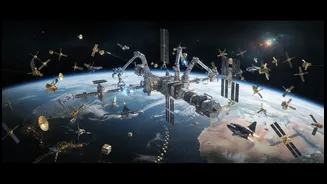


The End of an Era
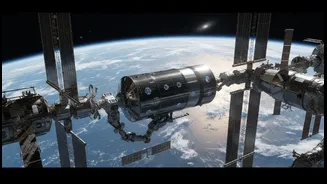
The International Space Station is one of the greatest engineering feats in history, a symbol of global cooperation that has hosted astronauts continuously since 2000. But all journeys must end. The aging outpost, which weighs over 400 tons, is becoming
increasingly expensive and difficult to maintain. NASA and its partners have committed to operating the station through 2030, after which it will be carefully deorbited to a watery grave in a remote area of the Pacific Ocean known as Point Nemo. This planned decommissioning has created an urgent and compelling opportunity, sparking a new kind of space race—not between nations, but between companies.
NASA's Pivot to Customer
Crucially, NASA is not building another ISS. Instead, it is transforming its role from owner and operator to anchor customer. Through its Commercial Low Earth Orbit Destinations (CLD) program, the agency is funding and supporting private companies to develop their own orbital platforms. The plan is to buy services—like astronaut time and research capacity—from these commercial providers, ensuring the United States maintains an uninterrupted human presence in space without bearing the full cost of station ownership. After some debate over strategy in early 2026, NASA has recently reaffirmed its commitment to this commercial approach, releasing a draft request for proposals in early July 2026 to move the program forward.
The Frontrunners: Axiom and Starlab
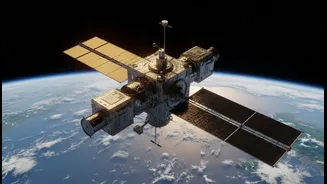
Among the pack of contenders, a few have emerged as clear frontrunners. Houston-based Axiom Space has a unique strategy, having already flown multiple private astronaut missions to the ISS. Its plan involves attaching its first module to the ISS as early as 2027, then adding more components before detaching to become a free-flying station before the ISS is retired. Meanwhile, Starlab is a transatlantic joint venture between America's Voyager Space and Europe's Airbus. This partnership is developing a large, single-module station focused on research, with a target launch date of 2029 aboard a SpaceX Starship.
The Disruptors: Vast and Other Visionaries
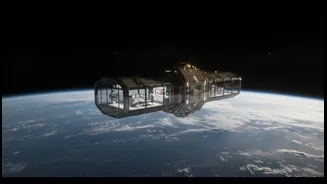
The race isn't limited to just a couple of players. California startup Vast is aggressively pushing to be first, aiming to launch its standalone Haven-1 station in early 2027. While smaller than other initial concepts, a successful launch would make it the first-ever commercial station in orbit, with the first crewed mission, Vast-1, to follow. Other major players like Blue Origin and Sierra Space have been developing their Orbital Reef concept, envisioned as a 'mixed-use business park' in space. While some initial partnerships have shifted, the breadth of companies entering this market—including Northrop Grumman, which joined the Starlab team—highlights the widespread belief in a future LEO economy.
A New Economy in Orbit
These stations won't just be science labs. They are the foundation for a whole new economy in low Earth orbit. The business cases extend far beyond government research contracts. Potential markets include in-space manufacturing of unique materials like fiber optics or bioprinted organs, advanced materials research in microgravity, and the burgeoning market of private space tourism. Companies are betting that creating reliable access to space will unlock unforeseen commercial applications, turning LEO from a government-funded frontier into a bustling hub of private enterprise. The success of this transition is critical, not just for the companies involved, but for continuing humanity's expansion into the solar system.