





The Balcony Gardener's Dilemma
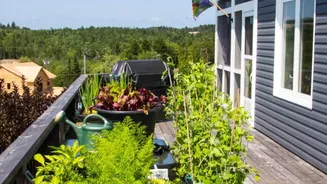
Container gardening on a balcony presents a unique set of challenges. Pots can dry out quickly in the sun and wind, while a surprise rain shower can leave them waterlogged. The signs of overwatering—like yellowing leaves and mushy stems—can confusingly
mimic the signs of underwatering, such as wilting. This constant guesswork is frustrating and can be fatal for your beloved plants. Traditional methods, like sticking a finger in the soil, only give you a surface-level idea and can be inaccurate for the root zone where it matters most. Overwatering is one of the most common causes of houseplant failure, as it suffocates roots and leads to rot.
What Exactly Are IoT Soil Probes?
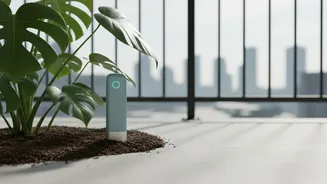
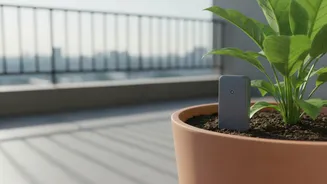
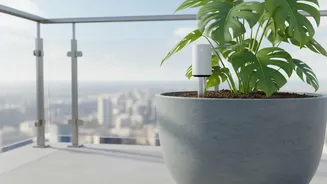
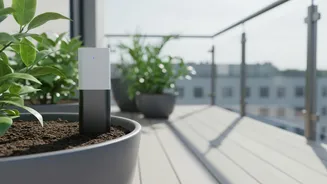
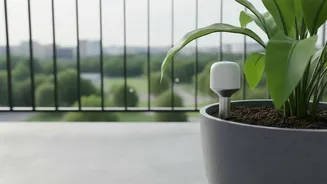
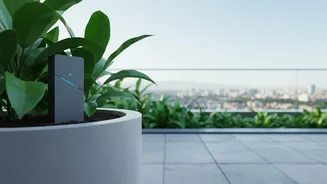
IoT, or the "Internet of Things," simply refers to physical devices connected to the internet, collecting and sharing data. An IoT soil probe is a small, smart sensor that you place in the soil of your plant's pot. This device acts as a dedicated health monitor, tracking key conditions in the soil. Most probes are battery-operated and designed to be left in place, providing continuous information without disturbing the plant. They connect wirelessly, usually via Bluetooth or Wi-Fi, to an application on your smartphone, giving you a direct line of communication to your plant's environment.
How Technology Meets Greenery
So, how does a small probe know how thirsty your plant is? Most consumer-grade sensors use one of two methods: resistive or capacitive sensing. Resistive sensors pass a small electric current between two electrodes in the probe. Since water conducts electricity, wetter soil allows the current to pass more easily (lower resistance). Capacitive sensors, which are often more durable, measure the soil's ability to hold an electric charge, which changes based on its water content. The sensor takes these electrical readings, converts them into a moisture level percentage, and sends that data directly to your phone. You get a precise, real-time measurement of the moisture right at the root ball.
Real-Time Data for Healthier Plants
The true magic happens in the app. Instead of guessing, you see clear data. The app will typically show the soil moisture as a percentage. You can receive customized alerts telling you, "Your fern needs water!" or "Hold off on watering the succulent." This prevents both the immediate stress of a plant drying out and the slow, silent damage of root rot from overwatering. Many apps also feature plant databases. You can select the specific type of plant you have, and the system will automatically calibrate the ideal moisture range for that species, from a water-loving calathea to a drought-tolerant cactus.
Beyond Just Moisture Levels
While moisture is the main event, many advanced IoT probes offer a more holistic view of your plant's well-being. Some sensors can also measure soil fertility (conductivity), ambient light levels, and temperature. This is incredibly useful for balcony gardens where conditions can be extreme. For example, you might discover that your tomatoes aren't getting enough direct sun in their current spot, or that the soil nutrients have been depleted and it's time to add fertilizer. By tracking these additional factors, you can make more informed decisions to create the perfect micro-environment for each plant to thrive.
Choosing the Right Smart Sensor
When selecting a soil probe, consider a few key features. First, think about connectivity. Bluetooth sensors are simple but require you to be within range to sync data, while Wi-Fi-enabled sensors connect through a hub and let you check on your plants from anywhere. Battery life is another important factor, as you want a device you can set and forget for months at a time. Finally, look at the companion app. Is it user-friendly? Does it have a comprehensive plant library? Some of the most valuable features are the historical data charts, which can help you understand your plant's watering patterns over time.