



The Foundation of a Good Hairstyle
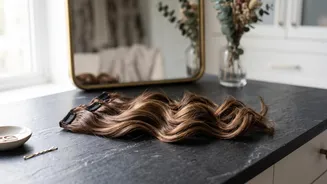
Before you even think about the final look, the application is key. The goal is to create a secure base for the clips without pulling on your roots. Instead of clipping directly onto fine, slippery hair, create a small, sturdy section. Take a thin slice
of your hair where you plan to place the weft and gently backcomb the roots. This 'cushion' of teased hair gives the clips something substantial to grip without needing to be snapped shut with excessive force. This simple step distributes the weight of the weft more evenly and prevents the pulling sensation that leads to tension headaches and, over time, hair loss. Make sure the clips are snapped shut comfortably, not painfully tight against your scalp.
The Relaxed Low Ponytail
A sleek, high ponytail can put immense strain on your hairline, and adding the weight of clip-ins only makes it worse. A low ponytail is a far gentler and equally chic alternative. Secure your natural hair into a loose, low pony at the nape of your neck. Then, take a two or three-clip weft and clip it in just above your hair tie, wrapping it around the base of the ponytail. You can then take a small piece of hair from the ponytail to wrap around the weft and hair tie, concealing everything. This method places the weight on the hair tie itself, not on your delicate roots, giving you a full, swinging ponytail without the stress.
The Effortless Half-Up Twist
A half-up style is perfect for showcasing length, but securing it too tightly can concentrate tension in one area. Instead of a high, severe half-ponytail, opt for a soft twist. Part your hair from ear to ear. In the lower section, add your clip-in wefts, focusing on the area that will be covered. Then, take two sections of hair from the front, gently twist them away from your face, and bring them together at the back of your head. Secure them with a bobby pin or a small, clear elastic. This style leaves the hair at your crown free from tension and effectively hides the top of the wefts, creating a seamless, romantic look.
Strategic Volume for Down Styles
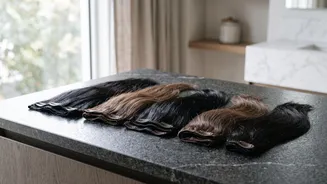
Wearing your hair down is the lowest-tension style of all, but incorrect weft placement can still cause problems. Avoid placing the heaviest wefts at the crown of your head, where your hair is often finer and more fragile. Instead, concentrate the larger, heavier wefts lower down, from the occipital bone (the curve at the back of your head) downwards. Use the smaller, single-clip wefts for the sides to frame your face. Staggering the wefts instead of placing them in a perfect, straight line can also help distribute the weight more effectively, making them feel lighter and more comfortable for all-day wear.
Disguise Wefts with Braids and Headbands
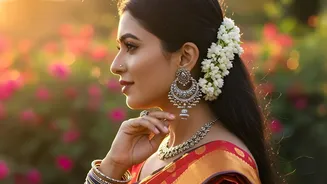
Braids are a fantastic tool for both styling and concealing. For a bohemian look, install your clip-ins and then create loose, messy braids throughout your hair. A classic crown braid is another brilliant option. You can braid your natural hair around your head and then strategically tuck and clip wefts into the braid itself to add volume, completely hiding the clips. Similarly, a thick, stylish headband can be your best friend. Place it over your hair after the wefts have been installed; it will press the clips flat against your head and hide any bumps, ensuring a smooth and natural-looking finish.
Listen to Your Hair
Perhaps the most important tip is to pay attention to what your hair and scalp are telling you. If a style feels heavy, pinches, or pulls, it is. Don't suffer for the sake of a look. Remove the extensions and try a different placement or a looser style. It's also crucial to give your hair a break. Avoid wearing clip-ins every single day to allow your scalp and follicles to rest and recover. Never sleep in your clip-ins, as this can cause significant tangling and breakage. Proper care ensures that clip-ins remain a fun accessory, not a source of long-term damage.