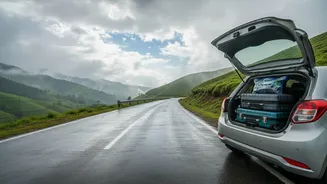







The First Layer of Defence: Waterproofing
Your first priority is shielding everything from moisture. Don't assume the car boot will stay perfectly dry, as water can find its way in during heavy downpours. For ultimate protection, invest in dedicated dry bags or hard-shell waterproof cases for
high-value electronics like laptops and cameras. For a budget-friendly approach, double-bag items in thick bin liners before placing them in your luggage. Even soft-sided bags and backpacks can be made water-resistant. You can use a waterproofing spray or a DIY wax treatment to create a barrier against moisture. A rain cover for your backpack is another simple and effective tool. Always pack liquids like toiletries separately in sealed bags to prevent internal spills from damaging your gear.
Cushioning Your Valuables from Bumps
Highways aren't always smooth, and sudden braking can send your belongings tumbling. Protect fragile items from shock by creating layers of padding. Use your clothes, towels, or blankets to wrap around delicate equipment. This not only saves space but also provides excellent cushioning. For smaller tech accessories like hard drives, chargers, and power banks, consider using padded pouches or even thick socks. Keep original boxes with foam inserts for particularly sensitive items like lenses or drones. If you don't have those, bubble wrap is a great alternative. The goal is to ensure nothing can slide or knock against a hard surface inside your bags.
Strategic Loading for Safety and Stability
How you load your car is just as important as how you pack your bags. The cardinal rule is to place the heaviest items at the bottom, as close to the centre of the vehicle as possible, and pushed up against the back of the rear seats. This helps maintain the car's centre of gravity, improving stability and handling. Placing heavy loads too far back can negatively affect the car's balance. Lighter, softer items like duffel bags and pillows can be placed on top. Never stack items so high that they obstruct your view through the rear window. Unsecured heavy objects can become dangerous projectiles in a sudden stop, so ensure everything is packed in snugly and cannot shift around.
Taming the Cable Chaos
A tangled mess of cables is a common travel frustration. Before you pack, take a moment to neatly wrap each charging cable, headphone cord, and power adapter. Use velcro ties, rubber bands, or dedicated cable organisers to keep them tidy. Storing all your cables and small accessories in one or two designated pouches will save you from frantic digging later. This not only keeps you organised but also prevents damage to the delicate connection points of your cables. Consider a multi-port USB charger to reduce the number of plugs you need to bring. Grouping items by function—all camera gear in one pouch, all phone accessories in another—can streamline your setup when you reach your destination.
The 'Easy Access' Bag
When you're on the road, some items need to be within reach. Prepare a separate, smaller bag to keep inside the car cabin with you. This should contain essentials for the journey, such as your phone charger, a power bank, any necessary medication, snacks, wet wipes, and a flashlight. This prevents you from having to pull over and unpack your entire boot just to find one small item. During a rainy trip, it's especially useful as it means you won't have to open your main luggage in a downpour. Keeping your most valuable, smaller items like your wallet, phone, and keys in the cabin is also a good security practice.