




The Silent Toll of Sitting
For millions of people, sitting for eight hours a day is simply a reality of their job. While it may not feel strenuous, this sedentary lifestyle has been linked by health experts to significant long-term risks. These include an increased chance of developing
metabolic syndrome, heart disease, diabetes, and even certain types of cancer. The problem isn't just a lack of intense exercise; it's the continuous, uninterrupted stillness. When you sit for long periods, your circulation slows, your metabolism downshifts, and your muscles and joints can become stiff and strained, leading to poor posture, back pain, and other musculoskeletal issues. Even a daily workout can struggle to completely offset the negative effects of sitting all day.
What Are 'Micro-Movements'?
This is where micro-movements come in. The term refers to small, gentle, and brief exercises or stretches that you can do right at your desk to break up long periods of sitting. They aren't meant to make you sweat or leave you breathless. Instead, their power lies in consistency. The goal is to interrupt the static posture of sitting every 30 minutes or so. These tiny bouts of activity, often lasting less than a minute, help to re-engage muscles, boost circulation, lubricate joints, and prevent the stiffness and sluggishness that build up over the workday. Think of it as hitting a gentle reset button for your body throughout the day.
1. The Seated Spinal Twist
One of the best ways to counteract the forward-hunching posture of desk work is with a gentle twist. This movement helps to maintain mobility in your spine and can relieve lower back tension. To perform it, sit tall at the edge of your chair with your feet flat on the floor. Gently twist your torso to the right, placing your left hand on your right knee for a light leverage. Hold for 20-30 seconds, breathing evenly, then slowly return to the center and repeat on the other side. Avoid forcing the movement; the goal is a gentle stretch, not a deep contortion.
2. The Subtle Shoulder Roll and Neck Release
Neck and shoulder tension is a hallmark of the desk worker. Staring at a screen often causes us to crane our necks forward and round our shoulders. A simple shoulder roll is an instant remedy. Simply lift your shoulders up toward your ears, roll them back and down, squeezing your shoulder blades together. Repeat this 5-10 times to release tension. Follow this with a neck release by gently tilting your right ear towards your right shoulder, holding for 15-20 seconds, and then repeating on the left side. This combination helps fight off tension headaches and stiffness.
3. The Under-the-Desk Foot and Leg Wake-Up
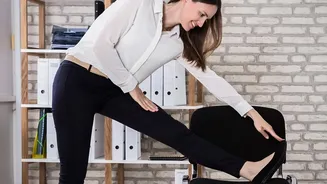
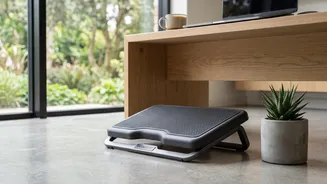
Your lower body often goes dormant while sitting. You can easily wake up these muscles without anyone even noticing. Start by doing simple ankle circles, rotating each foot clockwise and then counter-clockwise. Follow this by extending one leg straight out in front of you and flexing your foot, holding for a few seconds before lowering it. Alternate between legs. You can also perform seated calf raises by simply lifting your heels off the floor while keeping your toes planted, then lowering them back down. These small actions promote blood flow and prevent lower limb stiffness.
4. The 'Stand and Stretch' Habit
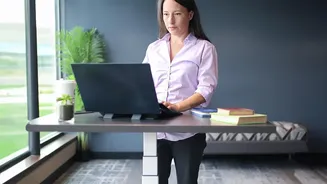
Perhaps the most powerful micro-movement is simply standing up. Research shows that breaking up sitting time every 30 minutes has measurable benefits. Set a timer to remind you to get out of your chair. When you stand, perform a quick hip flexor stretch by stepping one foot back into a small lunge. Or, simply place your hands on your lower back for support and gently arch your back to counteract the forward slouch. Use any excuse to move: walk to get a glass of water, visit a colleague's desk instead of sending an email, or take the stairs instead of the elevator.
Making It a Lasting Habit
The key to success with micro-movements is consistency. It's not about one perfect stretch, but about creating a rhythm of regular, small interruptions to your sitting time. Try 'habit stacking' by linking a micro-movement to an existing routine. For example, do a spinal twist after every email you send, or do shoulder rolls every time you join a video call. Using a timer or a simple app on your phone or computer can also provide helpful nudges throughout the day to get up and move. Start small with just one or two different movements and gradually incorporate more as it becomes second nature. The easier you make it, the more likely you are to stick with it.