






What Exactly Is 'Gut Health'?
Think of your gut, specifically your large intestine, as a bustling city populated by trillions of microorganisms—bacteria, viruses, and fungi. This community is called the 'gut microbiome'. For years, we thought of bacteria only as germs that cause disease.
But we now know that a vast majority of these tiny residents are crucial for our health. A healthy gut has a diverse and balanced population of these microbes. They help digest food, produce essential vitamins, regulate our immune system, and even influence our mood. 'Gut health' simply means keeping this internal ecosystem thriving and in balance.
Fibre: The Unsung Hero
So, where does fibre fit in? While our bodies can't digest it, our gut bacteria can. Fibre is essentially food for the good microbes in your gut. It acts as a 'prebiotic'. When these good bacteria feast on fibre, they produce beneficial compounds called short-chain fatty acids (SCFAs). These SCFAs are superstars: they provide energy for the cells lining your colon, reduce inflammation, and help strengthen the gut barrier, preventing harmful substances from leaking into your bloodstream. Without enough fibre, the good bacteria starve, and the delicate balance of your gut microbiome can be thrown off.
Meet the Two Types of Fibre
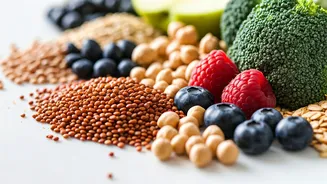
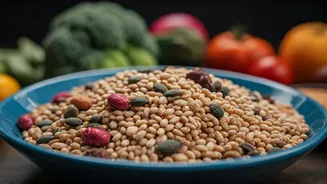
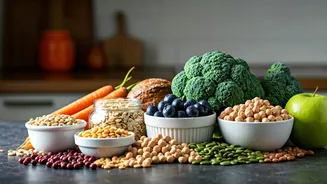
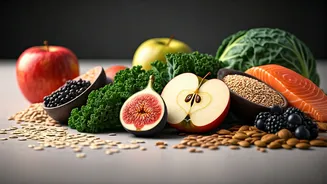
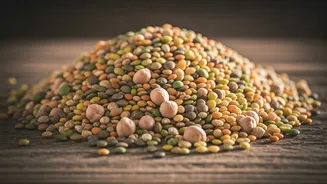
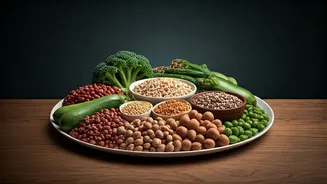
To keep your gut city running smoothly, you need two types of fibre, and most whole foods contain a mix of both. **Soluble Fibre:** This type dissolves in water to form a gel-like substance. It helps slow down digestion, making you feel full for longer, and can help manage blood sugar and lower cholesterol. Think of the soft, slightly gooey texture of oats or isabgol (psyllium husk). Excellent Indian sources include dals (lentils), beans (rajma, chana), oats, apples, carrots, and citrus fruits. **Insoluble Fibre:** This type does not dissolve in water. It adds bulk to your stool, helping food pass more quickly through the digestive system and preventing constipation. It’s the 'roughage' found in whole grains and vegetables. Great sources include whole wheat atta, millets (jowar, ragi, bajra), brown rice, nuts, cauliflower, green beans, and the skins of many fruits and vegetables.
How Much Do You Actually Need?
The Indian Council of Medical Research (ICMR) and the National Institute of Nutrition (NIN) recommend that a healthy Indian adult's diet should provide around 30-40 grams of dietary fibre per day. Unfortunately, with the rising consumption of refined and processed foods—like maida-based breads, white rice, and packaged snacks—many of us are falling well short of this target. A diet low in fibre doesn't just risk constipation; over time, it can negatively impact your gut microbiome, contributing to a host of health issues.
Simple Swaps to Boost Your Fibre Intake
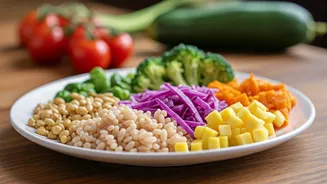
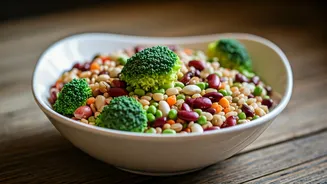
You don’t need to completely overhaul your diet. Small, consistent changes can make a huge difference. Here are some easy ways to get more fibre onto your plate: * **Embrace Millets:** Swap white rice or refined wheat rotis for those made from jowar, bajra, or ragi a few times a week. Start your day with a millet-based porridge or upma. * **Load Up on Legumes:** Make dals, chana, and rajma a central part of your meals. They are powerhouses of both protein and fibre. * **Eat the Rainbow:** Aim to include a variety of seasonal vegetables in your sabzis, sambars, and salads. Don't forget leafy greens like palak and methi. * **Snack Smart:** Instead of packaged chips, reach for a handful of nuts, a piece of fruit (with its skin, like an apple or pear), or some roasted chana. * **Go Whole:** Choose whole-wheat bread over white bread and brown rice over white rice whenever possible. * **A Gentle Warning:** If your current diet is low in fibre, increase your intake gradually over a few weeks. A sudden jump can cause bloating and gas. And remember to drink plenty of water, as fibre needs it to do its job properly.