
Jatayu Earth’s Center, Kerala
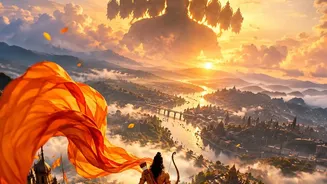
Perhaps the most dramatic tribute to the mythical bird is the Jatayu Earth’s Center in Chadayamangalam, Kerala. This is widely believed to be the spot where the wounded Jatayu fell after his fierce battle with Ravana. The centerpiece of this 65-acre eco-tourism
park is the world's largest bird sculpture, a colossal statue of Jatayu lying on his back. Measuring 200 feet in length, 150 feet in width, and 70 feet in height, the concrete and steel figure is a breathtaking sight. The project, envisioned by filmmaker and sculptor Rajiv Anchal, took over a decade to complete. Visitors can reach the sculpture via a scenic cable car ride that offers panoramic views of the surrounding hills. Inside the sculpture, there is a museum and a 6D theatre that narrates the epic battle. The park also features an adventure zone and an Ayurvedic cave resort, blending mythology with modern tourism and wellness. Adjacent to the main attraction is the ancient Jatayu Rama Temple, where Lord Rama is said to have granted moksha (salvation) to the dying bird. A footprint on the rock is believed to be that of Lord Rama himself.
Lepakshi, Andhra Pradesh
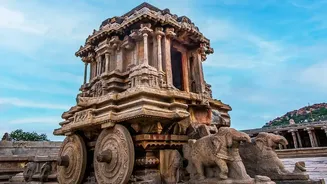
Another prominent location in Jatayu's story is Lepakshi, a historic village in Andhra Pradesh. Local legend holds that after finding the mortally wounded Jatayu, Lord Rama compassionately uttered the words 'Le Pakshi'—Telugu for 'Rise, bird'—granting him salvation. This act is said to have given the village its name. Today, Lepakshi is famous for the Veerabhadra temple, an architectural marvel from the Vijayanagara Empire, dating back to the 16th century. The temple is renowned for its intricate carvings, beautiful mural paintings, and the famous 'Hanging Pillar', a stone pillar that barely touches the ground. While the temple is dedicated to a fierce form of Lord Shiva, its connection to the Ramayana is a key part of its identity, attracting pilgrims and history enthusiasts alike. The presence of what is believed to be Sita's footprint further deepens its mythological significance. Just outside the main temple complex, a giant Nandi (bull) sculpture, carved from a single granite block, adds to the site's grandeur.
The Final Rites Sites
The story of Jatayu doesn't end with his fall; the performance of his last rites by Lord Rama is another significant event that has been immortalized in different locations. In Tamil Nadu, two temples are associated with this part of the legend. The Vijayaraghava Perumal Temple at Thiruputkuzhi, near Kanchipuram, is traditionally known as the place where Rama performed the final rites. The temple complex includes a sacred water body called Jatayu Theertham and a shrine dedicated to the bird king. Further south, in Rameswaram, the Jatayu Tirtham is another temple dedicated to his memory. It is believed to house the samadhi (final resting place) of Jatayu and commemorates Rama's pilgrimage to perform the sacred rituals for the bird he considered a brother. This makes Rameswaram, already a major pilgrimage hub famous for the Ramanathaswamy Temple, another stop on the trail of Jatayu's journey.
A Maharashtrian Connection
The tale of Jatayu also finds a home in Maharashtra. Near Nashik, in a village named Taked, stands the Sarvatirtha Jatayu Mandir. According to this version of the legend, this is where Jatayu fell after his battle. Local tradition holds that a thirsty and dying Jatayu was given water when Lord Rama shot an arrow into the ground, bringing forth water from the sacred river Ganga. Nashik itself is a key location in the Ramayana, with the Panchavati area being the site where Rama, Sita, and Lakshmana lived during their exile and from where Sita was abducted. The Jatayu temple in Taked adds another layer to the region's deep connection with the epic, offering devotees a different geographical anchor for this poignant episode.