






Meet ‘Transformer’ Furniture
Forget fleeting colours or fussy materials. The single smartest, most practical, and future-proof trend taking over Indian homes is not a what, but a how. It’s the rise of multi-functional, modular furniture—pieces that adapt, transform, and serve more
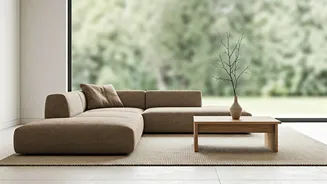
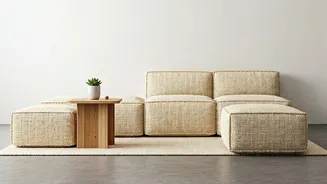
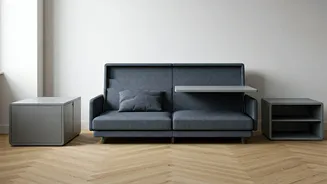
than one purpose. Think of it as ‘transformer’ furniture: items that can change form and function to meet the demands of modern life. This isn't just about the humble sofa-cum-bed we all know. We're talking about a new generation of clever design: coffee tables that rise and expand to become six-seater dining tables, beds that fold away to reveal a full-sized desk, and modular sofas whose sections can be reconfigured from a formal L-shape into scattered seating for a party. This trend is a design philosophy rooted in practicality, answering the question: how can one piece of furniture do the job of three?
Why Now? The Post-Pandemic Home
The need for such intelligent furniture has been supercharged by our new reality. The pandemic permanently altered our relationship with our homes. Suddenly, the living room wasn't just for relaxing; it was also a conference room. The bedroom wasn't just for sleeping; it became a yoga studio. This blurring of lines exposed the limitations of traditional, static furniture. In densely packed urban centres like Mumbai, Delhi, and Bengaluru, where every square foot is precious, this trend is less a luxury and more a necessity. As apartments get smaller, our need for functionality grows. We demand more from our spaces, and multi-functional furniture is the most logical answer. It allows a one-bedroom flat to have a dedicated workspace, a guest-ready living room, and ample storage, all without feeling cluttered or compromised.
The Genius in the Details
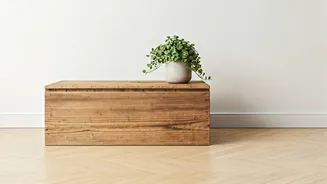
The true brilliance of this trend lies in its versatility. It’s about solving everyday problems with elegant engineering. Consider a pouffe in your living room. In its basic form, it’s a footrest. But a smart one might have a removable lid for storing magazines, or it might contain a stack of five nesting stools inside, ready to be deployed when guests arrive. That’s one small item providing seating, storage, and comfort. Other star players include wall beds (or Murphy beds) that integrate seamlessly into a shelving unit, freeing up an entire room’s floor space during the day. There are also kitchen islands on wheels with drop-leaf extensions that can serve as a prep station, a breakfast bar, or be rolled away completely. The focus is on dynamic, not static, living. Your home should adapt to your needs at any given moment, not the other way around.
Smarter for Your Wallet and the Planet
Initially, a high-quality convertible table may seem more expensive than a standard one. However, the long-term economics are compelling. Instead of buying a coffee table, a work desk, and a small dining table, you’re buying one piece that does it all. This consolidation saves not only money but also your most valuable asset: space. There’s also a strong sustainability angle. By choosing one piece that serves multiple functions, we reduce consumption. We buy less, and we are encouraged to invest in better-quality items that will last longer precisely because they are so useful. This philosophy of ‘buy once, buy well’ is a powerful antidote to the fast-furniture culture of disposable, trend-driven pieces that end up in landfills. A modular sofa you can reconfigure or re-upholster section by section is a piece you’re more likely to keep for a decade, not just a season.
How to Adopt the Trend
Getting started doesn't require a complete home makeover. Begin by identifying the biggest pain point in your home. Is it a lack of storage? A non-existent workspace? A dining area that feels cramped? Start your search there. Look for pieces with high-quality mechanisms—the hinges, sliders, and springs are what make these items work, so they need to be robust. Read reviews and, if possible, test the furniture in a showroom to feel how smoothly it operates. Don’t be swayed by just the primary function; evaluate how well it performs all its intended tasks. A desk that’s shaky or a table that’s difficult to convert will only cause frustration. The goal is to add convenience, not complexity, to your life.