



The Great Indian Meltdown
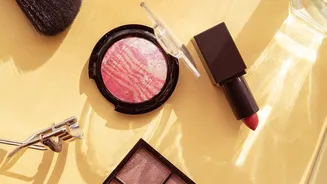
The frustration is universal for anyone who wears makeup in India: foundation separating, kajal smudging into 'panda eyes,' and lipstick bleeding long before lunch. For years, the blame was placed on oily skin or poor application. However, the real culprit
is the combination of extreme heat and relentless humidity, a signature of the Indian climate. This environment raises skin temperature, which in turn boosts sweat and oil production. This excess moisture on the skin’s surface prevents makeup from adhering properly, causing it to break down and shift. What many are experiencing isn't just a seasonal annoyance; it's a daily performance failure of products often not designed for such demanding conditions.
The Science of the Smudge
At a chemical level, most cosmetics are emulsions of oils, waxes, and water. Heat lowers the viscosity of these ingredients, making them runnier. Humidity then introduces excess moisture, which can break down the binding agents that hold a formula together. Think of it this way: a foundation that is stable in a dry, 22°C European climate behaves very differently in a 35°C, 80% humidity environment like Mumbai or Chennai. Studies show that for every 1°C rise in temperature, sebum (oil) production can increase by 10%. This means your skin becomes an oilier canvas, making it even harder for makeup to last. The result is a dual assault—heat from within the skin and moisture from the air—that standard formulations simply can't withstand.
Why Global Formulas Often Fail
For decades, the Indian beauty market was dominated by international brands whose products were primarily formulated for and tested in temperate Western climates. Standard stability testing might check a product's integrity at high temperatures in an oven, but it often fails to replicate the constant, combined assault of both heat and atmospheric moisture. This geographical disconnect is why a 'long-wear' foundation from a global brand might last all day in London but give up by midday in Delhi. Recognizing this gap, both homegrown and international brands are now creating 'climate-adaptive' or 'climate-intelligent' formulations specifically for the Indian market. This marks a major shift from a one-size-fits-all approach to recognising that geography dictates performance.
The Rise of Climate-Resilient Ingredients
To combat the meltdown, formulators are turning to a new generation of ingredients. The heroes of humidity-proof makeup are 'film-formers' like silicone derivatives (e.g., trimethylsiloxysilicate) and acrylate copolymers. These ingredients create a flexible, breathable, and water-resistant film on the skin that locks makeup in place. You’ll also find lightweight, non-greasy emollients like squalane and specific silicones that provide a smooth base without trapping heat or feeling heavy. For foundations, brands are developing non-occlusive formulas that provide high coverage without clogging pores, using specific emulsifiers and stabilisers to resist sebum and sweat. Products are now explicitly marketed as 'sweat-proof', 'transfer-proof', and 'humidity-resistant', reflecting this new focus on performance under pressure.
How to Build Your Climate-Proof Beauty Kit
Navigating the beauty aisle is becoming easier as brands get more transparent. Look for keywords like 'long-wear', 'water-resistant', or 'transfer-proof'. For complexion, silicone-based primers and foundations often perform better in humidity as they create a barrier against moisture. Mattifying primers can help control oil in the T-zone, creating a better grip for foundation. When it comes to technique, less is more. Apply thin layers and consider setting each layer with a light dusting of translucent powder. Finally, a good setting spray is non-negotiable; it acts as the final seal, locking everything in place. For lips, liquid lipsticks and stains are superior to traditional creamy bullets, as they dry down and are less likely to slide around.