



A Front-Row Seat to a Cosmic Collision
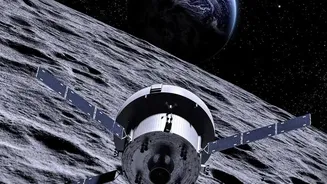
For the first time in over fifty years, humans journeyed to the Moon, and they came back with a remarkable story. During their flight, the Artemis II crew witnessed something that has long been studied from afar but never with such proximity: the constant
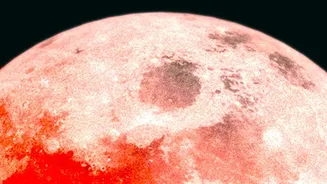
bombardment of the lunar surface. The astronauts reported seeing five distinct, instantaneous flashes of light on the Moon's dark side. These observations, described as faint 'pinpricks', stunned scientists in Mission Control, who reportedly reacted with 'audible screams of delight'. While NASA has monitored these events with robotic telescopes for years, having human observers adds a new dimension. The sightings confirmed that even outside of major meteor showers, the Moon is a dynamic and active body, constantly being struck by small pieces of space debris.
What Are Lunar Impact Flashes?
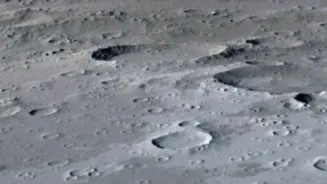
Unlike Earth, the Moon has virtually no atmosphere to protect it. When a meteoroid—even one as small as a grape or walnut—hurtle through space and strikes the lunar surface, it does so at tremendous speed, often faster than 20 kilometers per second. The immense kinetic energy from this hypervelocity impact is instantly converted into intense heat, vaporizing the rock and a small amount of lunar soil, or regolith. This creates a brief, brilliant burst of light that glows for just a fraction of a second before vanishing. It’s not fire in the conventional sense, as there's no oxygen for combustion. Rather, it’s the raw energy of a collision creating a split-second cloud of superheated plasma and molten rock.
Why These 'Pinpricks' of Light Matter
Each tiny flash provides a crucial piece of a much larger puzzle. Studying the frequency, location, and brightness of these impacts helps scientists characterize the meteoroid environment in the Earth-Moon system. This data is not just academic; it's essential for ensuring the safety of future lunar explorers and the habitats they will one day build. Understanding the rate at which space rocks of different sizes strike the Moon allows engineers to design spacecraft, lunar bases, and spacesuits that can withstand the harsh realities of the lunar environment. The Artemis II observations were particularly valuable because the crew could provide visual descriptions and pinpoint locations, which were cross-referenced with ground-based observations to provide a more complete picture of the events.
From Sighting to Science: The Analysis Begins
An astronaut's observation is a powerful starting point, but it's not the end of the scientific process. As one mission scientist noted, 'It's the science community's job now to take these data and go do magical things with it'. The initial reports have been released as part of a massive data trove—over 800 gigabytes of images, audio, and crew notes. Now, researchers must meticulously analyze this information. This involves ruling out other potential causes for the flashes, such as cosmic rays striking an astronaut's eye or reflections from the spacecraft. For each confirmed flash, scientists will use software to analyze its light curve—how its brightness changed over that fraction of a second. This helps estimate the mass and energy of the impactor. This detailed analysis transforms a fleeting 'bloop' of light into hard data that can be used to model and predict risks.
A New Chapter in Lunar Exploration
The impact flash sightings were just one part of the Artemis II science mission, which also included detailed geological observations and testing systems critical for long-duration spaceflight. However, they perfectly capture the spirit of the Artemis program. By returning humans to the lunar environment, NASA isn't just retracing the steps of Apollo; it's building a sustainable presence that integrates human intuition with robotic precision. The crew's ability to spot these incredibly faint flashes—some likely the faintest ever seen by a human—demonstrates the unique value of having trained observers in deep space. These findings underscore that the Moon is not a static, grey museum piece but a living laboratory that still holds many secrets, impacting our understanding of the solar system's past and our future within it.