




An Overlap of Dams and Strikes
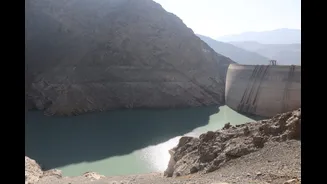
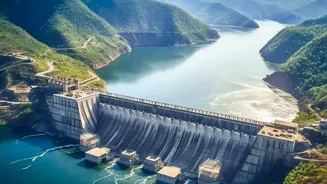
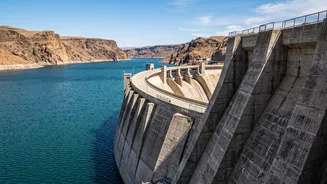
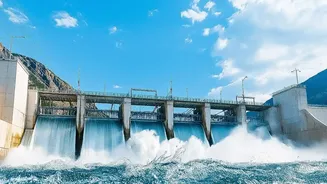
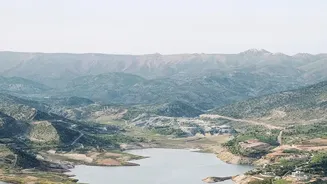
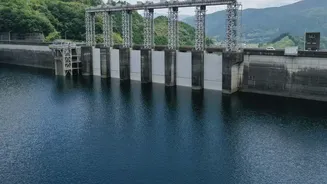
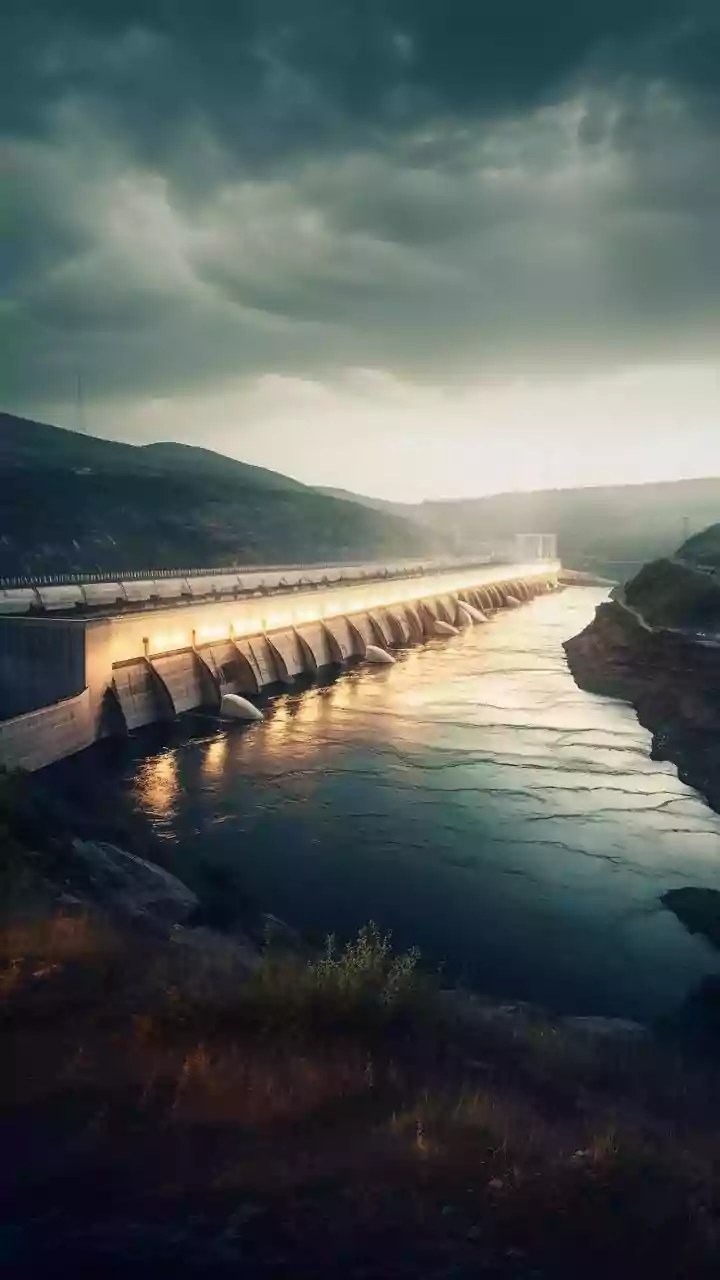
Recent analysis has highlighted a striking geographical correlation between Iran’s dams and the locations of alleged US and Israeli airstrikes on suspected military sites. Nima Shokri, a water security expert at Germany's Hamburg University of Technology,
noted that after mapping over 500 dams in Iran, he saw a strong resemblance to a map of recent military strikes. This has led experts to question whether the placement is a coincidence or a deliberate strategy. While the connection remains speculative and is not definitive proof, it has opened a new line of inquiry into Iran's long-term infrastructure planning.
The Strategic Logic of Water
The theories behind this potential strategy point to several advantages. Dams can provide a steady, independent supply of electricity and water, which are essential for maintaining large, complex underground military facilities, often dubbed 'missile cities'. These sprawling bases require significant power for life support, equipment, and operations. Having a dedicated power source disconnected from the national grid would ensure 'operational continuity' even if civilian infrastructure were disrupted in a conflict, according to former Israeli intelligence analyst Danny Citrinowicz. Furthermore, the massive construction projects associated with dams, involving heavy excavation and tunneling, can provide excellent cover for the simultaneous construction of hardened subterranean military sites.
A Fortress Mentality
This approach aligns with Iran's broader defense doctrine, which emphasizes building a decentralized and heavily fortified military infrastructure designed to survive a first strike. For decades, Iran has invested in creating deep underground facilities to protect its most valuable military assets, from missile production and storage to command-and-control centers. Placing these 'fortresses' in mountainous regions is common, and since dams are also often built in such terrain, some overlap is natural. However, the deliberate co-location with critical water infrastructure could add another layer of deterrence and protection, making adversaries hesitate to strike.
A Dangerous Dilemma
This potential dual-use nature of civilian infrastructure creates a complex dilemma. The presence of a military target near a dam complicates the calculus for any attacking force. A strike risks catastrophic collateral damage, including uncontrolled downstream flooding and the destruction of a vital civilian resource. This tactic effectively turns the civilian infrastructure into a shield. The scrutiny has drawn sharp reactions from Tehran, with officials warning that if their civilian infrastructure is treated as 'dual-use,' they will apply the same logic to the infrastructure of their adversaries. This escalatory rhetoric highlights the high stakes of the situation.
Skepticism and Alternative Theories
Not all experts are convinced of a direct military link. Some analysts argue that the correlation is a classic case of seeing patterns where none exist. They note that both military bases and dams are often built in remote, mountainous areas for geographic and geological reasons. Furthermore, one expert, Esfandyar Batmanghelidj, points out that fewer than 50 of Iran's 500-plus large dams actually have turbines to generate electricity, undermining the theory that they were built to power military bases. Another argument is that vested interests, including construction companies linked to the Islamic Revolutionary Guard Corps (IRGC), have a financial incentive to build large infrastructure projects, regardless of their necessity.