





The End of Endless Waiting
For decades, the question "Where is my train?" was answered with a shrug, a call to an often-busy enquiry line, or a hopeful glance at a crowded station display. Delays were a given, but their duration was a mystery. Today, apps like 'Where is My Train'
and the integrated 'RailOne' super app have transformed this experience. They provide real-time locations and remarkably precise Estimated Times of Arrival (ETAs), empowering millions of passengers daily. This isn't just about convenience; it's a fundamental shift that allows for better planning, from arranging a pickup to ordering a meal that arrives at your seat right on time. The core innovation that makes this possible is the ability to track trains accurately even when your phone is offline.
How the Offline 'Magic' Works
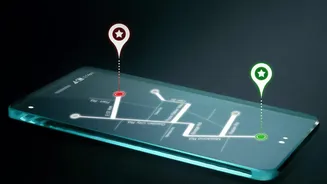
The true genius of these apps lies in their ability to function without a constant internet connection, a critical feature for a country where train routes often pass through areas with patchy or non-existent mobile data. The technology isn't magic, but a clever combination of methods. The primary technique is not actually GPS, but cell tower triangulation. Even without internet, your phone is always communicating with nearby cellular towers. These apps come with a pre-stored map of cell towers along every railway line in the country. By identifying the unique IDs of the towers your phone connects to as the train moves, the app can make a highly educated guess about its location, speed, and any delays. It then cross-references this with the train's official timetable, which is also stored locally on your device.
GPS and Crowdsourcing: Adding Layers of Accuracy
While cell tower data is the primary offline method, Global Positioning System (GPS) technology adds another layer of precision when available. Your phone’s built-in GPS receiver can pinpoint its location by listening for signals from satellites, a process that doesn't require an internet connection. However, GPS signals can be weak inside a metal train carriage or in tunnels. To bolster accuracy, these apps also use a hybrid model. When online, they pull data directly from official Indian Railways sources like the National Train Enquiry System (NTES). Furthermore, they gather anonymized location data from other app users on the same train, effectively crowdsourcing real-time information to refine ETAs for everyone. This multi-pronged approach ensures the system is robust and reliable.
Beyond Arrival Times: A Suite of Benefits
Knowing the exact arrival time is just the beginning. This technology unlocks a host of other features that reduce travel stress. Passengers can check the expected platform number, often with a confidence percentage, helping them position themselves correctly on crowded platforms long before the official announcement. Another popular feature is the location-based alarm, which can be set to wake you up a certain distance from your destination, ensuring you don't miss your stop, regardless of delays. For friends and family, the ability to share a train's live journey provides peace of mind. These apps have also become logistical backbones for other services, such as e-catering, where food deliveries are timed to the train's actual arrival, not its scheduled one.
How 'Exact' Are the Timings?
The claim of "exact" arrival times is, for the most part, impressively accurate, often down to the minute. These apps represent a monumental leap from the old system. However, they are not infallible. The offline methods are brilliant estimations, not perfect measurements. While the system is highly reliable, minor discrepancies can occur due to sudden, unscheduled stops between stations or last-minute signal changes that haven't yet been registered. The accuracy of data from official sources like NTES is considered the gold standard, but even that can have slight delays in reporting. In practice, the difference is often negligible, and the information provided is far more dependable than any method previously available to passengers.