







A Festival Reborn at Full Scale
For countless devotees, the Rath Yatra, or Chariot Festival, is not just an annual event; it is the spiritual heartbeat of the year. After the pandemic years forced scaled-down, devotee-less processions, its return to full-scale glory feels like a collective
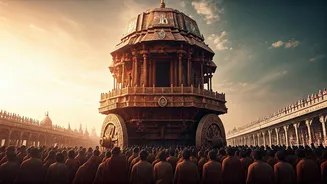
exhale. The grand Bada Danda in Puri, Odisha, once again transforms into a sea of people, their chants of 'Jai Jagannath' rising in unison. This year isn't just a resumption of tradition; it's a powerful reaffirmation of faith, community, and resilience. The festival's return to its uninhibited form signifies a broader return to normalcy, where public celebration and communal devotion can thrive once more.
The Lord of the Universe Meets His People
At its core, the Rath Yatra is a profoundly symbolic journey. It celebrates Lord Jagannath—considered the 'Lord of the Universe'—stepping out of the sanctum sanctorum of the 12th-century Jagannath Temple to meet his devotees, regardless of caste, creed, or background. Accompanied by his elder brother Lord Balabhadra and sister Devi Subhadra, he embarks on a nine-day sojourn to the Gundicha Temple, his mythical birthplace. This act of divine accessibility is central to the festival's ethos. Unlike in the temple, where access can be restricted, on the Bada Danda, the deities are visible to all, reinforcing a message of universal love and inclusion.
The Majestic Chariots of the Gods
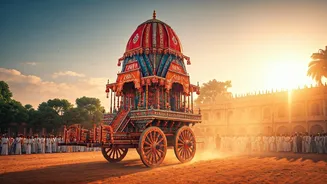
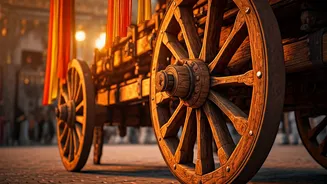
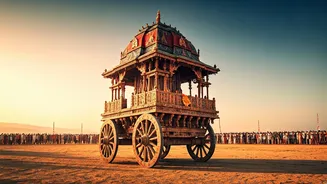
The chariots themselves are marvels of sacred engineering and artistry, constructed anew each year from specific types of wood. Each is a distinct mobile temple. Lord Jagannath's chariot, Nandighosha, stands a majestic 45 feet tall, with 16 wheels and adorned with red and yellow fabrics. Lord Balabhadra's chariot, Taladhwaja, is covered in red and green, while Devi Subhadra's Darpadalana is draped in red and black. The construction process, known as 'Ratha Nirman', begins on Akshaya Tritiya and is governed by ancient traditions. Pulling the thick ropes of these colossal chariots is considered an act of immense piety, a chance for devotees to physically connect with the divine journey.
Rituals Steeped in Meaning
The festival is a tapestry of intricate rituals. The 'Pahandi Bije' is a mesmerising sight, where the colossal wooden idols are carried out of the temple in a rhythmic, swaying procession. It’s a laborious and deeply spiritual process that culminates in the deities being placed on their respective chariots. Following this is the 'Chhera Panhara', a powerful ritual symbolising that in the eyes of the Lord, everyone is equal. The Gajapati Maharaja, the titular king of Puri, sweeps the chariot platforms with a golden broom and sprinkles them with sandalwood-scented water before the procession begins, performing the duty of a humble servant.
A Nine-Day Journey of Devotion
The procession from the main Jagannath Temple to the Gundicha Temple, a distance of about three kilometres, is the festival's centrepiece. It's a slow, arduous journey fuelled by pure devotion, taking hours as millions throng to catch a glimpse of the deities. The deities reside at the Gundicha Temple for seven days before making their return journey, known as the 'Bahuda Yatra'. The entire event is a vibrant spectacle of music, dance, and prayer, creating an atmosphere of unparalleled spiritual energy that reverberates not just in Puri but in similar Rath Yatras held in cities across India and the world.