




A Galaxy of Startups
The Indian space landscape is no longer a one-organisation show. Thanks to policy reforms in 2020 and the establishment of the Indian National Space Promotion and Authorisation Centre (IN-SPACe), the private sector has exploded. From just one space startup
in 2014, India now hosts over 400. Companies like Skyroot Aerospace, which became the first private Indian company to launch a payload into orbit, Agnikul Cosmos with its 3D-printed engines, and satellite-maker Pixxel are now major players. This startup boom is the primary engine of job creation. Projections show India’s space economy rocketing from about $8.4 billion today to over $40 billion by the next decade, creating thousands of new roles.
The New In-Demand Roles
While an aerospace degree remains a prized asset, the new space race requires a much broader set of engineering skills. The most significant growth is in software, data, and electronics. As one report notes, AI and machine learning are the fastest-growing categories in the space software sector. Engineers are needed to analyse vast quantities of satellite imagery for everything from crop health to urban planning. Companies like Pixxel and SatSure are hiring data scientists and remote sensing experts to build analytics platforms. There is also soaring demand for embedded systems engineers, simulation and modelling experts who use tools like MATLAB, and ground software engineers who build the systems that control satellites from Earth.
Upstream vs. Downstream Opportunities
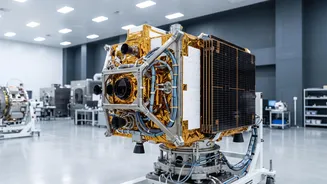
The opportunities can be split into two broad categories. 'Upstream' activities involve building and launching space hardware. This includes roles at companies like Skyroot and Agnikul, which hire propulsion, structures, avionics, and manufacturing engineers to build rockets. It also includes firms like Dhruva Space that build the satellites themselves. 'Downstream' activities focus on using the data and services that satellites provide. This is where much of the commercial value lies. It involves creating applications for satellite communication, Earth observation, and navigation. This creates jobs for geospatial analysts, software developers building data-as-a-service platforms, and engineers working on in-flight connectivity and logistics solutions.
It’s Not Just About Rockets
The private space boom is creating an entire ecosystem of ancillary industries. This includes companies manufacturing high-precision components, developing testing facilities, and providing ground station services. Even professionals from adjacent fields are in demand. Mechanical engineers with experience in composites and thermal analysis, and electronics engineers who can design and test mission-critical hardware are highly sought after. Job postings regularly call for systems engineers, assembly and integration specialists, and those with experience in PCB design for aerospace applications. The growth is not confined to one city; while Bengaluru remains a major hub, vibrant startup clusters are active in Hyderabad and Chennai.
A New Career Trajectory
Working for a space startup offers a different career path than a traditional government job. The pace is often faster, with engineers getting hands-on experience and seeing their work launch into orbit in months rather than years. While ISRO continues its vital role in advanced research and national missions, it is actively transitioning routine manufacturing and operations to private players. This symbiotic relationship means the entire talent pool is expanding. Experienced engineers are moving from ISRO to lead teams in the private sector, creating mentorship opportunities for a new generation. For young engineers, this means more pathways than ever to contribute to India's space ambitions.