








The Unseen Threat in Floodwaters
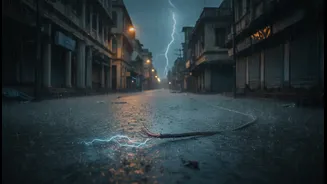
Water is an excellent conductor of electricity. When a live wire, a damaged underground cable, or a faulty electricity pole comes into contact with standing water, the entire puddle can become energised. A person doesn't need to touch the wire directly
to be electrocuted; simply stepping into the electrified water can be fatal. During heavy rains and strong winds, look out for hazards like snapped or fallen power lines, leaning or damaged electric poles, and submerged electrical boxes or transformers. These are common sights during urban flooding and represent a severe threat to public safety.
Your First Priority: Stay Safe
If you spot a potential electrical hazard, your immediate priority is your own safety and the safety of others. Do not approach it. Maintain a safe distance of at least 10 metres (about the length of a school bus) from any fallen power line or from water you suspect might be electrified. Do not attempt to move any wires or debris yourself, and warn anyone nearby to stay clear of the area. Avoid taking shelter under trees that have power lines passing through their branches. If you are in a vehicle and a power line falls on it, stay inside the car, warn others not to touch the vehicle, and try to drive away from the line if possible.
Who to Contact Immediately
The most important step is to report the hazard to the authorities who can disconnect the power and make the area safe. Your primary point of contact is your local electricity distribution company, often called a Discom. These companies are responsible for the power infrastructure in your area. Many state electricity boards have a dedicated emergency helpline number, such as 1912, which is a common number for many states. It is essential to find the specific helpline for your local provider (e.g., BESCOM in Bengaluru, Tata Power-DDL in Delhi, MSEDCL in Maharashtra) and save it on your phone before an emergency occurs. Additionally, you can call the nationwide emergency number 112 or the district disaster management control room (often 1077).
How to Make an Effective Report
When you call to report a hazard, providing clear and precise information can help the response team act quickly. Be prepared to give the exact location of the hazard. Use landmarks, street names, and the nearest electric pole number if visible. Describe the nature of the problem clearly: is it a fallen wire, a sparking transformer, or a damaged pole? Providing your name and contact number can also be helpful in case the team needs more information upon arrival. Many electricity providers, like BESCOM, also use WhatsApp to receive complaints, allowing you to send photos or videos of the hazard along with the location. This visual information can be extremely valuable for the repair crew.
Using Social Media as a Secondary Alert
While calling the helpline should always be your first action, using social media can help amplify the warning. Many Discoms and local police departments have active accounts on platforms like X (formerly Twitter). Tagging the official handles of your electricity provider, municipal corporation, and local police in a post with a clear description and photo of the hazard can draw faster attention. However, do not rely on social media as your only method of reporting. A direct phone call to the emergency helpline ensures that the complaint is officially logged and a response team is dispatched.